![PortStrategy[GreenPort]](https://www.portstrategy.com/wp-content/uploads/2026/09/PortStrategyGreenPort.svg)






Fuel efficient equipment pays off
Hyster will address fuel efficient handling and its benefits in ports at GreenPort Congress.
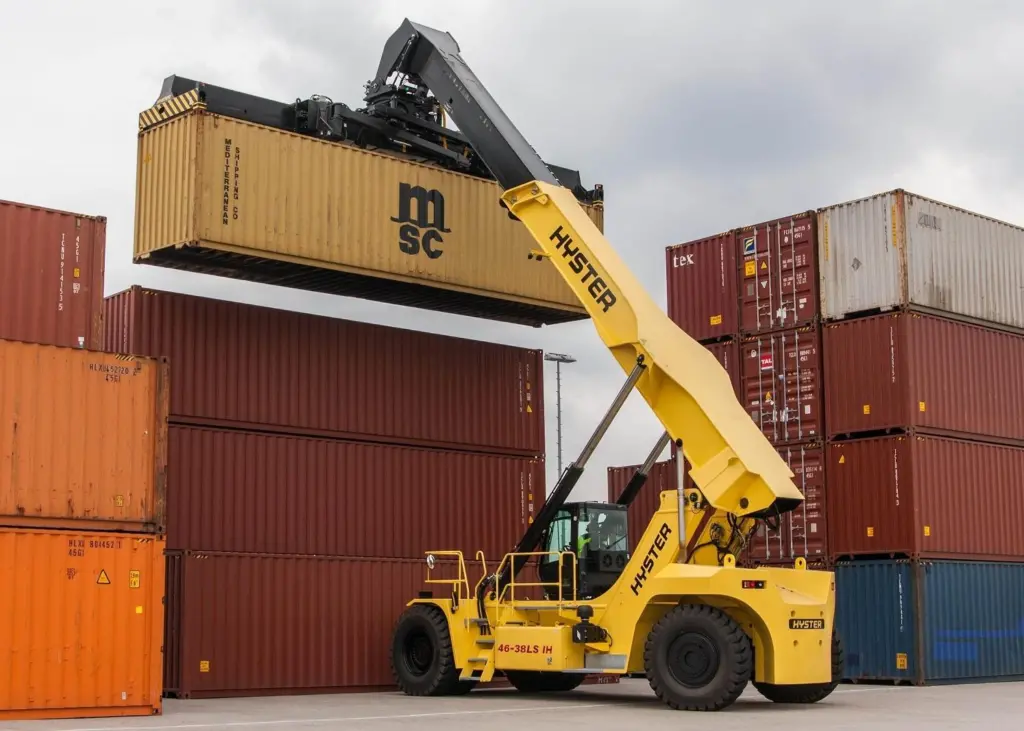
The truck manufacturer will tell delegates at this week’s Amsterdam conference that using fuel efficient equipment results in lower operational costs.
Rainer Marian, big trucks sales director for Hyster, said: “Ports, hinterland operations and inland terminals can all benefit from the fuel savings offered by the latest generation of fuel efficient lift trucks and container handlers.
“The environmental benefits are supporting a lower cost of operation. We call it profitable low emissions and the technology is here today.”
Fuel savings
The latest Hyster ReachStacker for container handling features the new Cummins QSL9 Stage IV engine and Hyster technologies, which the company said are proven to offer significant fuel savings.
ReachStacker uses up to 25% less fuel, potentially saving more than four litres per hour compared to previous models, said Mr Marian.
Of the 12 models in the Hyster ReachStacker series that provide stacking capabilities three rows deep, with options to stack six containers high, the RS46-41L CH offers 46,000kg load capacity in the first row, 41,000kg in the second and 23,000 in the third to enable maximum flexibility.
Extended life
The Hyster RS46-41L CH has an on-demand cooling system and a load sensing hydraulic system that allows the engine to run at lower speeds, extending the life of hydraulic oil and components.
In 2016, Hyster previewed a zero emissions high-voltage lithium-ion battery powered 8t electric forklift which can achieve 100% charge in two hours, without impacting productivity.
A 52-tonne capacity Hyster laden container handling truck with an electric motor will shortly be entering the test phase, meeting market demand for continuous operation with operator-friendly re-charge, or quick H2 (hydrogen fuel) refill options.
While ports wait for these technologies to be commercially available, smart terminals are already able to boost their efficiency and save money by analysing truck usage data, restricting truck access and controlling daily checks.
Related Articles
 EQUIPMENT
 ALTERNATIVE FUELS GREENPORT