






Oil spill monitoring buoys gain notoriety
An integrated systems manufacturers is reporting high levels of interest in its oil spill monitoring buoys following several recent port and harbour installations in the Middle East.
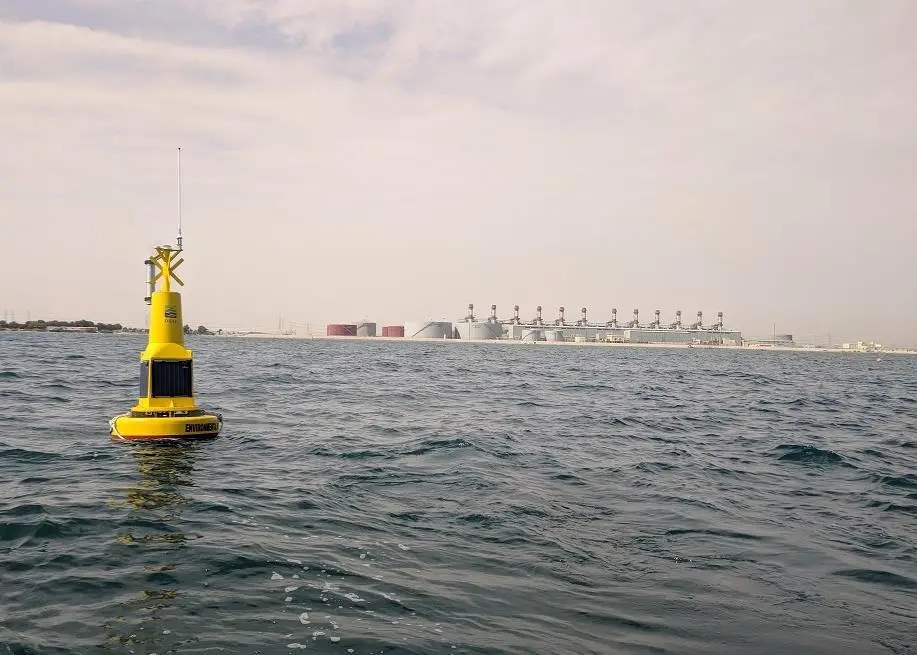
Ocean Scientific International Ltd’s buoy systems are designed to integrate a real time non-contact hydrocarbon sensor in the high visibility top frame design, which is equipped with a pulsed UV LED beam and optical photo-detector with on-board software.
This enables the buoys to detect oil spills on water autonomously and immediately alert the users to any changes to protect vulnerable areas day and night, even under harsh weather conditions. The buoys can detect a variety of hydrocarbon based substances and can be set up to ignore other materials that fluoresce in the same wavelength.
Real time data from these monitoring systems can be transmitted from the buoys via GSM, UHF radio and satellite to a base station and can be integrated into the clients’ own computer systems, providing users with a variety of alarm options including email and text alerts, audible alarms or visual indicators such as flashing lights.
The systems, which are available for a variety of buoy platforms from 1.2m to 3m in diameter, can also be equipped with additional water quality or MetOcean sensors depending on customer requirements.
Related Articles
 EQUIPMENT
 ALTERNATIVE FUELS GREENPORT