



Port of Liverpool: where carbon efficient meets cost efficient
There are many things that make the Liverpool City Region a great place for retailers and manufacturers to do business: it’s home to the Port of Liverpool and the Manchester Ship Canal – a 36 mile inland waterway from Liverpool to Manchester – and a wealth of multimodal facilities and development sites with a healthy £1.8 billion of investment in new infrastructure currently underway. The biggest attraction, though, is the size and density of its easily-accessible population, says Stephen Carr, Head of Business Development at Peel Ports.
It is that density of population that drives the region’s import market. The Liverpool City Region is the UK’s largest population centre outside Greater London, with 17 million people living within a two-hour journey time. In fact, 50% of the UK’s population is closer to the Port of Liverpool than to its competitor Southern ports. Of all the Deep-sea containers entering the UK, 90% do so via Southern ports, even though more than 50% of demand for this cargo resides in the North. Whether you look at this from a carbon saving or a cost efficiency point of view, it is hard to see the logic in the logistics.
By continuing to use road and rail, rather than coastal waters, to move goods from the South of the UK to the North, we are putting additional strain on already over-burdened transport networks and causing untold damage to the environment with unnecessary CO2 emissions.
But it doesn’t have to be this way. We can reduce carbon emissions effectively, lower congestion and be cost-efficient. Companies like Typhoo, Kellogg and Regatta are already doing just that, and by using the combined might of the Port of Liverpool and the Manchester Ship Canal have taken thousands of trucks off UK roads.
There was a time in the not so distant past when travelling by road was difficult, time consuming and expensive. The Victorians’ answer to this was to utilise more efficient infrastructure. The Manchester Ship Canal came in to being 119 years ago, a transport solution which took waterborne trade from across the globe right to the industrial heart of the UK.
Peel Ports port-centric network
It is that very same infrastructure that is once again moving goods from across the globe to the heart of the UK. Peel Ports has created an innovative and port-centric network stretching 44-miles from the Port of Liverpool to Manchester, with Irlam Container Terminal located just outside Trafford Park. The Liverpool City Region’s central position and its excellent connections to the national motorway and rail networks mean that logistics operators based in the region can service the whole of Scotland and Ireland, as well as the rest of the UK, with same-day delivery. In addition, the region’s strength in manufacturing means global exporters like Jaguar Land Rover, Unilever, Kellogg and NSG Pilkington, all based in the North West, provide healthy export business.
Peel Ports offers businesses integrated “Ship-to-Door” logistics solutions, by tailoring the services, we provide for individual customers thus optimising the transport leg from ship to door. By doing this we are making a significant contribution to the UK’s carbon footprint reduction targets.
Liverpool2
The region’s most important infrastructure project for a generation is Peel Ports’ £300 million investment in Liverpool2. Work has already started on this landmark deep-water post-Panamax container terminal, which will be operational in 2015. It will enable some of the world’s larger container vessels, with capacity of up to 13,500 TEU, to call directly at the Port of Liverpool. By transferring to the Manchester Ship Canal Container Shuttle, cargos will access the huge North West consumer market and processing facilities without touching the road or rail network. The economic and environmental benefits can be huge.
Liverpool2 will enable companies to once again use vessels that call directly into the Northern half of the UK. It is anticipated somewhere in the region of 100 – 150 million miles of land based transport could be saved as a result of the development of Liverpool2. One company that has already transferred much of its cargo to Liverpool is Typhoo. By shipping through Liverpool, Typhoo will save in excess of a quarter of a million kilometres of road transport and around 200t of CO2 over the next year or so.
Peel Ports is developing a series of logistics hubs that will incorporate inland water, rail, major roads and warehousing solutions at various locations along the Manchester Ship Canal, the UK’s largest inland waterway. These will allow us to deliver containerised products to canal-side warehousing – taking goods to DC’s closer to the consumer without touching UK road or rail networks.
Green highway network
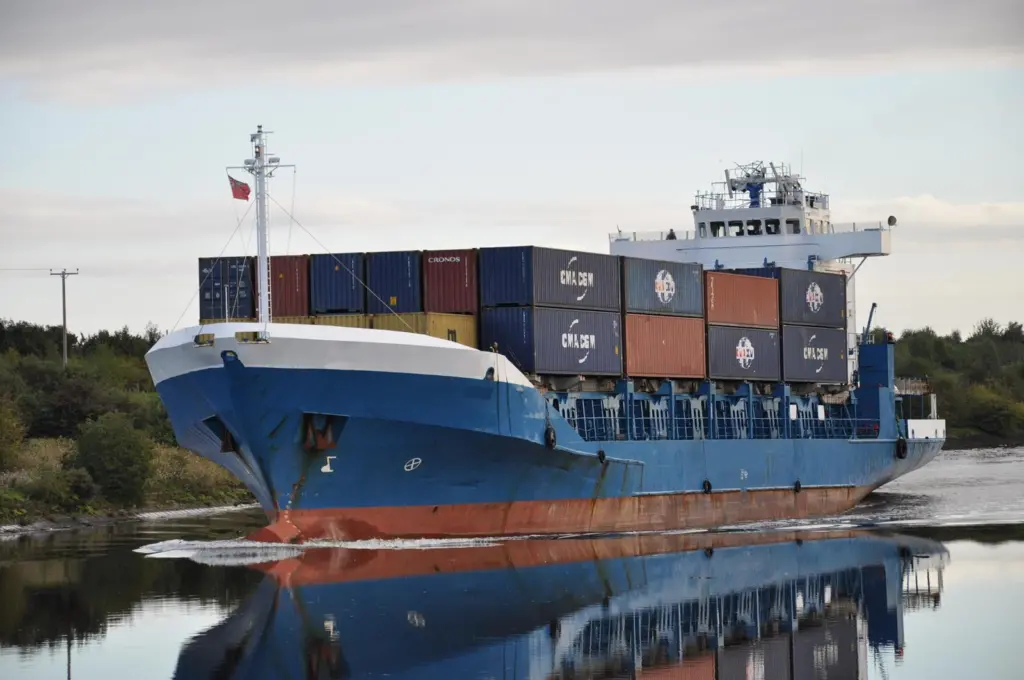
The Ship Canal shuttle service is the most environmentally-friendly logistics solution on offer in the UK and already serves major retail names such as Princes Foods, Kingsland Wine, Tesco, Typhoo, Regatta and a major global sportswear brand.
An excellent example of the bespoke service we offer is the work we have done with global cereal company Kellogg, a business that has a long-standing commitment to sustainability. We have a thorough understanding of their logistics needs and aspirations and so are working with them on a wide range of low-carbon initiatives including container handling, warehousing and consolidation.
In 2013, 2,500 TEU of Kellogg cereal products will be transported on the green highway network between the company’s manufacturing plant in Manchester and their international markets in Ireland and Iberia. The containerised product is transhipped at the Port of Liverpool onto short-sea services that operate to Dublin, Belfast and Bilbao.
Kellogg has also taken advantage of the Port of Liverpool’s flexible “on demand” warehousing offering in an added-value logistics solution for the company. The port-centric warehousing capacity further increases efficiency in the company’s supply chain with storage for up to 7,000 pallets of cereal product available at the Port of Liverpool when required. This is itself has eliminated wasted miles triangulating to warehouses “off-route” to store cargo before its international shipment.
Their use of the shuttle service will equate to an 85% reduction in road miles for the Liverpool to Manchester supply chain: a reduction of 40,000 road miles and 61 tonnes of CO2 in the coming year as they get products like Cornflakes and Rice Krispies into shopping baskets and onto breakfast tables.
The longest standing user of the Manchester Ship Canal is Kingsland Wines, responsible for bottling around 20% of all wine sold in the UK. Since they have started using the shuttle service in 2007 they have saved over 2 million kilometres of roads miles and 2000 tonnes of carbon. Just as importantly they have done this in a financially sustainable way.
There has never been a more exciting time to be working in logistics in the North West. Our offer to the market place combines 21st Century infrastructure like Liverpool2 with a revival of the visionary Victorian Ship Canal. More importantly, our customers clearly see the offer as a very effective modern response to today’s logistics challenges.
Related Articles
 EQUIPMENT
 ALTERNATIVE FUELS GREENPORT