![PortStrategy[GreenPort]](https://www.portstrategy.com/wp-content/uploads/2026/09/PortStrategyGreenPort.svg)






Port reception facilities, a necessity for The Baltic Sea
Ship generated waste is an increasing hazard to our seas and recipients. Certain waste, such as sludge, has been regulated since the beginning of the 1980’s, but this is no longer sufficient. Ports can make a difference by providing facilities and encouraging shippers to use them, writes Nikol Nielsen Gulis, head of department, ports and harbours and Åsa Wilske, market director, environment, Ramboll.
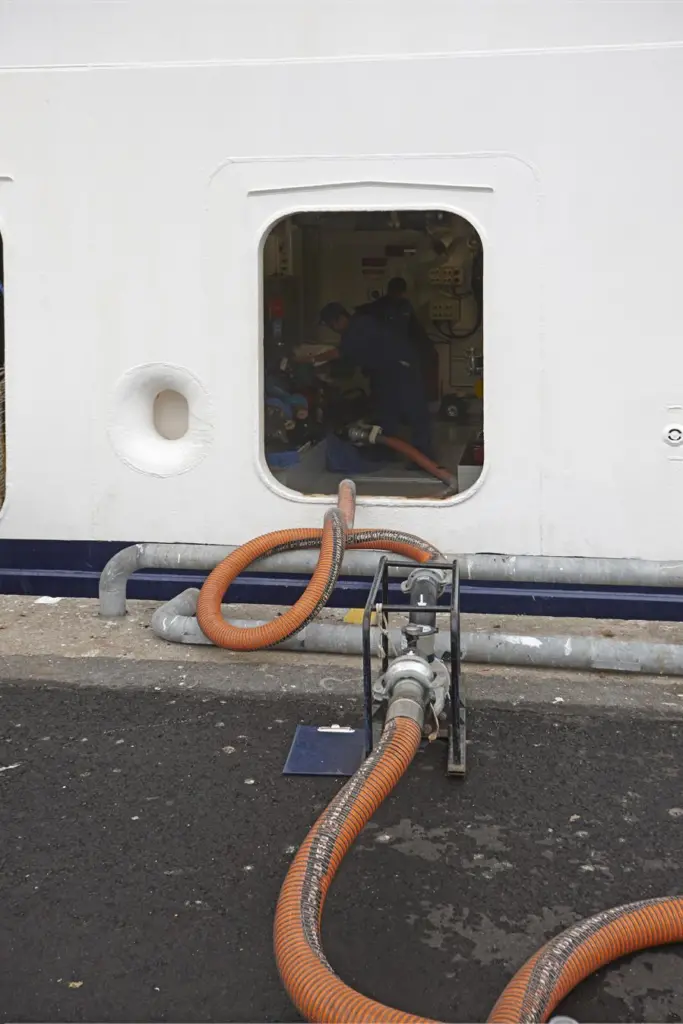
The Baltic Sea has the world’s largest areas of dead sea bed caused by humans. Because it is an inland sea with limited exchange of water due to low sills towards the North Sea, it is severely affected by eutrophication and environmental toxins.
In order to protect the marine environment in the Baltic Sea, all riparian states signed the Helsinki convention (HELCOM) in 1974, which came into effect in 1980. Together with the International Maritime Organization convention MARPOL 73/78 and their applications in the participating states, it sets the standard for public ports around the Baltic Sea. This has promoted a high environmental know-how in the ports surrounding the sea.
Black and grey wastewater
Wastewater is divided into two main categories. Blackwater is sewage from toilets on-board ships and from hospital waste, greywater is water from showers, laundries and kitchens.
Blackwater contains faecal matter and is often kept in tanks separated from greywater on board ships due to the higher contamination and smaller volumes.
According to MARPOL Annex IV: “The discharge of sewage into the sea is prohibited, except when the ship has an approved sewage treatment plant in operation or when the ship is discharging comminuted and disinfected sewage using an approved system at a distance of more than three nautical miles from the nearest land. Sewage which is not comminuted or disinfected has to be discharged at a distance of more than 12 nautical miles from the nearest land.”
This means that ships are still permitted to discharge black and greywater into the sea. It is in the ports’ interest to make the process of depositing sewage as simple as possible in order to make it attractive for the shipping companies.
Port reception
The reception facility can be made simple and discreet with only a concealed access point in the quayside. Other functions, such as pumping stations and interim storage facilities, can be placed further inland where they affect port operations to a lesser degree.
A facility which receives wastewater from cruise ships is generally made significantly larger than those catering for cargo vessels. It is not uncommon for cruise ships to make very short stops at ports. This also means that they want to deposit their wastewater quickly, perhaps as much as 200 cubic metres per hour. This poses a great demand on the reception facility regarding interim storage since the pipelines might be unable to handle such great volumes in that short period of time. In these cases, ports need to build an intermediate storage basin where the wastewater is brought initially and then channelled to the sewage treatment plants at a slower pace.
Blackwater forms hydrogen sulphide, which corrodes concrete and steel, and water should not be pumped through pipes without prior treatment or dilution. To minimise the acidic load, the recommendation is that blackwater from ships is pre-treated, or pumped through pipelines mixed with greywater. Municipal sewage treatment plants do not separate black and greywater, hence it can be sent in a shared pipe from ships.
Cruise ships and some cargo ships often have on-board treatment facilities for blackwater. These are systems for purification which remove faeces by using for example aeration, filtration and disinfection. These measures, however, have a relatively small impact on eutrophication, due to the high levels of nitrogen and phosphorous. An effective treatment can only be achieved if these substances are eliminated. The facilities demand a lot of space and knowledge which can be difficult to obtain on ships.
Analyses tell us that the heavy metal levels in blackwater can be higher than in normal wastewater in municipal facilities. This is probably due to the fact that toilets on board use smaller amounts of flushing water compared to toilets on land and wastewater processed by municipalities. Since blackwater from ships makes up a relatively small share of all the blackwater that is piped to treatment plants, heavy metals are rarely an issue. With significantly larger cruise ships, and/or if residue from treatment plants is for example used as fertiliser, this could become a matter of discussion.
Ports of Stockholm has two similar black and greywater reception facilities adapted to cruise ships which can receive up to 300 cubic metres in one hour. The quay is equipped with several connection points for adaption to different ships. Wastewater is pumped to a large pump station and then onwards to the municipal mains. The facilities have a high degree of utilisation and the handling is rather discreet and clean, which might be important when there are passengers in the vicinity.
Bilge water
Bilge water or sludge is water from ships’ engine-rooms which is polluted by oil. All ships produce this type of wastewater in varying degrees. According to IMO Annex I 83, shippers are not permitted to discharge oily wastes from engine rooms (sludge) in international water. It must thus be disposed of on land.
It is difficult to predict the amount of sludge that is going to be discharged at a port. Sludge volumes can vary from 5 to 100 cubic metres in one discharge. The reception of bilge water is in many cases done via ships or tankers and then transported to a processing or recycling plant. Water polluted by oil is generally not accepted by public wastewater treatment facilities. Any oily content must first be separated from the water. Oil separators alone are not enough for that process because of the possible prevalence of solvents and other chemicals.
The oil containment in bilge water is as little as 5%. This means that 95% of the water needs to be removed (dehydrated, ie evaporated) before the residue is further processed via oil separators, flocculating processes etc. Oily substances can then be recycled while the remaining residue is destroyed.
When the Port of Lulea planned a new terminal in 2014 it made a specific effort to include known ships and cargo generated wastes in order to find the best solution for reception. Ramboll assisted the port by performing a study on how the new terminal was to be equipped and prepared for receiving different types of waste. It also included several suggestions on how the port authority could act in order to encourage the port cluster to work together in a more sustainable manner. One subject to investigate was the capacity of the local oil treatment facility in the adjoining oil terminal. The conclusion was that an update of the existing facility for also receiving sludge was possible, but not economically justifiable. The adaption may be realised in the future if the volumes of sludge and bilge water increase.
Other waste
A fairly new type of waste in the marine environment is the water from exhaust gas cleaning systems – scrubbers. According to MARPOL Annex VI 2003, ship emissions of sulphur and nitrogen oxides are to be reduced significantly. This has led to an increase in the development and use of scrubbers in recent years.
Until now, a ship has been allowed to re-circulate wastewater containing sulphate and nitrogen from exhaust cleaning into the sea without prior treatment. However, the wastewater contains not only sulphate and nitrogen, but also a large content of heavy metals. The handling and treatment of this waste is well-known, but to the ports it is yet a new type of waste generated by ships that must be taken care of.
According to MARPOL: “Annex V prevention of pollution by garbage from ships, common ship garbage should be handled in clearly designated reception facilities on-board and in the ports. If possible, the garbage should be sorted into fractions so that environmentally hazardous waste, such as strip lights, paint etc, is treated separately. Proper containers and handling is necessary to keep the facilities functional and accessible.
Port of Gothenburg has developed a concept for reception facilities with simple and clear instructions on how to sort different fractions into separate containers. The facilities are situated close to the quays, kept clean and are easy to use. Ramboll works continuously for the Port of Gothenburg in different areas to help improve the port’s sustainability including emission calculations, handling of contaminated dredged materials, onshore power supply, etc.
It is often possible to dispose various types of sewage and waste from ships in an environmentally-friendly manner. This means that reduced amounts of pollutants will be dumped into sensitive seas, such as the Baltic Sea. If the increase in transport volumes is to take place in a sustainable way, an interaction between the actors involved is required. Harbours, municipalities, shipping companies, as well as authorities regulating shipping, should find effective solutions to the disposal problem so that it can be handled in an efficient and standardised way.
Related Articles
 EQUIPMENT
 ALTERNATIVE FUELS GREENPORT