![PortStrategy[GreenPort]](https://www.portstrategy.com/wp-content/uploads/2026/09/PortStrategyGreenPort.svg)





Preparing ports for oil spill response
Over the past 20 years, a great deal of work has been done to clean up the environment and prevent pollution and with even more stringent regulations in place, being prepared for an oil spill is vital, UK-based Adler and Allan (A&A) told ‘GreenPort’.
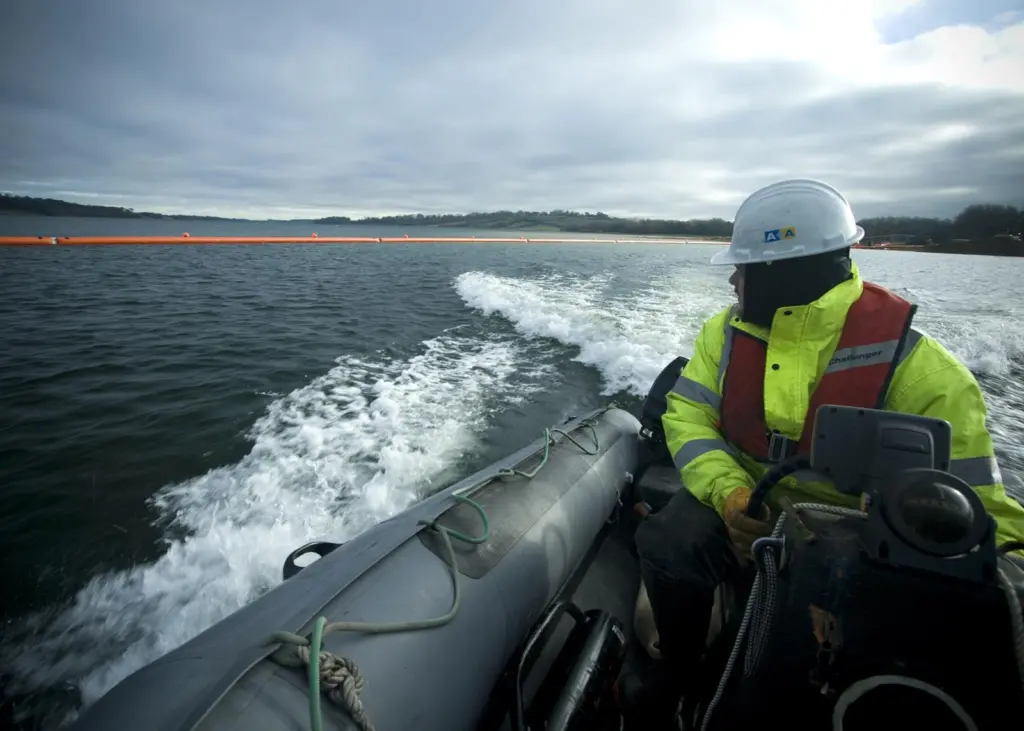
Under the Merchant Shipping Regulations 1997, ports, harbours, terminal operators and marinas have a duty to plan for the provision of reception facilities for certain ship and boat generated MARPOL wastes. They also have a statutory ‘duty of care’ to ensure that waste is safely contained and is only transferred to authorised persons under the Environmental Protection Act 1990.
Ports must also meet the requirements of the Oil Pollution Preparedness Response and Co-operation (OPRC) Convention. The national competent authority that oversees compliance in the UK is the Maritime and Coastguard Agency (MCA), which requires all qualifying ports to possess an approved contingency plan to deal with oil spills, including provision of ‘self-help’ (Tier 1) and regional assistance (Tier 2).
Where accidental spills in a harbour occur from vessels, the statutory harbour authority has powers to prosecute offenders. Where the source of the spill is on land, the Environment Agency is the prosecuting authority, with the harbour authority assisting in the provision of evidence.
Dealing with spills
If a spill does occur, A&A says preparation is key. Oil spill contingency plans must be in place to enable ports to stop pollution in its tracks, quickly. Part of these plans should include keeping the appropriate spill equipment on site supported by trained staff – essential for ISO14001 compliance. Tier 1 is the first line of defence, but in many cases it will not be enough. Having an expert team (Tier 2) on hand to respond round the clock is essential to avoiding chronic damage, loss of business continuity and environmental pollution.
A spokesperson for A&A told GreenPort: “The best way for ports to reduce their risk to the environment is to make sure that they have conducted adequate and realistic risk assessments around their operations, which they can then address with suitable response strategies which should be incorporated into their Oil Spill Contingency Plan (OSCP).”
Following a spill, there is a legal obligation to clean up the area thoroughly, remediating the marine environment and/or land back to its pre-spill state. This will require expert support, with a post-spill assessment conducted in order to implement the best course of action.
To deal with oil pollution, A&A can “strategically” place a 8.5 tonne pre-packed regional response vehicle containing a selection of equipment designed as a first line response that can cope with the majority of probable Tier 2 incidents. This can be dispatched to the scene of the incident along with a team of trained marine responders.
Additional resources can also be put in place if the incident escalates, such as road tankers to remove hazardous waste to one of A&A’s three ‘Hazardous Waste Transfer Stations’ or other temporary storage facilities to manage the waste in accordance with the governing regulations, plus extra manpower and equipment.
Further support
A&A also helps shipowners comply with new emissions regulations in the Baltic and North Sea Emission Control Area (ECA) by draining and fully cleaning vessel tanks ready for changeover to cleaner fuels.
To boost its tank cleaning services, the company recently acquired UK-based MTB Environmental Ltd, which carries out bilge, ballast and storage tank cleaning, ultra-high pressure blasting for paint preparation and treats contaminated fuel storage and treatment facilities.
The company told GP: “This is an excellent opportunity for the A&A Group to strengthen our regional presence on the south coast with the help of MTB’s area knowledge and customer contacts.”
A&A is a leading marine spill response company for coastal facilities in the UK, providing accredited Tier 2 pollution response services to over 85 ports, harbours and terminals from its nationwide network, including the ABP Group, Forth Ports, Peel Ports Group, Port of Dover, Portsmouth and Falmouth Harbours.
In addition to pollution response, A&A is accredited by the Nautical Institute on behalf of the Maritime and Coastguard Agency to undertake marine pollution training from Foundation to Commander Level.
A&A also provides consultancy services to help ports with the preparation and submission of contingency plans, the scoping and facilitation of exercises and the remediation of contaminated sites.
Related Articles
 EQUIPMENT
 ALTERNATIVE FUELS GREENPORT