





Quieter trains cut noise pollution
A German operator is benefitting from reduced noise emissions having fitted its entire rail container fleet with whispering composite brakes.
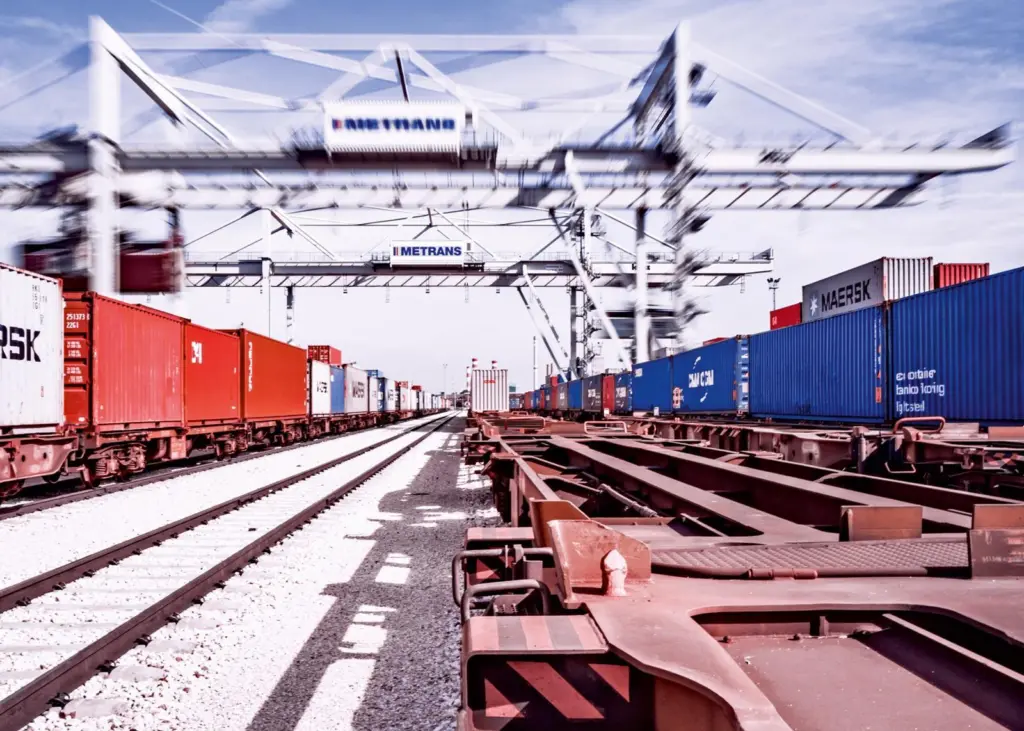
Metrans, the rail subsidiary of Hamburger Hafen und Logistik AG (HHLA), fitted its entire 3,000-container wagon fleet with the brakes to meet the recent ban on noisy freight trains passed by the German Federal Parliament.
For Peter Kiss, CEO of the Metrans Group, this type of innovation is the right way to more sustainability: “Our rail transports are more eco-friendly than road traffic. However, we cannot just rest on our laurels. We need to keep expanding this advantage.”
Less noise
With the new brakes, driving and braking noise created by the wagons will be cut in half because the composite material of the brake pads is harder than the actual wheel.
The braking process is not the only part that will be quieter – the wheels will also be smoothed down by the pads, which will lead to less friction and therefore less noise.
Metrans wagons are especially energy efficient as a result. They help make the already eco-friendly rail transport even more sustainable because they are around 4,000kg lighter than conventional container wagons.
Additionally, their special construction allows containers to be placed closer together on the 700-metre long block trains, meaning more containers can be transported on the same train length.
Metrans is known for being at the forefront of green rail technology, including its work with environmentally friendly hybrid technology on shunting.
Units using this technology emit up to 50% less CO2 and nitrogen dioxide by up to 70% more than conventional shunting locomotives.
Depending on the assignment, a shunting locomotive can run on battery power for between 50 and 70% of the time it is in operation, reducing fuel consumption by up to 50%.
Three of these hybrid shunters have become part of the regular fleet.
State-of-the-art electric locomotives are also used on the numerous rail connections be-tween the seaports and Metrans terminals.
They have noise-reducing disc brakes and use their electric motors to support the braking process. Thus, up to 18% of the energy is recovered during braking and fed back into the power grid.
Related Articles
 EQUIPMENT
 ALTERNATIVE FUELS GREENPORT