![PortStrategy[GreenPort]](https://www.portstrategy.com/wp-content/uploads/2026/09/PortStrategyGreenPort.svg)






Seawater scrubber interest accelerates
After recent positive trials on a Pacific cruise liner, Krystallon is now receiving widespread interest from across the industry in its innovative scrubber system. The Krystallon technology effectively scrubs marine exhaust gases to eliminate harmful sulphur emissions and particulate matter. It provides an alternative to using more expensive low sulphur fuels inside Sulphur Emissions Control Areas (SECA) in the North Sea, English Channel and the Baltic Sea, and other tightly-controlled zones.
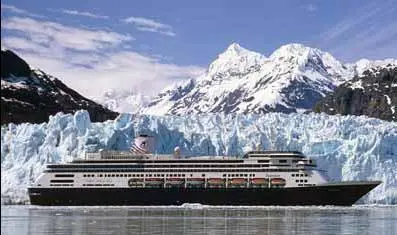
Krystallon, a joint venture between BP Marine and Kittiwake, has already been recognised for its work receiving a number of industry awards. These include an Environmental Initiative award from the Sea trade Insider Cruise Awards in 2007. The company shared this honour with Holland America Line (HAL) for the trial of a Krystallon seawater exhaust scrubber on the cruise ship Zaandam. The cruise vessel set sail from Vancouver in May 2007 for work off Alaska after having a Krystallon scrubber installed on one of its 8.5 MW engines. Early feedback from the trial has been extremely encouraging, according to Krystallon’s Andy Scaplehorn, with independent tests by Environment Canada confirming a significant reduction in both sulphur emissions and particulate matter. Although tests were conducted during system commissioning when the scrubber was not fully operational, and despite operating in glacial areas with high fresh water content, the seawater scrubber still significantly reduced sulphur and PM emissions. Scaplehorn said that he expects to see even better things following the completion of the Zaandam scrubber. “Earlier trials on completed seawater scrubbing systems have achieved 100% sulphur dioxide reductions and in excess of 80% for particulate matter,” he said. The future installation of a high-tech laser sensor will also enable the measurement of exhaust gas emissions with much greater precision in subsequent testing. Dan Grausz, senior vice president, fleet operations, Holland America Line said the tests confirm the Krystallon scrubber’s significant ability to protect the marine environment. “Despite the fact that these tests were carried out before the scrubber was fully commissioned, we are very encouraged by these initial results,” he said. ”Krystallon and HAL, working together, are determined to maximise the benefits of this unique opportunity to help safeguard and protect the marine environment.” The seawater scrubber has been deployed on other high profile vessel types, including P&O’s Pride of Kent passenger ferry, which sails on the Dover to Calais route. With environmental legislation and pressure on shipping companies to reduce their carbon footprint mounting, particularly in SECA zones and other sensitive areas – the US, Canada and Mexico are all preparing SECA applications – industry interest in the scrubber system is gathering momentum. This year Krystallon expects to see the first scrubber installed on a commercial oil tanker with BP planning to retrofit the system on one of its fleet of vessels. Other tanker operators have also expressed strong interest in the technology. Krystallon is believed to be in advanced negotiations to install the scrubber system on a whole fleet of tankers on behalf of one bulk shipping customer. This includes retrofits for existing vessels and installation on all new-builds. Scaplehorn says the technology can effectively future proof vessels against further emissions legislation, as well as rising fuel costs and low sulphur fuel restrictions. “Investing in scrubber technology at the new-build stage represents a very minor cost compared to the major technical, logistical and commercial benefits,” he said.
Related Articles
 EQUIPMENT
 ALTERNATIVE FUELS GREENPORT