![PortStrategy[GreenPort]](https://www.portstrategy.com/wp-content/uploads/2026/09/PortStrategyGreenPort.svg)



AGVs: At the heart of productivity and decarbonisation
The role of AGVs in ports is rapidly ramping up in the face of ever-larger container ships and terminal congestion.
SECTOR ANALYSIS: AGVs KEY TO OPTIMISING EFFICIENCY & DECARBONISATION
The role of AGVs in ports is rapidly ramping up in the face of ever-larger container ships and terminal congestion. According to ABI Research, a global technology intelligence firm, AGV seaport deployments worldwide will have a Compounded Annual Growth Rate (CAGR) of over 26% from 2022 to 2030 and will exceed 370,000 global deployments by 2027. It singles out AGVs as being among the most productivity-augmenting solutions in seaports. AGVs are also at the heart of the drive by terminal operators to decarbonise, with increasing numbers now fully electric. As detailed below, Konecranes is delivering 116 battery driven AGVs for the Hamburger Hafen und Logistik CTB terminal, helping the terminal operator reach its goal of carbon neutrality by 2040.
The AGV is also an important part of port decarbonisation R&D, from Konecranes’ Future Fields concept, to the PIONEERS Consortium, which is aligned with the European Green Deal’s main objective to make Europe climate neutral by 2050 (see below). Another main theme is the incorporation of AI and Internet of Things technology. Their role within AGV predictive maintenance is leading to a reduction in downtime and boosting system reliability.
DATA ANALYSIS: BATTERY POWER, COMMISSIONS, PRODUCTIVITY AND R&D
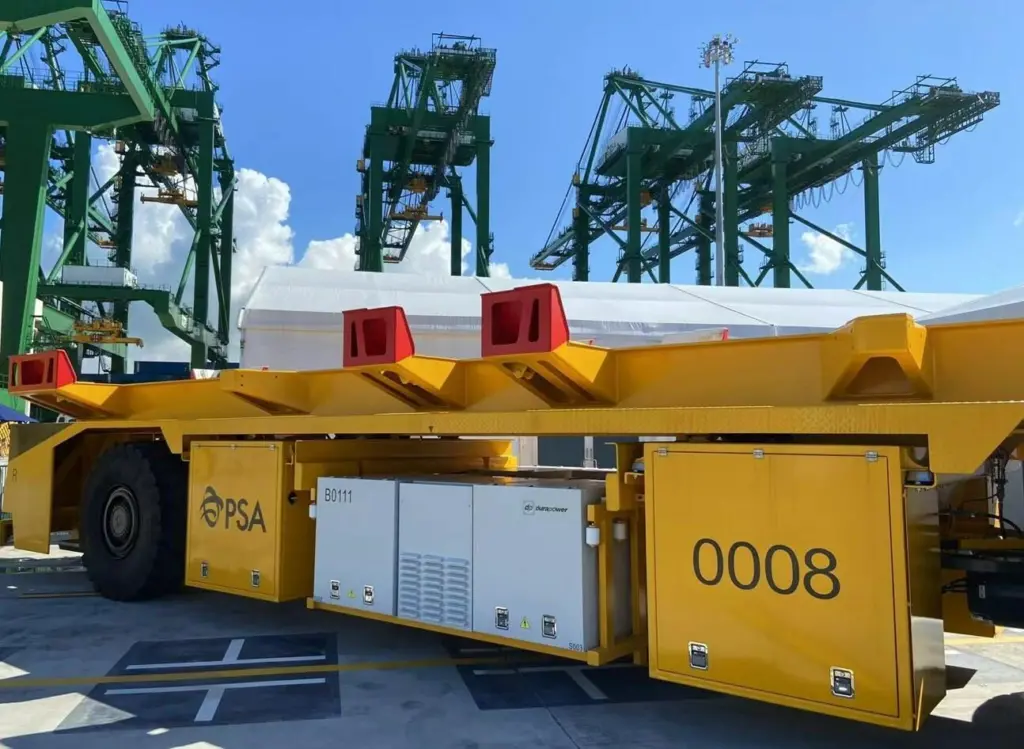
Durapower: The manufacturer has commissioned 54 AGVs powered by its batteries, for operation at PSA Singapore’s Tuas Port. It has since completed testing of its 266kWh Battery Energy Storage System (BESS) with a third-party AGV manufacturer. The Singaporean Lithium-ion battery company says that its customised durable, high power battery solutions, first deployed in 2012 for specialty vehicles like AGVs, are built for ruggedness to withstand heavy loads and extreme operating conditions. It has also scooped an order for its batteries to be deployed in VDL AGVs for South Korea’s first fully automated terminal (see VDL company profile). The company is currently researching a cloud-based technology that can greatly enhance the lifespan and safety of lithium-ion batteries in collaboration with scientists from Nanyang Technological University, Singapore (NTU Singapore). Powered by the Internet of Things (IoT) and Artificial Intelligence (AI), this new solution can help companies and data centres lower the risks associated with lithium-ion batteries, including potential fire hazards.
Gaussin: Gaussin announced the launch of the world’s first hydrogen-powered fuel cell AGV for seaports, in 2022. “It will help port operators switch to zero-emission immediately and provide longer operating hours, shorter and less frequent refuelling, as well as quiet and efficient transportation,” underlines a statement by the company. The AGV H2 can handle a container payload of 65 tonnes, with a maximum speed of 25 km per hour. It is powered by a 2,226kW permanent magnet fuel cell with a 45kW H2 tank capacity, with a 20kg @350bar battery capacity. It can operate with 60kwh autonomy with H2 for 15 hours, with three hours additional autonomy with batteries. The France-headquartered company provides zero-emissions vehicles for freight transportation.
Hyundai Rotem: Hyundai Rotem has scooped an order for the production and delivery of electric AGVs at Gwangyang Port in South Korea. Hyundai Rotem will supply a total of 44 port AGVs, as well as control systems and chargers by 2029. When the project is completed, Gwangyang Port will have a fully automated system for all logistics processes within the pier. The AGV to be supplied by Hyundai Rotem is a large port AGV that is 16m long, 3m wide and 2.3m high, capable of transporting containers weighing up to 65 tonnes. It is powered by electricity and has a fast-charging system, so it can run for about eight hours on a 30-minute charge. The antenna mounted on the AGV and the sensor embedded on the port floor enable sophisticated driving by identifying the location of the vehicle in real time. It will also be equipped with the latest unmanned technology to prevent collisions by detecting obstacles with LiDAR sensors mounted on the front and back. The company is increasing production efficiency by establishing AGV-only production lines and driving test sites at a factory located in Dangjin-si, Chungcheongnam-do. Based on this, Hyundai Rotem completed the installation of 60 AGVs and related infrastructure supply projects at Pier 7 of Busan New Port.
Jungheinrich/Kollmorgen: DB Schenker has started deploying Jungheinrich AGVs with Kollmorgen technology at its terminal in Borås, Sweden – the company’s first to use automated forklifts. “The main challenge on this site is to move a lot of goods in a very short time,” explains Fredrik Ottosson, Terminal & CoDi Manager, DB Schenker Land in Borås. “We also have a target in cluster SE/DK Land to increase automation within our terminals. This is a good step forward in this direction.” DB Schenker says it chose Jungheinrich AGVs with Kollmorgen technology for their proven track record and tailored solutions. Kollmorgen supplied the system software and vehicle hardware for fleet management, routing, and navigation solutions. The Swedish company, which delivers motors, drives, AGV control solutions and automation platforms, last year launched cloud-based commissioning system Cirrus, which speeds up and streamlines AGV installations. The company explains that by simplifying the tuning and verification of layouts via an easy-to-use interface, Cirrus provides two significant workflow benefits: the flexibility of either remote or on-site operation, and that only basic AGV and load handling knowledge is needed by the installation team.
Kivnon: Spanish provider of AGVs Kivnon has struck a partnership with ProLog Automation to accelerate the deployment of such solutions in the German market. This collaboration establishes ProLog Automation as Kivnon’s key partner for AGV projects and services in Germany. By leveraging Kivnon’s AGV technology and ProLog’s local expertise, the partnership aims to help companies unlock next generation efficiency and competitiveness. Nicholas Loh, Regional Manager, Central and Northern Europe, Kivnon, notes: “Together, we are committed to delivering faster response times, localised service, and an improved customer experience for our clients in Germany.”
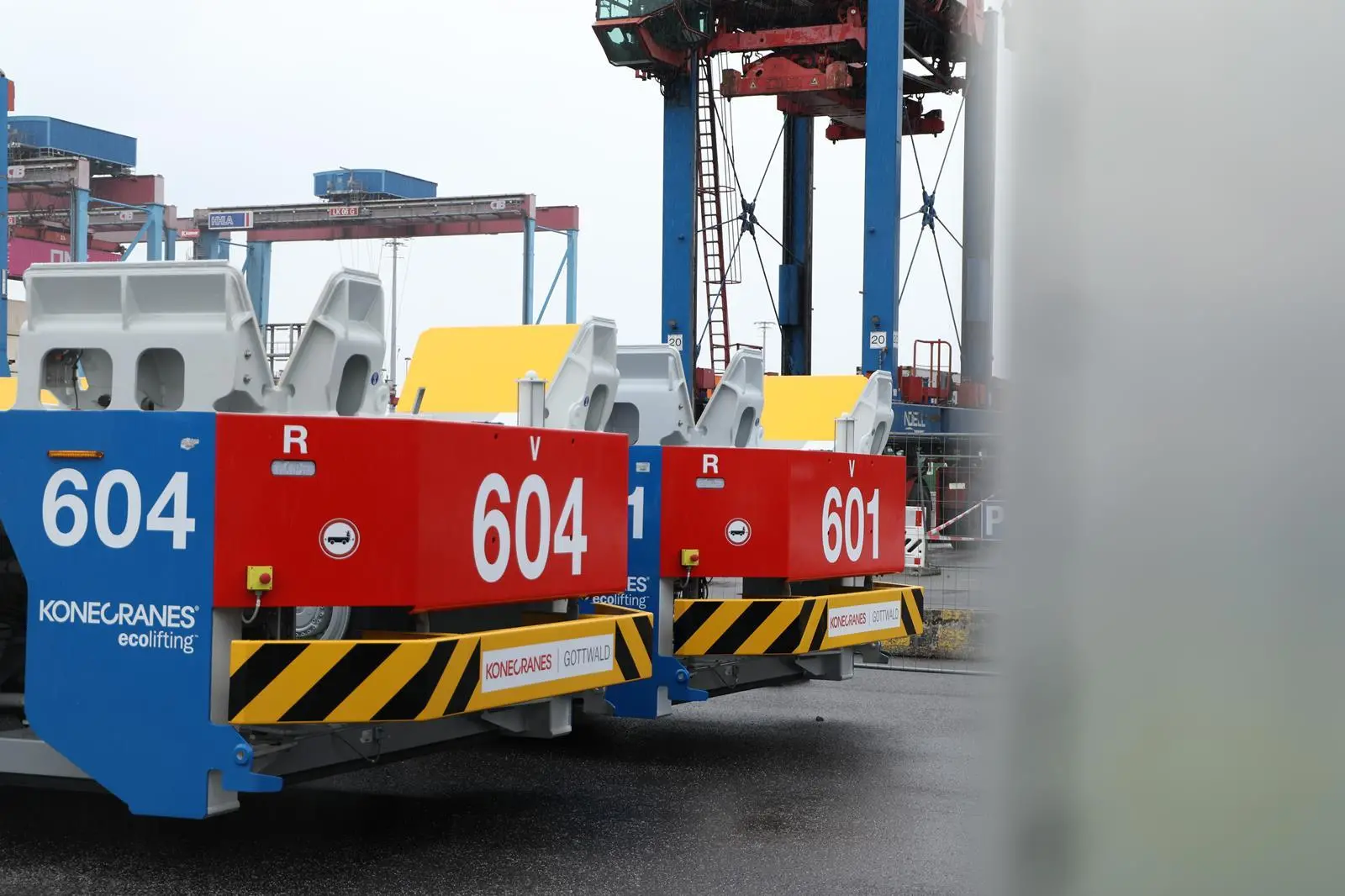
Konecranes: Konecranes is now delivering its largest-ever single order for AGVs to Container Terminal Burchardkai (CTB), supporting the carbon-reduction plans for Hamburger Hafen und Logistik AG. It will introduce 116 Li-Ion AGVs from Konecranes in a transition to a fully electric Automated Horizontal Transport System at CTB. Deliveries will continue through 2025 and take HHLA’s total Konecranes AGV fleet size to more than 200 vehicles. The delivery includes a CE TYPE Approved Interchange and Fence Control safety system connected to CTB’s quay cranes and automated stacking cranes. Ingo Witte, General Manager, HHLA, Container Terminal Burchardkai, points out: “This comprehensive modernisation project is regarded as the largest brownfield upgrade of an operational plant in the global industry. Once fully implemented, this transformation will enable us to reduce CO2 emissions by up to 12,000 tons annually.” Konecranes used TOC Europe 2024 to launch its Future Fields concept which considers new ways of combining technology including AGVs, to achieve 10,000 moves daily from a single berth. The key features of the horizontal transport area of its idea include managing the vessel and container yard interface with AGVs and deploying a fully electric solution with proven battery technology combined with solar power.
Recent uptake: APM Terminals Maasvlakte II B.V. has struck a deal for 71 lift AGVs from Konecranes as part of a project to double its capacity at the Port of Rotterdam.
Siemens: Siemens used LogiMAT 2024 to showcase its Simove platform that is specifically designed for AGVs and automated autonomous mobile robot (AMRs), complete with new features. The platform includes modular software components and libraries for guidance control, navigation, and general automation and uses standardised automation and drive components. Another highlight is the autonomous load-carrier handling technology. The AI-based software system enables AGVs and AMRs to visually detect, autonomously approach, and automatically pick up load carriers in variable and dynamic environments. Siemens explains that autonomous load-carrier handling solutions can significantly reduce costs, engineering, and time expenditures. Simove is part of Siemens’ Xcelerator portfolio, which includes IoT-enabled hardware and software covering the entire warehouse operation.
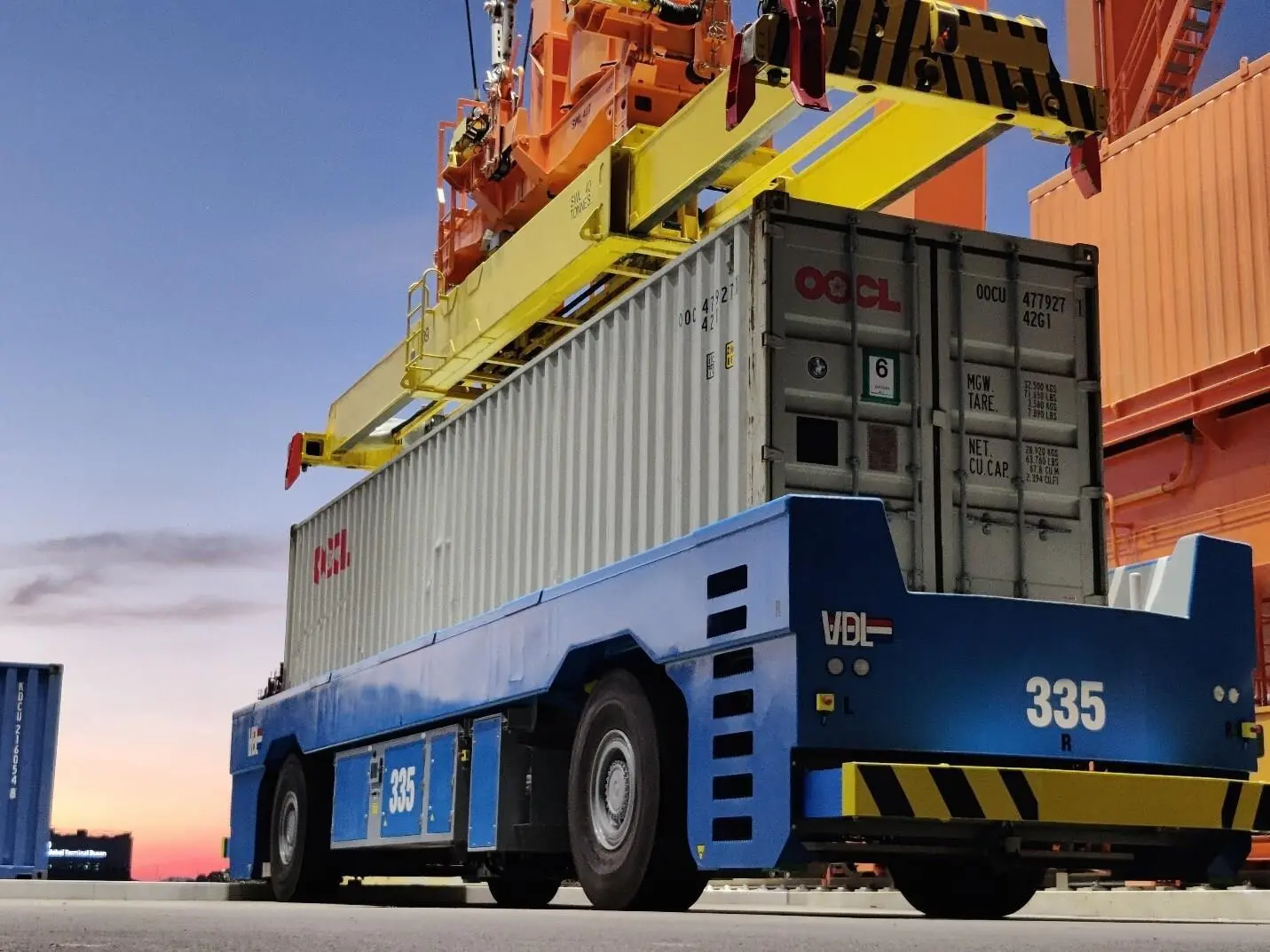
VDL Automated Vehicles: South Korea’s first fully automated terminal will deploy a fleet of VDL AGVs powered by Durapower Holdings Pte Ltd’s battery system. Durapower has supplied up to 60 units of their battery system for VDL’s zero emission AGVs, which will transport containers within Busan New Port’s terminal. The Netherlands-headquartered VDL has also recently supplied a mega-order of 80 AGVs to be used for container terminal logistics at PSA Singapore’s Port. VDL says that the AGVs “transport containers 24 hours a day, seven days a week.” VDL is also playing an important role in the PIONEERS Consortium, which addresses the challenges faced by European ports to reduce their environmental impact while remaining competitive. It is building on the commitment of the Port of Antwerp-Bruges to be climate neutral by scaling up current technology and to demonstrate applicability and feasibility through several demonstrations, acting as a “lighthouse” for EU ports. It will test demonstrations during the project at the ports of Barcelona, Constanta and Venlo. VDL’s role will be in the in the research and development phase by offering advice to terminal operators on operations with electrical heavy duty AGVs. The hardware of electrical AGV will have a drive-by-wire vehicle control architecture, which can be interfaced with the automated software of partner AKKA, and it will be made available for further software development. VDL will also provide a framework for a comparison between conventional container port shuttle costs and electrified automated container shuttles.
Related Articles
 TERMINAL OPERATIONS
 DIGITAL
 DIGITAL