![PortStrategy[GreenPort]](https://www.portstrategy.com/wp-content/uploads/2026/09/PortStrategyGreenPort.svg)



Digital to the rescue
Que Tran, Head of IT, Ports & Terminals, Europe, DP World sets out why Northern Europe’s ports need (digital) systems (not just space) to relieve congestion
Urban planners know the concept of induced demand: Building wider roads to ease traffic often leads to more congestion, not less. More lanes attract more drivers, worsening the problem. In port logistics, a similar dynamic is at play – more space does not necessarily equal less congestion.
Northern Europe’s container terminals are facing delays, with wait times rising by up to 77% at key ports. Causes range from low water levels to strikes, re-routings, and an early peak season. But despite expanded capacity, congestion persists. Like roads, physical growth must be matched by digital agility. Digital systems are not just a substitute for space, it’s what makes that space work at its best.
Without rapid coordination or extensive scenario planning, added capacity fills up fast. Ports are now feeling the consequences of this. Of course, the sequence of events that led to the current operating environment aren’t necessarily predictable in isolation. But if you take the long-term view that global and regional disruption is here to stay, then port operators must have access to advanced technology that makes their spaces work not just harder but also smarter.
PORTS AS TRAFFIC GRIDS
A terminal is like a city grid. Widening roads and improving signs won’t help if the traffic lights aren’t synced. Similarly, yard, gate and vessel operations must be well-coordinated in real time. Performance hinges on unified visibility and control.
Since the 1980s, terminals have relied on specialised Terminal Operating Systems (TOS) to manage container movements. Early systems tracked inventory and schedules but in silos, with extensive manual checks often still needed to keep things running.
Today’s cargo flows are less predictable, with tighter yard space and increasing ship sizes and shifting schedules. Expectations for faster turnarounds and clearer emissions tracking add pressure. While many Northern European ports have the physical infrastructure to meet demand, it’s often the absence of real-time coordination, not a lack of space, that limits performance. And as ports expand, the role of smart systems becomes even more critical to ensure every square metre delivers value.
DESIGNING CARGOES TOS+
Recognising this challenge, DP World launched CARGOES TOS+ in 2021 at our Jebel Ali Free Zone in Dubai. Unlike conventional terminal operating systems, which manage functions in discrete modules, TOS+ offers a real-time, unified view of container and cargo handling. It integrates planning, execution, and exception management into one platform, allowing terminals to act on live data instead of delayed updates or siloed perspectives. With this digital layer, terminals can respond to change with greater speed and accuracy.
As a cloud-based platform, TOS+ connects with Terminal IoT systems and real-time location services, automating job sequencing across yards and equipment. AI and machine learning capabilities help identify bottlenecks early and support proactive decisions that prevent congestion. Processes like equipment allocation and gate handling can now occur synchronously, improving flow and avoiding delay escalation.
This is akin to reprogramming a city’s traffic system to adjust dynamically to live conditions, flagging disruptions before they occur. In complex terminal operations, every unplanned minute has costly knock-on effects – and TOS+ helps minimise them.
In April 2022, we deployed TOS+ at our Southampton terminal. This replaced the existing system, transforming operations with added new features including real-time simulation modelling, allowing pre-implementation fine-tuning of terminal plans.
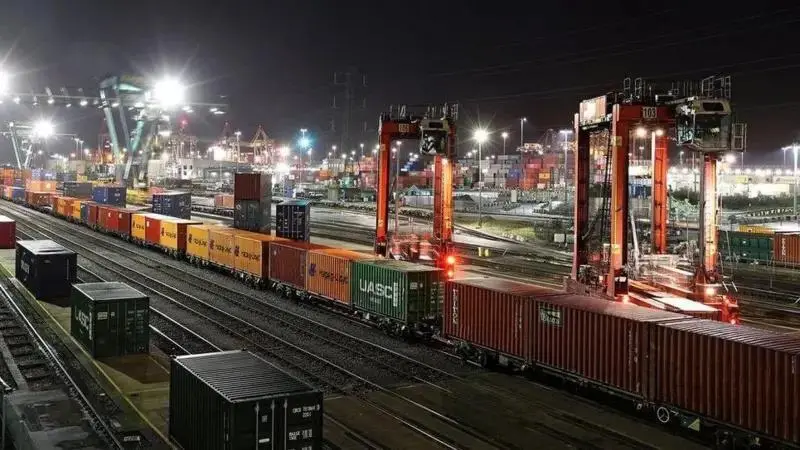
Results include improved yard planning, more accurate container discharge/loading, and better coordination between ship and shore. Truck turnaround times dropped significantly, while rail integration has helped remove over 300,000 truck journeys annually, cutting both congestion and emissions. Today, DP World Southampton averages 35-minute landside turnarounds, with 99.5% of containers meeting their train schedules.
HARDER AND SMARTER
Although not every site can or should invest in large-scale expansion, all terminals can seek to improve how their existing system and operations work together. With pressure building across European supply chains, the ability to coordinate and manage seamlessly through digital, may matter more than any single new physical investment. Sometimes, the clearest path to progress is not creating more lanes but getting the traffic lights right.
*Que Tran, Head of IT, DP World Europe
Que Tran has extensive senior technology and transformation leadership experience, with a focus on cyber, digitalisation and innovation initiatives to help protect, optimise and transform organisations and the industry. Que is currently leading the Technology function across Europe at DP World and has been named among the top 30 leading business and technology executives in the CIO 100 by CIO UK. He was named and has been conferred title ‘Fellow of the British Computer Society’ and recognised for outstanding achievements and contributions to technology. Que also holds Chartered Engineer status with the Engineering Council and is a Chartered Fellow with the Chartered Management Institute.
Related Articles
 TERMINAL OPERATIONS
 DIGITAL
 DIGITAL