![PortStrategy[GreenPort]](https://www.portstrategy.com/wp-content/uploads/2026/09/PortStrategyGreenPort.svg)

EXCLUSIVE: Why automation alone will not fix the pressure on ports
Ports have always operated under pressure, but an increasingly volatile environment is making them more difficult to manage, writes Mark Rosenberg, EVP, Ports & Terminals, DP World Europe.

Disruption is no longer limited to seasonal peaks or isolated shocks. Supply chains are being reshaped more frequently by geopolitical risk, trade policy shifts, inland transport bottlenecks and higher customer expectations for visibility and reliability.
For port operators and cargo owners, this creates a hard question: how do you improve capacity and resilience when land is limited, costs are rising and disruption is becoming increasingly hard to predict?
Many ports are responding by looking at where technology, better coordination and selective automation can improve throughput, reduce delays and make better use of existing infrastructure. But technology on its own is rarely the answer. The ports making the biggest gains are typically the ones using it to solve specific operational problems rather than pursuing transformation for its own sake.
Technology is only as effective as the operation behind it
The starting point should always be the operational issue that needs solving – whether that is vessel turnaround time, yard density, gate flow, safety, emissions, data quality or the reliability of onward by road, rail and barge connections.
In practice, the most effective approach usually focuses on three areas. They use existing terminal space more efficiently. They reduce variability in repetitive, safety-sensitive movements. They improve quality and availability of data so operators can make decisions earlier and recover faster when plans change.
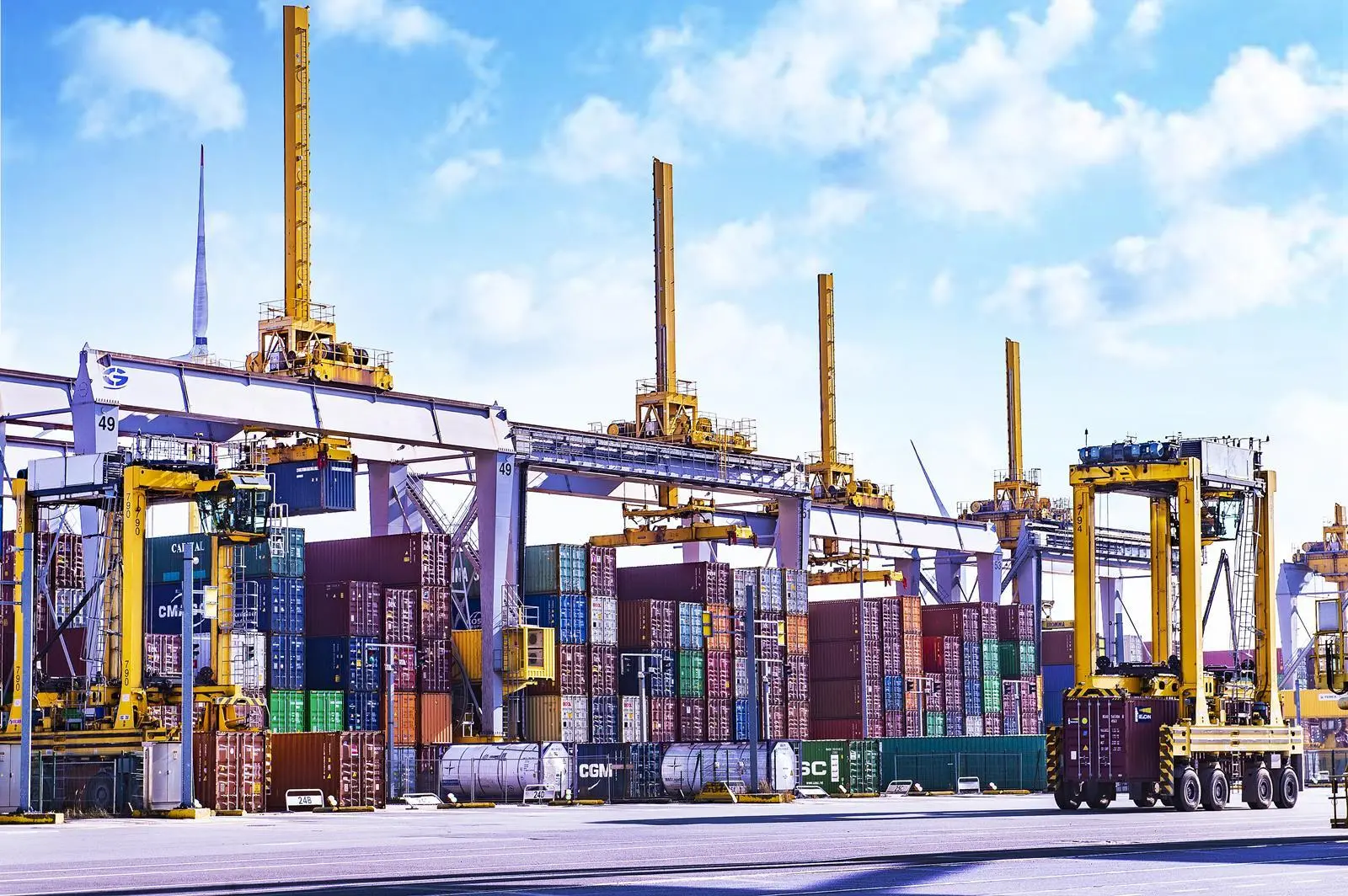
Automated guided vehicles, automated stacking cranes, digital twin tools and truck appointment systems can all help, but only if they are integrated into the operating model. Ports can invest heavily in new equipment and still face bottlenecks if the data, workforce planning, landside processes and customer interfaces are not aligned.
This is particularly important in Europe, where many ports are operating within physical constraints and under growing pressure to improve both efficiency and sustainability at the same time. In that environment, incremental operational gains can have a meaningful impact across the wider supply chain.
Lessons from European terminals
There are useful examples in Europe. At Rotterdam World Gateway, 84 electric automated guided vehicles support a highly automated terminal model, moving containers between the quay and yard in more predictable and safer ways. The value is not only in replacing manual moves, but in creating a more consistent flow between vessel operations, yard planning and onward transport.
At Antwerp Gateway, automated stacking cranes and hybrid straddle carriers are being used to increase yard capacity while reducing emissions intensity. These cranes can stack containers up to 50% more densely than traditional straddle-carrier yards, allowing terminals to increase throughput within the same footprint.
For supply chain leaders, the more important question is not how much automation a port has, but whether investments are improving operations performance. Are berth operations becoming more efficient? Is truck dwell time being reduced? Are rail or barge handoffs becoming more reliable? Are cargo owners getting better visibility when schedules change? Is the terminal becoming safer and more predictable to operate?
The next gains will come from integration, not expansion
There is still significant work to do. The next phase of port modernisation will depend less on individual pieces of equipment and more on how effectively systems and stakeholders work together. Ports, carriers, hauliers, rail operators and cargo owners need systems that can share usable data securely and consistently.
That means technology standards, cyber resilience and workforce capability will matter as much as the cranes and vehicles. The challenge is increasingly about coordination across the supply chain rather than automation within a single terminal.
Technology will not remove disruption from supply chains. But used carefully, it can help ports manage variables they can control more effectively. In a market where reliability is becoming as important as speed, that may prove to be the bigger differentiator.
Related Articles
 TERMINAL OPERATIONS
 DIGITAL
 DIGITAL