![PortStrategy[GreenPort]](https://www.portstrategy.com/wp-content/uploads/2026/09/PortStrategyGreenPort.svg)



Horizontal Transportation 2.0 Released
Huawei and Tianjin Port Group have released the new Horizontal Transportation 2.0 Solution. Developed on a collaborative basis, this new system addresses the challenges of horizontal transportation automation at cargo terminals by offering a cost-effective and innovative path for the smart transformation of global ports.
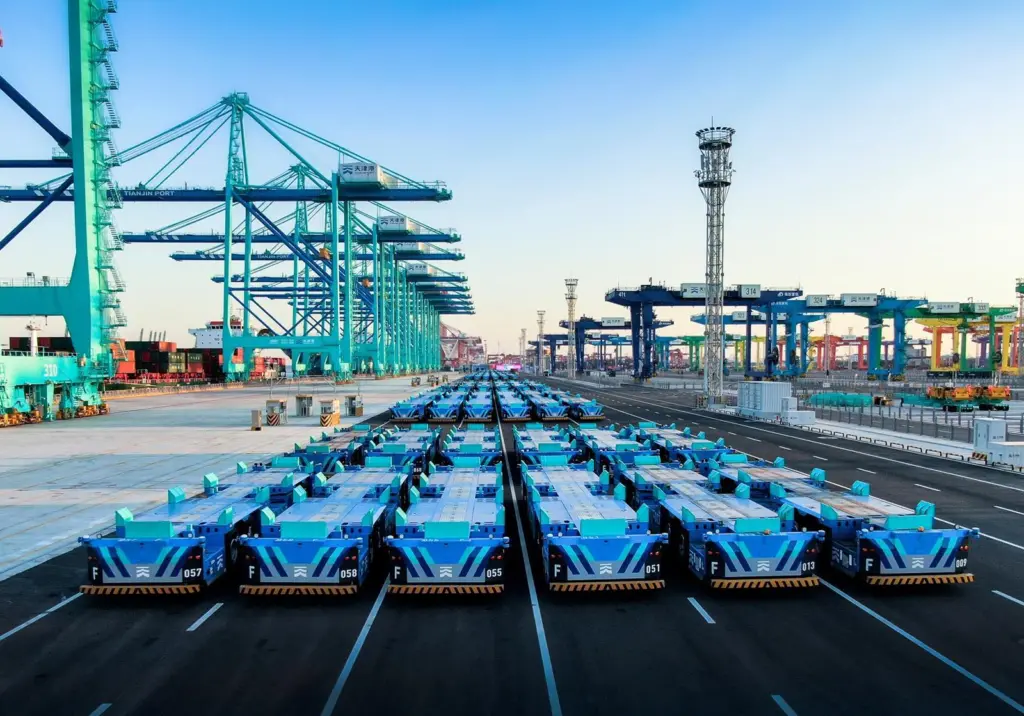
Huawei and Tianjin Port Group have released the new Horizontal Transportation 2.0 Solution. Developed on a collaborative basis, this new system addresses the challenges of horizontal transportation automation at cargo terminals by offering a cost-effective and innovative path for the smart transformation of global ports.
The two partners state that this new solution “marks a shift in port automation from operating in closed scenarios to more open collaboration,” because the product has evolved from conventional independent vehicle intelligence to vehicle-road-cloud synergistic architecture.
This new approach establishes a triple-intelligence system comprising a smart cloud, intelligent roads, and autonomous vehicles. This means it offers an efficient closed loop through collaboration among cloud-based global scheduling, roadside sensing, and onboard real-time decision-making.
Huawei cites further benefits as the system enables AI robots of transportation (ARTs) and manual container trucks to operate safely and seamlessly together. By being able to leverage multiple roadside sensors and cloud-based smart scheduling algorithms, the new system identifies the driving routes of manual container trucks in real time and automatically plans operational paths. This process is said to move, “beyond the limitations of physical isolation traditionally used in automated terminals.”
The system is additionally reported to allow the coordinated management of large-scale fleets of up to 300 vehicles in total, which include both ARTs and manual container trucks. Huawei underlines that this new system significantly reduces manual intervention, with the ART intervention rate dropping below 0.1%, thereby resolving deadlocks commonly encountered at road intersections.
Huawei currently supports over 100 ports worldwide with a noted vision of “driving mobility and logistics into the intelligent world” by matching technology to specific operational scenarios.
Fully Integrated Port Cost Management
Leading maritime technology specialist, HarborLab, is partnering with Danaos Management Consultants to provide a fully automated port cost management tool.
This collaboration means HarborLab’s platform can directly integrate with the Port Expenses Module, Voyage Estimation, and Protocol, offered by Danaos.
The two companies state that this new platform sets an “an industry standard by enabling fully automated, real-time data synchronization between the two systems” which delivers a streamlined process from port call initiation to expense approvals and financial reporting, significantly reducing errors while enhancing transparency and efficiency.
By eliminating traditional manual data imports and automating all processes, users of the tool can benefit from faster approvals and real-time synchronisation that ensure greater transparency and accountability. This means alleviating administrative burdens and allowing port operators to focus on core operations while maintaining full control over their financial data
Ports Urged to Adopt PAS 4000
To improve interoperability and reduce supply chain costs, the Terminal Industry Committee 4.0 (TIC4.0) is urging ports and terminals to adopt a new information model, following the publication of PAS 4000 by British Standards Institution (BSI).
TIC4.0 has stated that industry’s increasing reliance on automation is exposing limitations caused by differing semantic models used by operators and solution providers. To combat this issue, PAS 4000 plans to ensure that “any process and data related to operational activity taking place in a port or logistics hub is expressed in a consistent, unambiguous and appropriate way, irrespective of the type of technology used.”
“The publication of this specification by BSI marks a decisive milestone for the cargo handling industry. For the first time, we have an internationally recognised and structured framework that consolidates a common digital language, shared definitions and interoperable foundations for logistics operations,” states Boris Wenzel, President of TIC4.0.
5G and Edge AI
NTT DATA and Ericsson have entered into a multi-year partnership to scale-up deployment of private 5G, edge artificial intelligence (AI) and physical AI applications. The two companies plan to deliver industry ready solutions by combining Ericsson’s private 5G and edge platforms with NTT DATA’s full stack enterprise network services, wireless network capabilities, information technology and operational technology security, and managed services.
Gioia Tauro Drones
Two remotely controlled drone systems are being introduced at the Port of Gioia Tauro to improve security. The Port System Authority of the Southern Tyrrhenian and Ionian Sea has signed a MOU with the Guardia di Finanza to strengthen monitoring and control activities for a five-year period, with an option to extend. This initiative is part of a plan to tackle organised crime and illicit trafficking, which authorities describe as a “longstanding focus of activity at the port.”
Data Drives Tyne
The UK Port of Tyne has trialled autonomous electric yard robots in live operations to assess how data-driven machinery can improve container yard activities. The month-long pilot programme focussed on movements between the container yard and quay-side crane, using a European-built robot from ANT Machines that was equipped with LiDar and advanced sensors to continuously map its surroundings and detect obstacles.
Digital IMO
The International Maritime Organization (IMO) has approved a global strategy on maritime digitalisation, as part of a wider range of cybersecurity issues. Digitalisation has been set as an “overarching IMO policy” with key objectives including streamlining seafarer credential verification, passenger identification, and ship certification, while enhancing navigation safety operational resilience and environmental performance
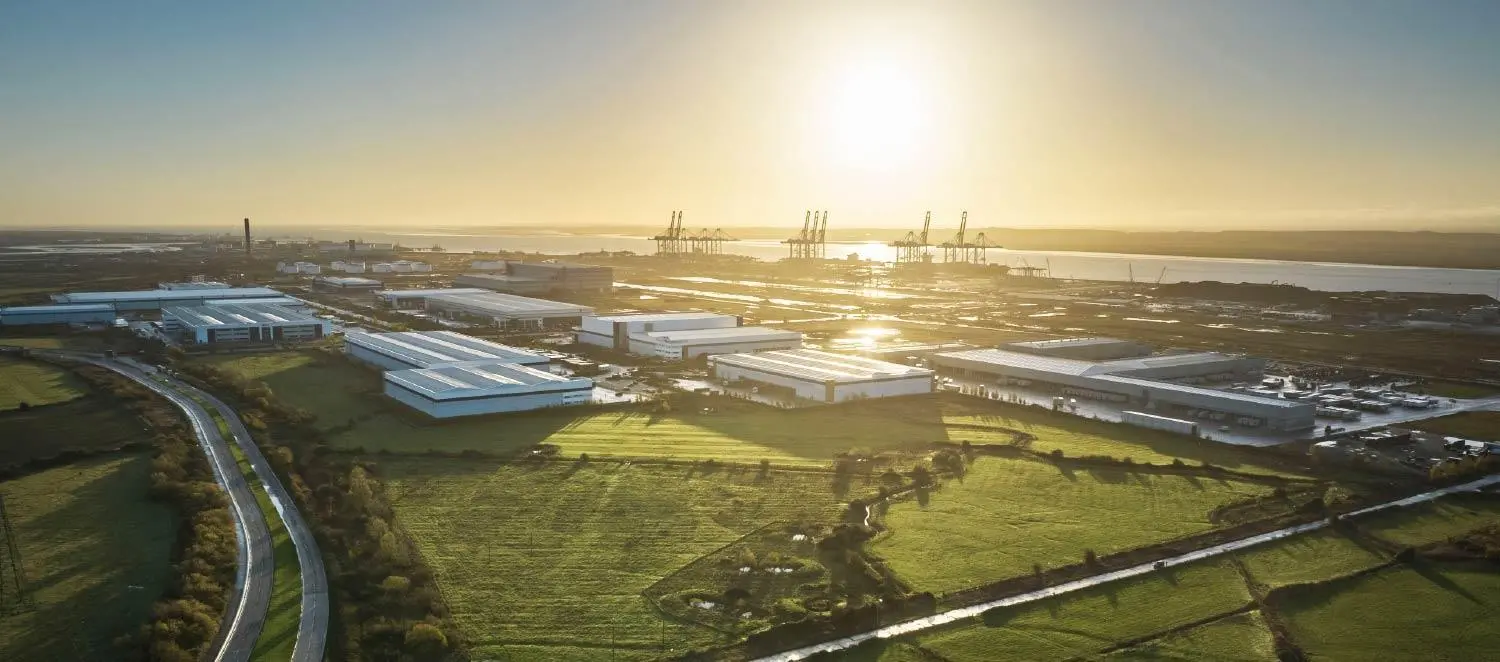
Thames Freeport tests AI and 5G in live operations
A range of digital and technological pilot programmes are being adopted through Thames Freeport’s port facilities in the UK.
DP World London Gateway, the Port of Tilbury and Ford Dagenham are all undertaking tests from different technology providers under the Connectivity Lab programme, which brings together global companies and scale-ups to test solutions in live port and industrial environments.
Thames Freeport said that it received more than 140 applicants to join the Connectivity Lab initiative, with eight companies subsequently shortlisted to trial solutions focused on operational efficiency, safety, and automation.
The ability to deliver productivity gains of at least 25% is one specified objective, while accelerating technology adoption by reducing procurement timelines and lowering implementation risks are also on the deliverables agenda.
The nominated pilot projects are:
- DP World London Gateway is engaging with Conroo for provision of a mobile application to track container arrivals and improve gate operations, and Purple Transform, which uses CCTV data, to automate PPE compliance monitoring. This facility has recently also piloted MapBI, which developed a digital twin of container inventory to support planning and operational efficiency.
- The Port of Tilbury will see Aible use AI-driven analytics to support operational decision-making, and Allread to improve container tracking by rail through use of AI imaging via CCTV. Trials are also continuing with Streamwide providing integrated communications to enhanced coordination across port operations.
- Ford Dagenham is working with Aible to optimise vehicle movement processes, and Focalx, which uses mobile-based AI to standardise vehicle inspections. Discussions are also ongoing with Nokia to deploy 5G-enabled camera systems to improve operational visibility.
The Connectivity Lab initiative forms part of Thames Freeport’s strategy to support advanced logistics and industrial growth, providing operators with a structured framework to test and scale emerging technologies within live terminal environments.
Stuart Rimmer, Interim CEO, Thames Freeport, elaborates: “As the UK’s Next Generation Growth Zone, Thames Freeport is focused on turning innovation into deployment. The Connectivity Lab shows how new technologies can be tested in live operating environments and adopted at pace. This is about improving productivity, safety and resilience across critical industrial sites.”
Thames Freeport is strategically positioned along the River Thames in London. It offers easy access to a large consumer market of 18 million people within 120km and connects to over 130 ports in over 65 international markets.
BMT’s DICS is Live
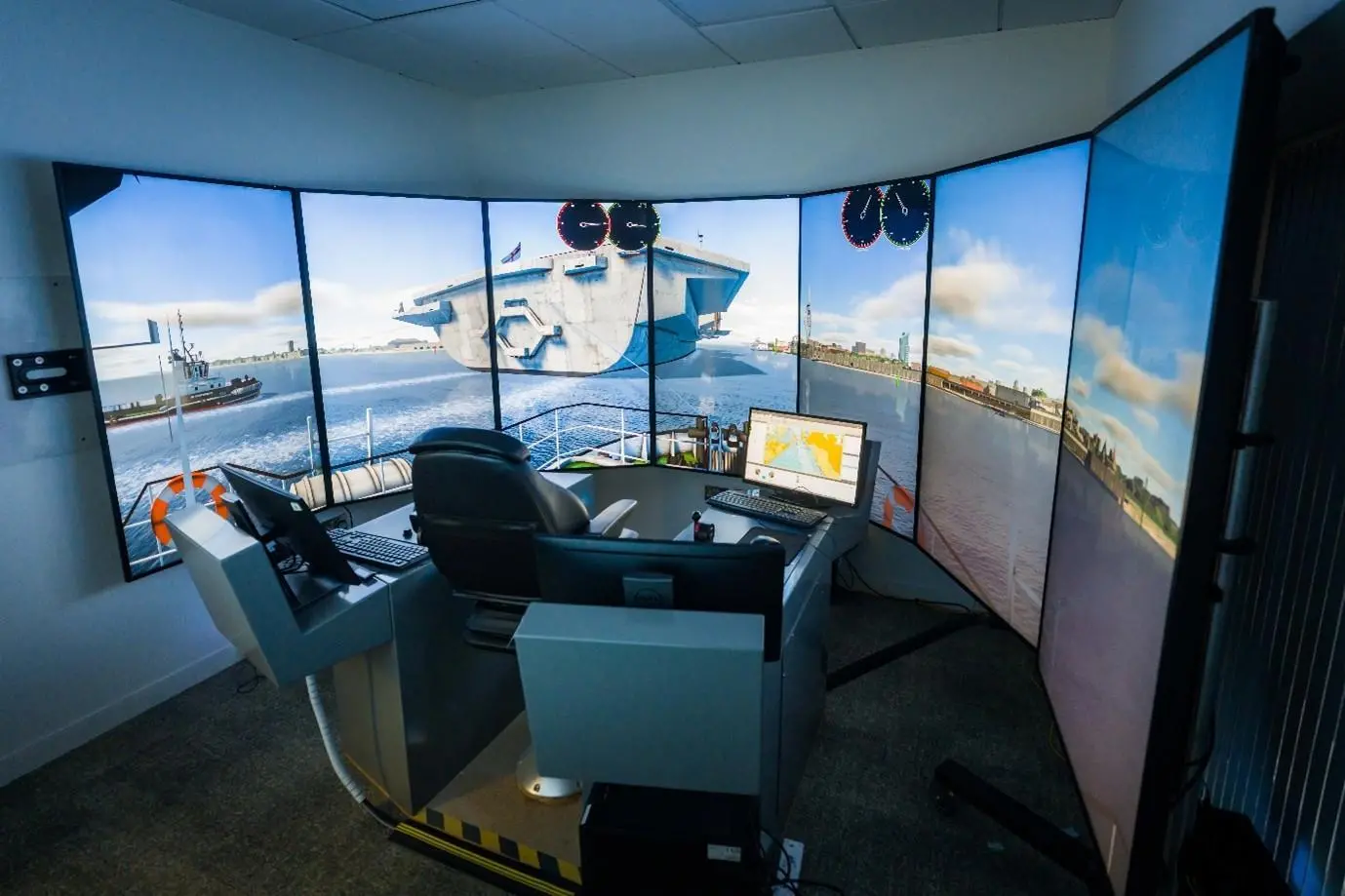
BMT has opened a new Digital Innovation & Simulation Centre (DISC) in the UK. It has been developed to transform how teams and customers innovate, collaborate and de‑risk decisions across complex maritime and multi‑domain programmes.
DISC offers a customer‑focused, self‑contained collaboration space that includes a reconfigurable Full Mission Bridge (FMB) for defence and commercial vessels, two 360‑degree pod simulators, two small‑vessel simulators, a Remote Operations Centre (ROC), a Scenario Control Room, and an Instructor/Briefing Room.
The facility also offers one of the UK’s largest specialised LED video walls to convey a fully immersive canvas for multi‑vessel operations, port and coastal studies, complex tow‑outs, incident reconstructions and investor‑ready digital storyboards.
In addition, BMT ENGAGE, powered by Unreal Engine, allows users to create photorealistic digital twins, virtual ship walk‑throughs and are compatible with the company’s digital port capabilities, and other programmes such as MRSS (Multi-Role Support Ship) design, ports.
Real-Life AI
Port automation specialist, Docker Vision, has linked its AI-driven gate and crane OCR solution with a digital twin from the Indian Institute of Technology Madras (IIT Madras). The process links real time OCR data into a live digital twin, enabling AI-powered visualisation of gate operations and crane movements. Docker Vision said the system is a working one, not a proof of concept, and is validated against actual terminal operations.
Mandatory in Germany
Germany’s North Sea ports now require all transport companies and truck drivers to supply a valid digital authorisation for container activities. The process allows terminals to verify credentials in real time and create a seamless digital workflow from container arrival to terminal exit. The procedure, known as the Secure Release Order (SRO), has been fully integrated into operations and marks the final phase of the digital import container release process.
YMSLite is Go
INFORM has introduced YMSlite, a cloud-based yard management solution aimed at small to mid-sized operations. It offers yard, dock, and gate management together within a single web-based interface, providing real-time visibility of trailers, containers, and chassis while allowing users to assign equipment. YMSlite is targeting warehouses, distribution centres, container yards, 3PL sites, and manufacturing operations with yard activity.
Related Articles
 TERMINAL OPERATIONS
 DIGITAL
 DIGITAL