![PortStrategy[GreenPort]](https://www.portstrategy.com/wp-content/uploads/2026/09/PortStrategyGreenPort.svg)



Hydrogen powered RTG trials proliferate
A range of different projects have been announced relating to the use of hydrogen-based technologies targeting reductions in equipment emissions.
The French Port of Rochefort-Tonnay-Charentes has deployed Canadian dynaCERT’s hydrogen-based technology, HydraGEN, to reduce greenhouse gas (GHG) emissions from port tools, machinery, and equipment. The port reports that this is the first time that HydraGEN technology, an aftermarket unit which produces hydrogen and oxygen on demand through an electrolysis system, is being used on a crane.
The €58,000 unit was deployed on the first crane on July 1, 2025, although it has been part of ongoing tests since December 2024. Similar units are expected to be installed on four other cranes before the end of 2025 because the port has concluded that the use of HydraGEN contributes to a reduction in GHG emissions.
At multiple ports in Japan, Mitsui E&S has confirmed commencement of field trials of hydrogen-powered RTGs, as part of Japanese ports collectively targeting widespread decarbonisation of terminal operations. The trials involve retrofitting existing diesel RTGs with hydrogen fuel cell systems or hydrogen internal combustion engines (ICE).
Further developments are ongoing in North America. At the Yusen Terminals Inc. (YTI) facility at the Port of Los Angeles, a Mitsui PACECO H2-ZE hydrogen fuel cell RTG is now in operation. This RTG has a 100kVA class fuel cell with a rated output of 60kW (DC 650V) and stores 64kg of hydrogen, which can support 16 hours of operational activity.
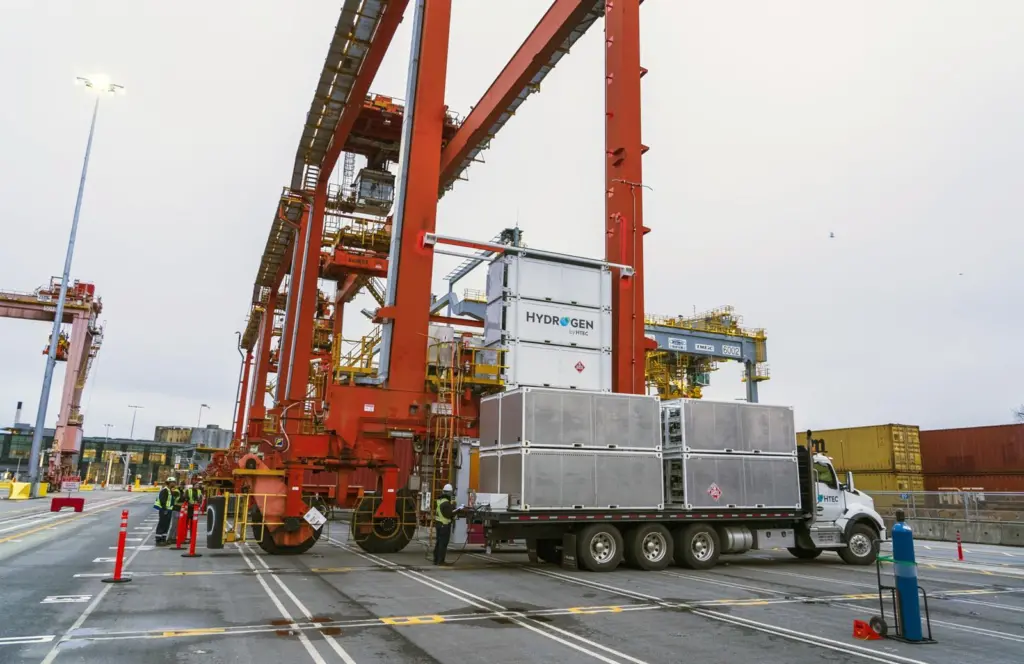
At the Canadian West Coast Port of Vancouver, DP World has confirmed a successful completion of initial testing of a hydrogen fuel cell-powered RTG, as part of the BCH2 Ports Project at the operator’s Centerm facility. This initiative currently funds a “large-scale project to use hydrogen and fuel cells in the shipping and transportation sectors.
DP World states that its 19 RTGs at Centerm account for 50% of diesel consumption and generate more than 4,200 tonnes of CO2 emissions annually.
“The system operated continuously for 16 hours, lifting and lowering a 40-tonne load 105 times, emitting only steam compared to the 400kg of CO2 produced by a comparable diesel unit, explains Scott Mason, President and CEO of TYCROP Manufacturing Ltd, one of DP World’s partners on the project. H2 Portable, HTEC and Loop Energy are also all involved in the initiative.
The operator has confirmed plans to convert its 25 diesel RTG cranes in Vancouver and Prince Rupert to hydrogen-electric power to support future zero-emissions objectives.
Related Articles
 TERMINAL OPERATIONS
 DIGITAL
 DIGITAL