![PortStrategy[GreenPort]](https://www.portstrategy.com/wp-content/uploads/2026/09/PortStrategyGreenPort.svg)


Keeping Pace With Automation
As terminal automation increases, Dave MacIntyre assesses the performance of Terminal Operating Systems (TOS) in keeping pace and benefits offered.
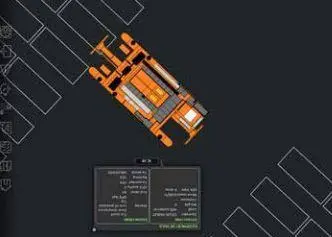
As terminal operators identify the port characteristics that make automation viable and more specifically the processes that make sense to automate, TOS providers are needing to ensure their product offers scalability and integrated solutions that fit the terminal’s size, location and overall needs.
TJ Rucker, president of Tideworks Technology, says for clients being automation-ready is paramount, even if they are not ready to fully automate today.
“We want to ensure that we’re isolating necessary applications to a variety of subservices and standardising where possible on automated service integration. Our system provides optionality for operators to increase automation in the future, as it makes sense for their terminal.”
He adds that it is important to be able to integrate not only for data collection and visibility, but across all different vendors and their solutions.
“We developed Tideworks Insight data-platform as a BI [business intelligence] agnostic tool that aggregates disparate data sources and allows a terminal to paint a picture that they couldn’t otherwise do with a single view into the data.”
The company has developed open APIs (application program interfaces) into a collection called the “Tideworks Unified Gateway” (or TUG). TUG facilitates more straightforward integration with third-party systems, including accounting or ERP systems, automated data capture technologies, and geopositioning systems to bring greater data visibility.
Another important feature, says Rucker, is for the system to present data in an understandable form. “Imagine an operator is deploying 60 pieces of equipment to an operation every day, three times a day. That’s 180 pieces of equipment sustained throughout 365 days. If the operator could figure out which one of those pieces of equipment was the most underperforming and could sustainably correct the situation or even determine too many pieces of equipment are being deployed, consistently through 365 days, the operator could improve performance by correcting the inefficiencies in the operation, resulting in significant cost savings.”
Clearly, TOS is expected to play an important role in reducing costs. Tideworks Insight, for example, can be used to manage assets and use only what is needed to save money.
“The pricing component is the biggest obstacle,” says Rucker, explaining, “For the most part, today it is the same price for lines to bring in a vessel of two different sizes – even though the complexity of operations may be dramatically different with a larger vessel.
“A variable model, where the price per unit changes as the operation becomes more complex and difficult to operate, would accommodate for the increase in costs associated with larger vessels.”
Cost Saving Potential
More cost-saving potential for terminals is in reducing their day sales outstanding (DSO). In a large organisation with hundreds of millions of dollars in DSO activity, reducing that activity by a single day can improve cash flows by millions of dollars.
Automating billing enables the operator to convert its sales, investment and inventory into cash flow. Tideworks’ Mainsail 10 allows operators to track payments and manage customers. They can automate gate billing with specific accounts to allow pre-payment, and invoices created automatically.
Terminal operators approaching automation can take small steps forward, says Rucker, and adds that they need a TOS that helps scale operations to accommodate increased volumes well as in times of contraction – such as during a recession or a pandemic like COVID-19 – when supply chains are negatively affected.
“Operators need access and visibility to their data to work smarter, no matter the external influences that are present. Operators want to know which equipment to pull to stay efficient. Terminals need to be thoughtful about cost cutting when times demand it.”
Accelerating Time to Value
Carlos Barbera, Senior Director of Product Management at Navis, says terminals need to decide whether they want to be early adopters or look to more mature technologies in order to accelerate time to value. If they fall into the second category, there are concepts and blueprints within automation that have been proven to be quite effective.
“For import/export terminals, an end-loading operation with automated yard cranes and manned shuttle carriers as the horizontal transport, has proven to be quite effective. This is becoming a blueprint for import/export operations with very good results in terms of time to value and operational performance.”
There are also practical considerations too, according to Barbera. “The rise of retrofitting strategies makes sideloading operations with automated RTGs is a very attractive option … the technology is growing rapidly since it offers a step-wise approach towards automation compared to the traditional big bang approach.”
Barbera succinctly sums-up the position here. “The options are becoming good standards for automation and vendors should be ready to deliver turn-key solutions and blueprints.”
Control Choices
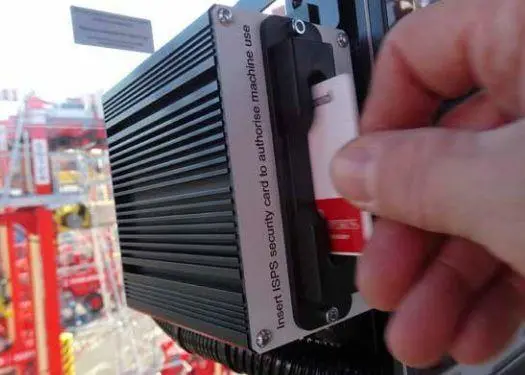
Russian-based Solvo says that sometimes the main challenge is to choose which system will be in control of terminal equipment – would that be a PLC developed on the side of the equipment vendor or would that be a role of a TOS?
Since quite a few functions might be duplicated in both systems or interfere, the question becomes a cornerstone for a project manager, and this is where emulation software may help.
Dan Pershin, Solvo’s Head of Marketing, says most TOS systems now include various data collection capabilities out-of-the-box, however those are not always enough to meet growing client requirements, as his company has discovered.
“Solvo TOS for example offers handheld OCR support to help tallymen recognise and input container numbers in the system using a handheld camera and this is on top of a standard integration with fixed cameras and OCR portals.”
He explains further. “The same goes for barcode reading for general cargo, RFID or even voice-picking for crane operators. Support of these technologies is a feature in our TOS as a standard add-on aspect not requiring deep customisation or complex adaptations in most cases.”
Game-changing Features
Moving forward, Pershin outlines the company’s next steps. “Now we are working on another potentially game-changing feature in auto-ID and data-collection, AR-glasses support for terminal operators, a feature known to the public from warehouse management automation now could be in demand in ports and terminals as it may increase the speed of internal logistics flows.”
Pershin says most vendors propose a best-practices approach which implies that the customer may have to adopt their business processes and workflows to the way the TOS operates and not vice versa.
“Our approach has always been to meet a customer halfway – we do offer best practices in terms of interfaces, systems logic, configuration and user interfaces but are very flexible in even changing the current logic of the system’s main modules (using add-ons) in case a customer has a very specific workflow that his operation relies on.”
Solvo sees the challenge most terminals or ports face would be to find a solution that would address their needs while fitting their budget and time constraints.
“The general trend now is for the biggest operators to come up with their own in-house software systems that would best suit their needs and that would be in their full ownership and control, so the customisation may be provided to the deepest extent possible,” says Pershin.
He also clarifies one outcome noted here. “The terminal operator sometimes gets a very complex system overloaded with functions and due to that may have productivity issues. Smaller terminals, however, tend to look for a commercial TOS which would require minimal customisations and would cover a minimum 70 per cent of their requirements out-of-the-box.”
Pershin concludes that with the changing expectations of customers such as vessel sizes, larger exchanges and pressures on yard space, more terminals require sophisticated solutions that would be able to cope with any type of cargo.
Internet of Things
International Terminal Solutions Ltd (ITS) runs a Port Automation Team of Microsoft-embedded OEM developers, building enterprise-grade platforms with the latest Windows 10 The Internet of Things (IoT).
The IoT platform forms a hub and can connect to a myriad of information sources such as GPS, driver identification and equipment metrics. This sub system provides the ability to make available data metrics from previously difficult-toreach sources and data can then be shared to secured networks for such things as operational visualisation, TOS automation, and BI.
Richard Lambert, Managing Director of the Port Automation Team, says the key criterion for any TOS should be how well it can talk to other systems, which is crucial to encompassing automation, BI and IoT.
“One of the key changes in a short space of time is greater availability of data and even in relatively-small operations, this is only set to increase with the IoT.
“For example, BI doesn’t have to involve crunching huge amounts of data looking for unfathomable patterns, it can also help with safe operational methods, operational performance, and investment strategies when it comes to equipment purchase and estimating operational outcomes.”
Lambert says many TOS systems have various levels of automation built into them, however, to leverage the automation, the TOS systems need to be connected to the real world. An essential step to taking control of the operation, and having measurable metrics and KPIs, is knowing what is going on in the terminal, live and first hand.
To undertake any form of data analysis you first need the data. “We work alongside some TOS systems providing data and providing management visualisations for items that aren’t supported in the TOS. This allows terminals with different TOS to have the live operational visibility that they need regardless of their size.”
He explains why flexibility and is crucial. “Flexibility is a cornerstone of our port automation systems and means allowing the terminal access to a full range of data that may or may not be able from other systems. For the more common functions we provide browser-based screens including metrics for live equipment movements and maps, containers being carried, and operational performance screens.
“We do recognise we are unlikely to cover all the terminal’s special requirements so in addition to providing a good level of operational live visibility we also allow the terminal operator to ‘take charge or their own data’ by providing an open database allowing creation of their own dashboards or BI analysis.”
Automation Challenges
At Navis, Carlos Barbera, Senior Director of Product Management, confirms automation presents unique challenges for the TOS. “It must be able to account for various factors inside and outside the terminal. It has to account for physical and digital parameters and provide optimisation while accounting for potential human intervention.
“It needs to have a user experience which focuses on interruptions versus having to manage regular process flows. At the end of the day, it must also deliver the operational performance which justifies the enormous investment in the infrastructure.”
Navis’s automation platform accounts for various different phases of automation from semi- to fully-automated while maximising the return on investment (ROI). Barbera says the TOS stores and creates a great amount of valuable data, for example, container routing information, cargo availability, vessel operations, ETA, start and completion.
“This data is valuable within the terminal and also beyond the terminal, since it directly impacts how other industry players make decisions in order to remove inefficiencies and maximise resources.
“As an example, the TOS calculates in real-time the estimated time of completion of the operation and by providing real-time visibility of these calculations, other partners can make strategic and tactical decisions.”
Navis says small terminals typically have simpler workflows and processes. This means the level of customisation required is low and it is more feasible to aim for high levels of standardisation. Medium to large terminals usually require more sophisticated workflows and they are often bound by stricter local regulations, hence significant customisation.
Some of the challenges fall into the categories of:
- Intelligence: With greater volumes, systems and algorithms need to become smarter by eliminating unnecessary equipment travel, reducing distances and waiting times while maximising the output of the machines
- Zero downtime: The TOS of the future needs to support upgrades and maintenance tasks with no downtime or impact in the operation
- Time to value: Standardisation, blueprints and the Cloud could be drivers to shorten time to value significantly
- Connectivity: The TOS needs to stay connected to other players in the industry. Having real-time information on appointments, train schedules, vessel arrival etc., can make a big difference in how a terminal is optimised
Related Articles
 TERMINAL OPERATIONS
 DIGITAL
 DIGITAL