![PortStrategy[GreenPort]](https://www.portstrategy.com/wp-content/uploads/2026/09/PortStrategyGreenPort.svg)





OPTIMISED VESSEL MOVEMENT
The digital know-how is available to optimise vessel arrival and departure – Innovez One’s marineM platform offers an advanced solution.
The Ever Given’s week in the headlines highlights a fact that is often overshadowed in the age of the megaship; that global trade is highly reliant on the effective co-ordination of hundreds of relatively tiny vessels, the tugs, pilot boats and other service vessels that make the fi rst and last miles of any maritime journey possible.
Given their importance, it might be surprising to discover that most towage, pilot and supply vessel movements are still co-ordinated by old-fashioned means such as whiteboards and excel sheets. This is incongruous with the term ‘smart port’ – a port that is underpinned by innovative digital technologies and solutions. In reality, however, it is clear that only a few major, ‘tier one’ ports fully reap the digital dividend. And even then, the digital emphasis is on the land-based operations of a port, overlooking the vital processes that happen at sea in terms of towage, pilotage, and workboat operations.
When a ship makes a port call, the marine services provided by pilots, tugboats, and pilot boats need to be scheduled and dispatched for the safe approach of a vessel into port. A vast number of scheduling considerations need to be evaluated including: providing a pilot with a suitable license; finding the appropriate number of tugboats to move the vessel, weather conditions, tide considerations, availability of berth and other factors. Incredibly, of the estimated 4900 ports globally, 80 per cent are not yet using digital technology for even the most fundamental processes. Instead, they rely on manual, legacy solutions such as whiteboards or spreadsheets to manage critical marine services including towage, pilotage, and launch boats.
This lack of digitalisation leads to a range of inefficiencies in ordering, execution, and billing, as well as a lack of sustainability. Furthermore, it leaves many ports commercially vulnerable and less able to compete in an increasingly digital maritime world. While the business of efficiently allocating vessels, crew and berths around a port might seem insignificant, the size and scale of modern ports means that the right people, vessels and equipment could all be in the right port, but kilometres away from where they need to be.
This can be the difference between a successful, F1 pitstop-style, port call and a vessel waiting unnecessarily outside a port for hours, having burned considerable amounts of fuel and emissions to get there on time in the first place. This dynamic reflects the often-messy reality of port operations where there is a blend of advanced digital and paper-based, manual processes sitting side-by-side. It also causes interoperability issues, where systems are not talking effectively to each other, which impedes effective execution.
TAKE THE DIGITAL PATH
The reality is that affordable, proven digital technologies and services, with a fast return on investment, exist and are readily available now to optimise vessel arrival and departure – Innovez One’s marineM platform is a prime example. By automating complex maritime operations for ports, terminals and towage and workboat operators worldwide, Innovez One enables ports and launch operators who are missing out on the digital dividend to harness the benefits.
The marineM platform provides port management information systems that link together each stage of the towage and pilotage chain, covering job management, planning & dispatch, tracking & monitoring and billing. Together, it provides an ecosystem that integrates the whole process, from booking nautical services to billing. This streamlines a port’s planning and management of pilotage and towage services, and significantly reduces the workload for the operations and billing departments.
The benefits are varied – marineM delivers berth planning, optimises vessel allocations, enables real-time reporting of timings and locations, and delivers digitalised service returns to the billing engine to generate invoices automatically. It basically provides a far more efficient, reliable and robust system for planning and allocating these valuable resources than traditional methods. It also saves significant amounts of fuel and maintenance cost by enabling optimised vessel journeys.
The marineM Port management software apps receive pilotage and tug job dispatches on devices wirelessly. They allow pilots and tug masters to update job timings that are delivered real-time to the marineM Job Planner, which uses a proprietary AI engine, built specifically for the maritime sector, to maximise efficiency for pilotage and towage operations.
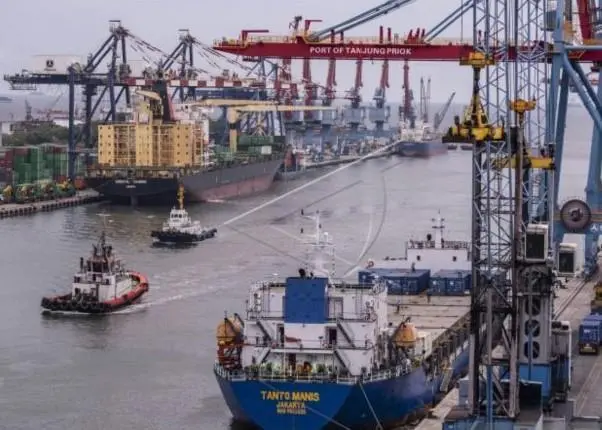
marineM has been deployed in some of Asia’s busiest ports, such as Singapore and Tanjung Priok, Indonesia, facilitating hundreds of thousands of dollars of savings per year. In Tanjung Priok, for example, marineM has saved US$155k in annual fuel costs, by reducing vessel mileage by 20 per cent. It has also saved an estimated US$90k in annual maintenance costs, and US$150k through reducing the incidence of accidents.
Whereas in the past vessels waited on average 2.5 hours for nautical services, since adopting marineM the Port of Tanjung Priok has reduced vessel waiting time to below 30 minutes. These kind of Software-as-a-Service solutions can enable tier 2 ports and below to boost the efficiency, sustainability, profitability and competitiveness that they so urgently need.
Related Articles
 TERMINAL OPERATIONS
 DIGITAL
 DIGITAL