![PortStrategy[GreenPort]](https://www.portstrategy.com/wp-content/uploads/2026/09/PortStrategyGreenPort.svg)




OPTIMISING TERMINAL OPERATIONS WITH DATA ANALYTICS
Terminals face different pressures today to optimise their operations, as Matthias Jablonowski, Global Practice Lead – Ports, Nokia, confirms.
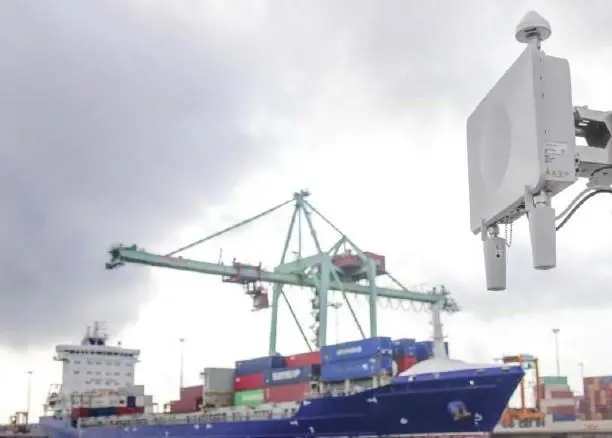
Larger vessels, demands by global supply chains for faster turnarounds, competition from new ports and growing shipping volumes are pressures terminals face. Indeed, from late vessels to damaged goods, there are multiple and daily risks to be managed.
Data analytics based on artificial intelligence and machine learning can optimise specific terminal business processes and provide terminal managers with insights on how to optimise their operations end-to-end, predict high-risk areas for attention and prioritise the actions needed to manage disruption when it inevitably occurs.
The first step in building analytics capabilities is to access data hidden in multiple systems and spreadsheets, and overcoming “tribal” knowledge within the workforce. One of the problems is that where data exists, it is isolated in individual data lakes.
One of the first challenges then is finding how to link the rich historical data buried in the TOS, the ERP, asset management, and other stakeholder systems and sub-systems in the operational chain.
The next challenge is to integrate and analyse streaming information coming from IoT sensors, RFID readers and video cameras. These sensors and devices can be mounted on a fixed infrastructure around the yard or on moving containers, container-handling equipment, as well as workers, vessels, trucks and trains. This will require a robust wireless technology such as LTE today, and 5G in the future.
These technologies overcome the performance, security and mobility challenges of Wi-Fi and have better support for IoT devices. Gathering all the data — both historical data embedded in terminal systems and live streaming data — enables the analytics software to model work flows within the terminal.
It ingests partner data on vessels, containers, payloads, available workers, yard layout and destinations, and gives the terminal operator an optimised sequence for loading, unloading and storage.
We’ve found that logistics solutions of this kind can provide a 7% –10% improvement in efficiency. When applied at scale, these solutions can generate significant cost savings.
With such a heavy reliance on terminal assets, predictive asset maintenance is a key application for analytics. Advanced data analytics can create maintenance models or “digital twins” for most equipment through historical maintenance records and real-time IoT monitoring.
These analytic models use machine learning to create what normal operations look like and spot anomalies that might indicate the risk of failure. They make it possible to optimise the maintenance and replacement schedules for assets using “predictive maintenance” and identify where the greatest risks exist.
These models can be created for almost any asset or process within the terminal and help with capital planning.
In addition to asset monitoring, it is also possible to apply video analytics to truck movements inside the terminal and to video from drone inspections and perimeter surveillance.
Containers need to be monitored during handling and their condition identified in case of damage claims. Video cameras can play an important role in meeting many of these needs, although human monitoring of video feeds can be error-prone.
Software-based video analytics can reduce the human review costs of monitoring video streams using machine-learning algorithms. The software learns over time to identify anomalies based on data models it constructs for what is normal.
The analytics program alerts personnel when an anomaly occurs, such as the mishandling of a container that might lead to damage. Video analytics can also be used to identify container BIC codes and the condition of the container, plus a truck license plate or movements in the terminal.
As terminal operators pursue digital transformation to meet increased pressures and better integrate their operations with digitalised global supply chains, analytics powered by machine learning and artificial intelligence hold tremendous potential to enable new capabilities and optimise terminal operations end to end.

Related Articles
 TERMINAL OPERATIONS
 DIGITAL
 DIGITAL