![PortStrategy[GreenPort]](https://www.portstrategy.com/wp-content/uploads/2026/09/PortStrategyGreenPort.svg)




Port of Singapore MASS trials successful
The first commercial Maritime Autonomous Surface Ship (MASS) trialled in Port of Singapore waters has demonstrated its capability to avoid a variety of obstacles, including virtual and real-life moving vessels.
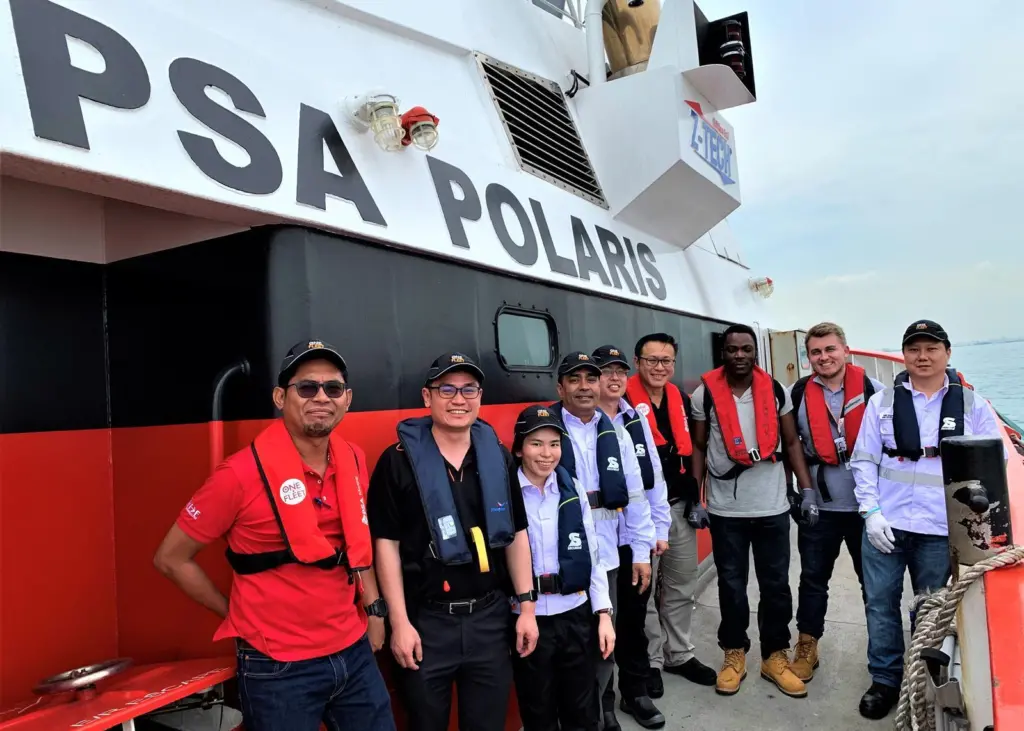
Co-funded by Maritime and Port Authority of Singapore’s (MPA) Maritime Innovation and Technology (MINT) Fund, the ‘IntelliTug’ project involves the PSA Marine owned and operated harbour tug PSA Polaris, which has been retrofitted with a suite of Wärtsilä technology to enable autonomous navigation.
Having commenced in September 2019, the trials are Singapore’s first for commercial MASS using the MPA MASS regulatory sandbox, which has been established to facilitate the testing of MASS and other autonomous technologies in a safe and controlled environment within the Port of Singapore. The IntelliTug trials are part of MPA’s MASS initiative, which aims to accelerate the industry’s R&D capability in this field and validate new MASS-related concepts of operations and technologies.
“It is critical that we prepare the Port of Singapore for MASS. With MPA’s MASS regulatory sandbox, I am glad that Singapore can contribute to the sea trials and eventual adoption of MASS,” said Captain M Segar, assistant chief executive (operations) of MPA.
Data collection ongoing
The 27m long PSA Polaris with dual azimuth thruster controls has been fitted with a sensor suite, including Wärtsilä’s RS24 near-field high resolution radar and Wärtsilä’s Dynamic Positioning (DP) system, to enable autonomous capabilities. Data collection via the sensors has been ongoing since the start of the project in conjunction with the development of a collision avoidance algorithm.
During the sea trials, a new smart navigation system – which was developed during the project in cooperation with PSA Marine’s tug masters – was used to select destinations for the hundreds of test cases carried out.
Wärtsilä and PSA Marine will continue development work on the IntelliTug and its systems throughout 2020, working towards continuous deployment of smart capabilities in real-life harbour craft operations.
Lloyd’s Register and the Technology Centre for Offshore and Marine Singapore (TCOMS) are also involved in the project.

Related Articles
 TERMINAL OPERATIONS
 DIGITAL
 DIGITAL