![PortStrategy[GreenPort]](https://www.portstrategy.com/wp-content/uploads/2026/09/PortStrategyGreenPort.svg)





Private 5G reshapes UK ports
A new private 5G network is now live across three of the UK’s most important ports, giving Hutchison Ports the digital backbone needed to push further into automation and data-driven operations.
Three Group Solutions has completed the rollout at the Port of Felixstowe, Harwich International Port and London Thamesport, creating a single industrial-grade connectivity platform spanning the entire operational hub.
For Felixstowe, the country’s largest container port, the upgrade marks a step change from connectivity that supported human-operated equipment to one designed for machines making decisions in real time.
The network is intended to underpin autonomous trucks, remote-controlled cranes and other latency-sensitive systems that are becoming central to modern port operations. According to Three Group Solutions, the existing 4G network was reliable but never built to cope with the volume of data and split-second response times required by large-scale automation.
Replacing it, however, was not as simple as a switch-off. The new 5G system was built alongside the 4G network using separate spectrum, allowing assets to be migrated in stages without disrupting live operations.
“When you are dealing with the connectivity that keeps the country’s largest container port moving, you cannot simply turn one network off and another on,” said Graham Wilde, head of private networks at Three Group Solutions. “Running both systems in parallel meant we could move vehicles and machinery across in a controlled way.”
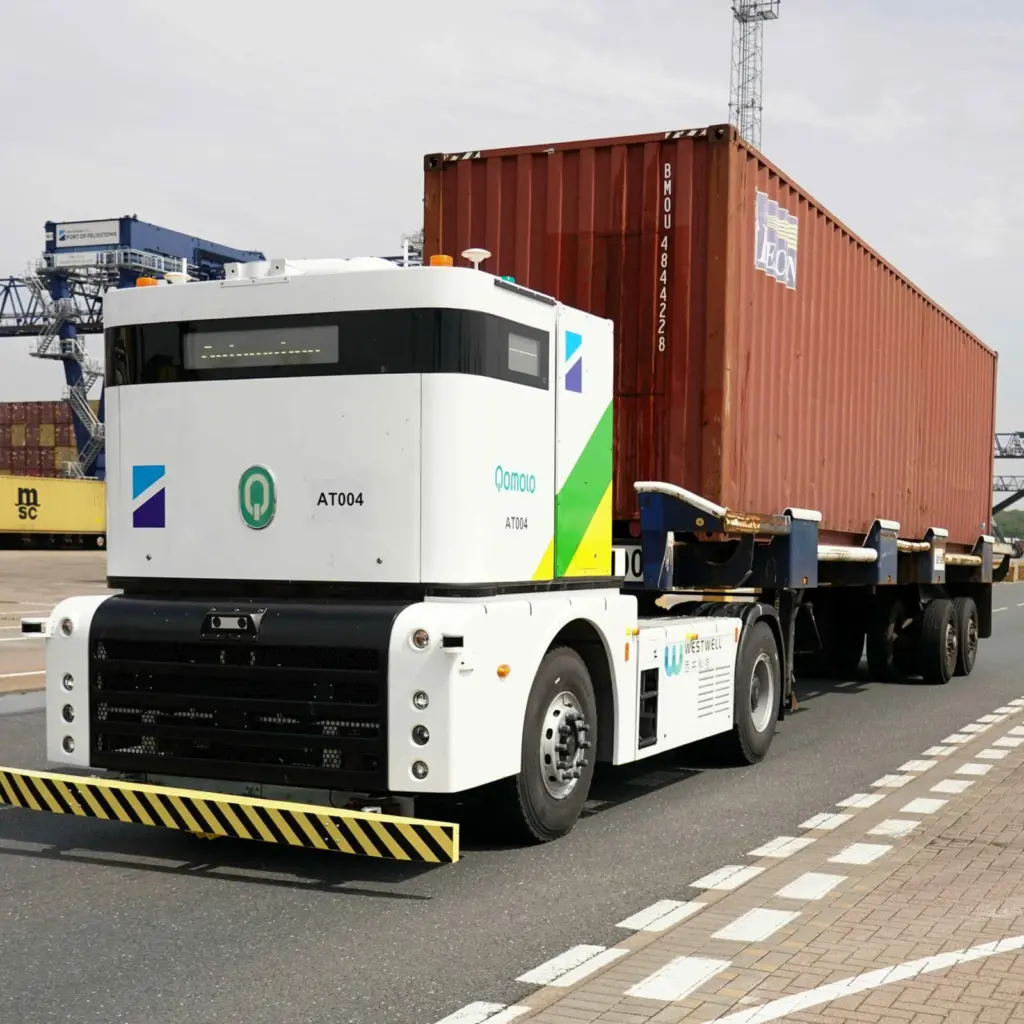
One immediate beneficiary will be Hutchison Ports’ plan to introduce autonomous, electric trucks at Felixstowe, replacing part of the diesel fleet. These vehicles rely on constant, low-latency links for safe operation and remote intervention, often supported by multiple live video feeds.
“Automation in ports is not about putting people out of work,” Wilde said. “It changes the jobs people do, making them safer and more interesting.”
Beyond vehicles, the 5G platform has been designed with headroom for future applications, from drone inspections and predictive maintenance sensors to real-time data feeds feeding digital twins.
Related Articles
 TERMINAL OPERATIONS
 DIGITAL
 DIGITAL