![PortStrategy[GreenPort]](https://www.portstrategy.com/wp-content/uploads/2026/09/PortStrategyGreenPort.svg)



Sector Analysis: eRTGs Take Centre Stage
Rubber Tyred Gantries (RTGs) are undergoing a rapid evolution, moving to hybrid and electric power, as well as trialling alternative fuels such as hydrogen.
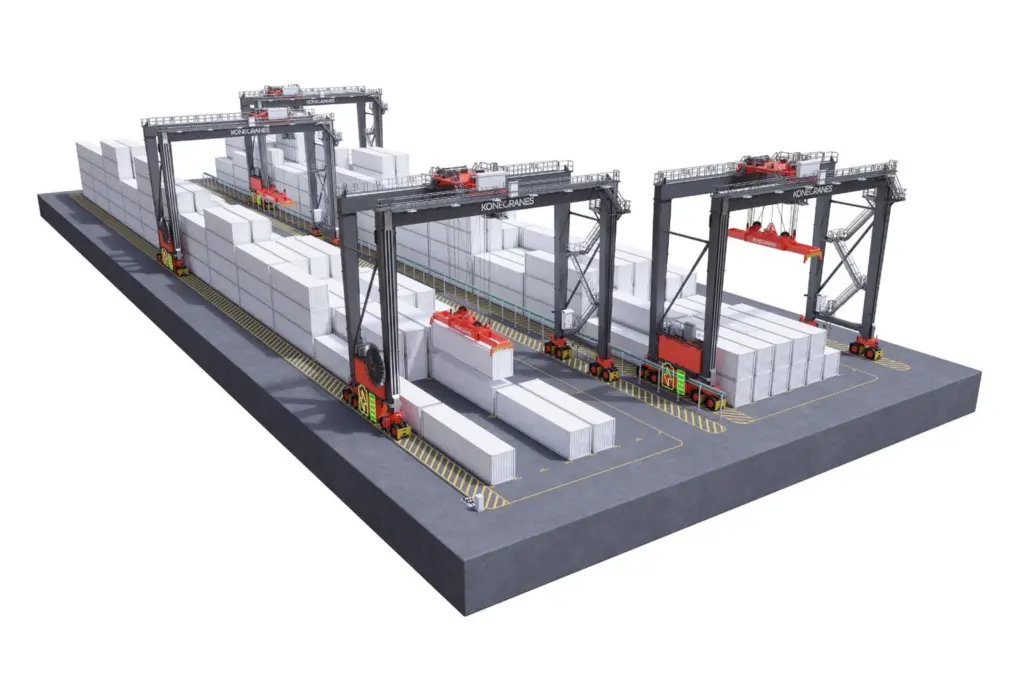
Traditionally, RTGs have deployed diesel engines, but in recent years, ports have increasingly implemented hybrid and full electric RTGs on the back of meeting stringent environmental legislation and their sustainability goals. As well as significantly reducing emissions, these models have the added advantages of boosting energy efficiency, as well as reducing noise and maintenance requirements. The movement towards electric RTGs will only continue, with other drivers including technological advancements and government incentives and funding programmes. Growth Market Reports’ Container Yard Electric RTG Power Supply Market Research Report 2033 underlines: “Innovations in battery technology, conductor rail systems, and hybrid power solutions are making electric RTG power supplies more reliable, cost-effective, and adaptable to diverse operational environments.” As the below RTG supplier sector analysis shows, there have been multiple port sector orders, as well as new model launches, of electric and hybrid RTGs. Furthermore, collaborations between manufacturers, terminal operators and government agencies are leading to even more innovation.
ALTERNATIVE FUELS, NEW MODELS, R&D AND CONTRACTS
Conductix-Wampfler: APM Terminals and Conductix-Wampfler have signed a Framework Purchase Agreement for RTG electrification products and services for terminal operations. The framework agreement was signed in October last year and marks the third collaboration agreement between the two companies. Over the past 14 years, Germany’s Conductix-Wampfler has supplied APM Terminals with 413 energy supply systems for eRTGs (new and retrofitted) and 116 battery systems for its operations. APM Terminals is working towards achieving net-zero greenhouse gas emissions by 2040. Shifting from fossil-fuelled equipment in its terminals to battery-electric container handling equipment is the main lever for reducing its Scope 1 GHG emissions. For its Scope 2 emissions, the ambition is to transition to 100% renewable energy by 2030. APM Terminals has implemented large-scale diesel-to-electric conversions at multiple terminals worldwide, replacing diesel-powered yard cranes with electric-powered ones to reduce emissions at the source. François Bernès, Chief Executive Officer, Conductix-Wampfler, notes, “This renewed partnership with APM Terminals provides Conductix-Wampfler with a strategic anchor and practical platform for our long-term vision. As a strategic partner, we will continue to fully support APM Terminals in achieving its energy-saving, emissions-reduction, and carbon-neutral goals, deeply engaging in the port operator’s decarbonisation journey and contributing our expertise to drive sustainable transformation in the industry.”
GENMA Solutions: This Chinese headquartered company has recently delivered multiple hybrid RTG cranes to two ports, as well as unveiling the development of a methanol-powered RTG. At TOC Asia 2025, it announced that it was developing a ‘methanol-powered RTGs with latest active anti-sway energy recovery system’. The company hailed it as a “sustainable breakthrough for green port operations”. It has also recently delivered hybrid RTGs to two ports, comprising 14 hybrid RTGs to the Red Sea Gateway Terminal (RSGT) at Chittagong port, Bangladesh and four hybrid RTGs to a “long term partner in Mexico.” The RTGs that have been delivered to RSGT Chittagong, which are now fully operational, are expected to significantly enhance the terminal’s container handling capacity and mark the first GENMA RTGs deployed to the port. The Mexico units were shipped in late 2025 and GENMA points out that compared to previously delivered diesel-powered RTGs this new batch of RTGs can achieve a reduction in fuel consumption of approximately 60%, generating significant operational cost savings. For enhanced safety and operational efficiency at the terminal, these hybrid RTGs are equipped with multiple intelligent systems. These include AGSS, PDS, laser anti-collision, automatic fire suppression, and CCTV.
Konecranes: Konecranes has launched its new E-Hybrid RTG crane, moving it one step closer to its goal of having fully electric variants of its entire port equipment portfolio by 2026. Launched at the 2025 TOC Europe exhibition in Rotterdam, the Finland-headquartered company explains that the new solution expands the meaning of hybrid power beyond traditional diesel-battery RTG operation to electric-battery operation. It states that this is a vital option especially for terminals currently unable to drop diesel power given the need for back-up if blackouts occur. It points out that even short, one- or two-second blackouts cause emergency stops, brake issues and maintenance problems, while longer outages halt operations completely. “Blackouts are a clear operational risk for a number of our terminal customers, so the Konecranes E-Hybrid RTG, with a combination of onboard batteries and busbar or cable reel electricity supply, solves that problem. But the E-Hybrid RTG is a game-changer for all customers on the road to fully electric container handling and lower emissions,” underlines Thomas Gylling, Director of Marketing & Customer Experience, Port Solutions, Konecranes. Container terminals can charge the E-Hybrid RTG batteries via a cable reel or busbar system during the normal flow of operations. The electrical power requirement for battery charging is 60 kW, which, the company points out, is “much less” than the up-to 400 kW needed for RTGs powered directly by cable reel or busbar systems. Therefore, significant CAPEX savings can be achieved when building or adjusting the container yard infrastructure. Konecranes has received an order for its E-Hybrid RTGs from a Brazilian container terminal. Recent uptake: Konecranes has won its first European full battery RTG order. HHLA TK Estonia AS has invested in two RTG cranes engineered for full operational shifts on battery power. The 296-kWh battery system enables up to eight hours of independent operation. The deal was booked in Q4 2025, with delivery scheduled for Q4 2026. The 1-over-5 six-lane Konecranes RTGs will be deployed for container handling at the Port of Muuga, as part of HHLA TK Estonia’s broader investment in a more eco-efficient container yard. With energy supplied via an integrated 25-meter busbar charging system, the cranes can run fully on battery power, eliminating tailpipe emissions and significantly reducing yard noise as well.
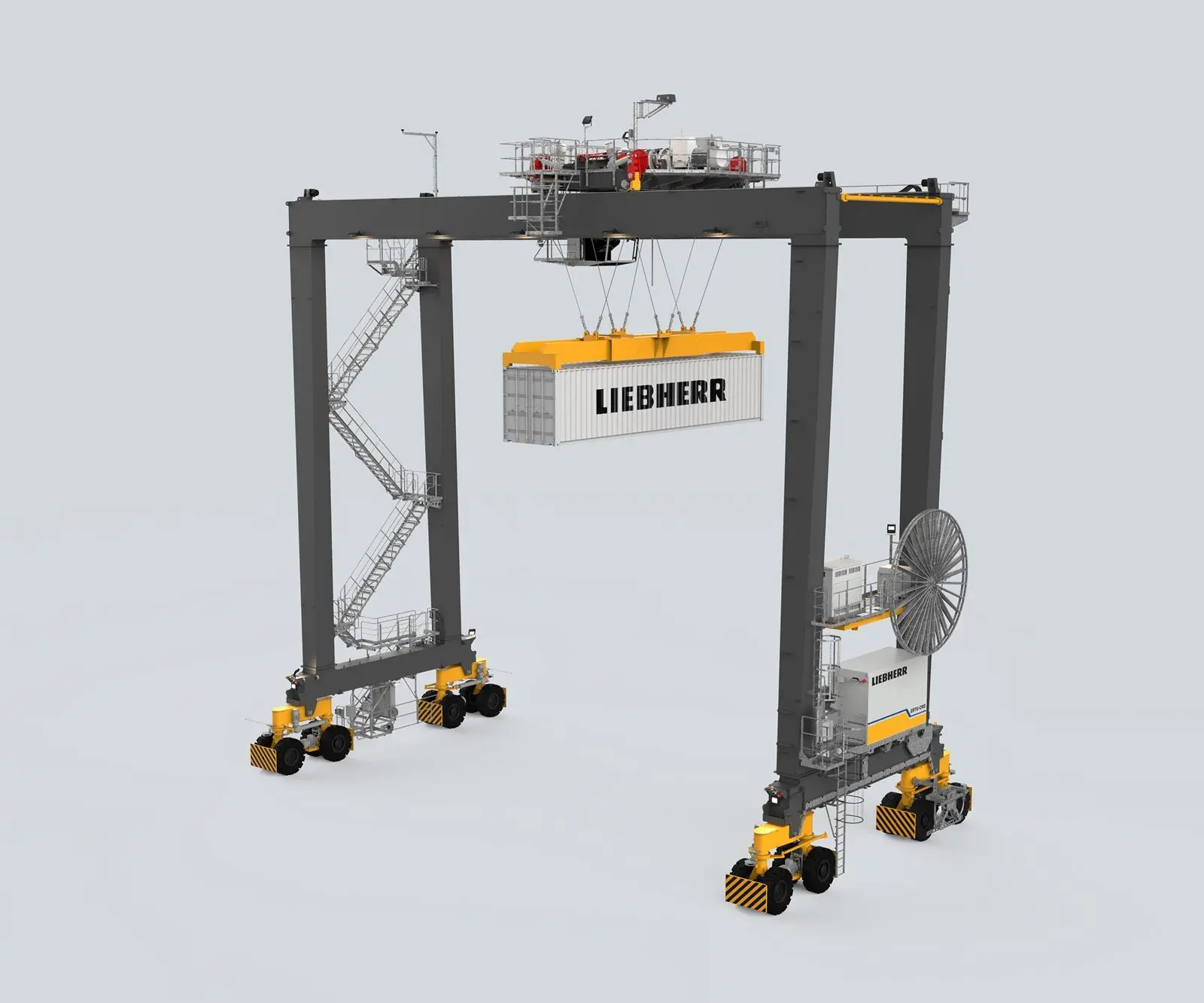
Liebherr: Liebherr has launched its next generation RTG cranes that include electric and hybrid power. The five base models are: RTG-CB (Electric, Conductor Bar): a fully electric RTG with a continuous power supply, requiring fixed conductor bar infrastructure; ERTG-CRD (Electric, Cable Reeling Drum): a fully electric RTG with a flexible power feed, utilising a reeling drum for cable management; RTG-HB (Hybrid, Battery): a diesel-electric hybrid RTG utilising battery energy storage, designed for optimal fuel saving and emissions reductions; RTG-VSG (Variable Speed Genset): a fuel-efficient diesel RTG with optimised performance; RTG-HC (Hybrid, Capacitor): a hybrid RTG utilising super-capacitors for energy recovery in combination with a smaller diesel generator. Liebherr notes that this offers the lowest capex investment and fastest pay-back period for a hybrid system. The Switzerland-headquartered company says that sustainability and flexibility are the key drivers in the range. Charlie McCarthy, MD-Engineering, Liebherr Container Cranes, states: “…Our electric RTGs operate with zero local emissions while our hybrid models deliver exceptional performance alongside significant reductions in emissions, running costs and maintenance.” He adds that Liebherr’s proprietary software enables advanced simulations and energy modelling, predicting fuel and energy consumption, for various power system configurations based on clients’ specific operational scenarios.
MITSUI E&S Co., Ltd: MITSUI E&S Co., Ltd has converted an RTG crane to a hydrogen fuel cell system at Yokohama’s Minami-Honmoku Terminal, as part of Japan’s Carbon Neutral Port initiative. Delivered to Utoc Corporation in September 2023 as a near-zero-emission diesel-electric unit, the RTG has now had its diesel generator replaced with a hydrogen fuel cell power pack. The retrofit was contracted in January 2024 by the Ministry of Land, Infrastructure, Transport and Tourism’s Kanto Regional Development Bureau. Hydrogen refuelling is being provided by Taiyo Nippon Sanso using a mobile hydrogen station, with real-time operational data being delivered. The demonstration, which was scheduled throughout 2025, is set to inform regulatory reforms and technical standardisation by the end of this year. The project comes on the back of Japan-headquartered MITSUI E&S Co.’s deployment of the world’s first hydrogen fuel cell RTG at the Port of Los Angeles in 2024.
SANY Group: The arrival of 28 fully electrified equipment units, including seven RTGs, at APM Terminals Suape marks a major step forward in the development of Latin America’s first fully electrified port facility. Delivered by SANY and representing an investment of USD$47 million, the equipment enables the start of the technical phases that will prepare the terminal for operations at the Governador Eraldo Gueiros Industrial and Port Complex (Suape) in Pernambuco. The RTG cranes will be operated remotely from dedicated control rooms. The equipment incorporates advanced technology, including precision systems that support accurate movements and help prevent collisions. The new electric equipment also includes two Remote-Controlled STS Cranes, two reach stackers, two empty handlers, one forklift and 14 terminal tractors.
Related Articles
 TERMINAL OPERATIONS
 DIGITAL
 DIGITAL