![PortStrategy[GreenPort]](https://www.portstrategy.com/wp-content/uploads/2026/09/PortStrategyGreenPort.svg)




Technology winners
World ports leaders at the 2021 chainPORT annual meeting discussed new technologies that drive efficiency, solutions to strengthen supply chain resilience and circular economy-related approaches to sustainability in ports.
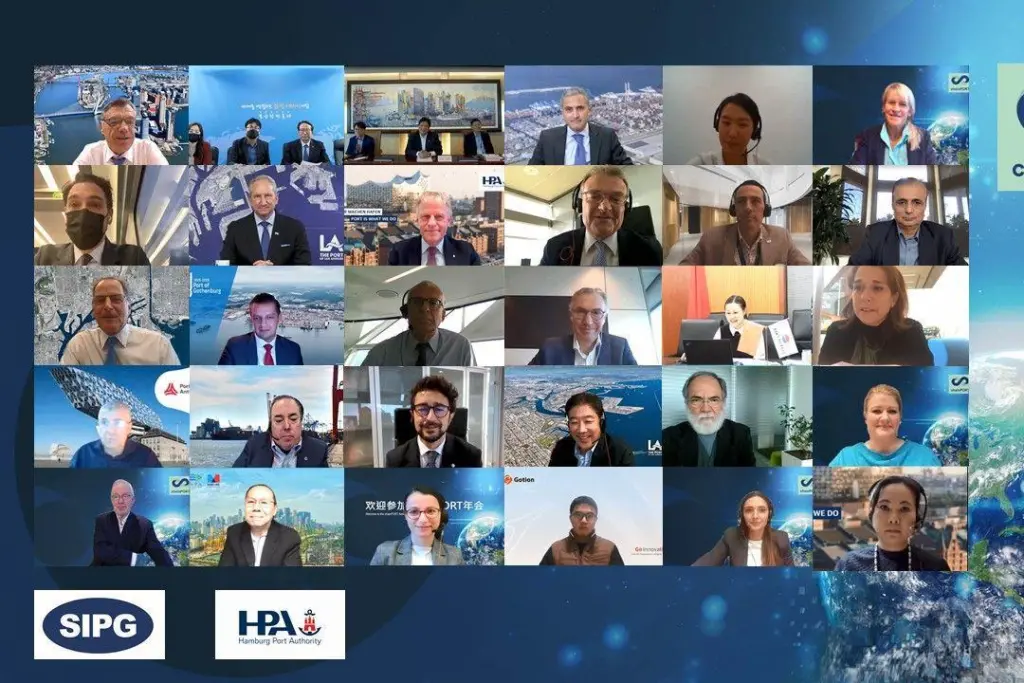
At the seventh meeting, hosted virtually by Shanghai International Port Group (SIPG) and Hamburg Port Authority (HPA), managing director of Nezha Shipping – Port Technology, Huang Heng introduced the audience to a pioneering smart ports project about optical networking technology for centralised remote control in ports. This has been implemented in partnership with SIPG and Huawei.
Remote operators can control a variety of heavy port equipment at multiple locations from a single point. This has numerous advantages, such as increased efficiency in terminal operations, reduced commute times for staff, better predictability of personnel availability, and increased attractiveness of the workplace. The introduction of this technology goes hand in hand with a change in the profile of the future port workforce and the skills that will be needed in ports.
Alex Yan, president of SIPG, emphasised: “SIPG is continuously committed to the development of a smart, green, efficient and sci-tech-driven port by means of lean management, technology innovation, and digitalisation.”
MOZART traffic management
In line with new trends and technologies used to efficiently operate the port, Tencent Holdings Ltd. and Fujitsu Ltd. presented their advanced path to quantum computing and its application in different industries.
Dr Joseph Reger, CTO at Fujitsu Ltd, and Jens Meier, CEO at Hamburg Port Authority, shared first-hand insights on MOZART (Mobility OptimiZation and Analysis in Real Time), a joint project for traffic management. The MOZART system not only provides an overall view of the port transport network, but also enables network-wide traffic light coordination in order to stabilise traffic flow.
Meier said: “Quantum computing is not yet fully mature; however, quantum-inspired technology already offers viable solutions for ports – in Hamburg we have already been able to prove that it is of great value to our daily business.”
Enabling the circular economy
The meeting also addressed the role of ports as ideal locations for the fostering of circular economy projects.
According to keynote speaker, Dr Nick Vyas from the USC Marshall School of Business, the proximity to large urban centres makes ports important enablers, with the ability to impact the business strategy of many companies located in the port area or associated with port activities.
With reference to this, Volkswagen’s Chinese technology partner, Gotion High-Tech, showed an example of its battery recycling projects and its journey to offer zero-emission solutions to ports and a wide range of industries.
Gene Seroka, executive director at the Port of Los Angeles, stated: “Port ecosystems can be instrumental in expanding the circular economy and helping society break away from the ‘take-make-waste’ product cycle. Our ports are front and centre in a pandemic-induced consumer buying spree of historic proportions. The circular economy is about maximising the recycling or regeneration of the waste from those discarded goods and materials, and ports can be change agents in helping to achieve that objective.”
Keynote speakers from Jungheinrich AG, and Orient International (Holding) Co. Ltd. presented their strategies for ensuring a secure and resilient supply chain. Intermodal ports, quality data and transparency were among the main topics addressed during these discussions.
chainPORT is a multilateral partnership of the world’s leading ports that aims to leverage the latest developments in technology and realise the vision of a smart, interconnected and digital port-ecosystem.
Related Articles
 TERMINAL OPERATIONS
 DIGITAL
 DIGITAL