![PortStrategy[GreenPort]](https://www.portstrategy.com/wp-content/uploads/2026/09/PortStrategyGreenPort.svg)






Air pollution monitoring container sets sail
An air pollution-monitoring smart container with solar panels to determine how much power a container can generate during any given journey will leave the Port of Rotterdam for the first leg of a two-year data-collecting mission around the world.
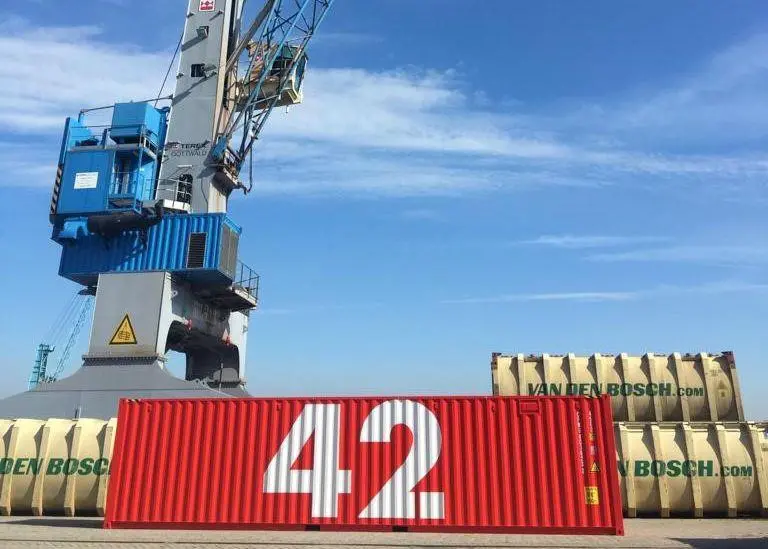
During this journey, the hyper-smart Container 42, which houses an array of sensors and communications equipment – will be measuring changes in parameters like vibration, slope, position, sound, local air pollution, humidity and temperature. The solar panels fitted to the container can be used to determine how much power a container can generate during a given journey by ship, train or truck.
Project partner, the Port of Rotterdam Authority, said: “The collected data provides insight into the challenges faced during transport and logistics and contributes to the development of a so-called ‘digital twin’ for the port: a digital representation of the actual, physical port area.”
IoT foundations
The foundations for the project are formed by the Port of Rotterdam Authority’s existing Internet of Things (IoT) platform. The port authority uses this cloud-based platform to collect and process data coming in from sensors installed throughout the port area.
This provides users with real-time information about the local infrastructure, water and air quality, among other things – allowing the port of Rotterdam to further improve its provision of services.
The digitalisation of Rotterdam’s port services is expected to contribute to the even safer, swifter and more reliable forwarding of cargo. At some point in the future, it will also enable Rotterdam to accommodate autonomous shipping in its port area.
Other partners working on the Container 42 project include IBM; Cisco; Esri; Axians; Intel; HyET Solar; Van Donge & de Roo; Awake.ai; Betta Batteries; Simwave; Advanced Mobility Services; and Kalmar and Shipping Technology.

Related Articles
 ALTERNATIVE FUELS GREENPORT