






EcoPorts entering a new era
Since 1 January 2011 the EcoPorts Foundation dissolved and EcoPorts is now officially integrated within the structure of the European Sea Ports Organisation (ESPO).
The integration marks the start of a new era regarding port environmental management and sustainability in Europe. The European port sector has achieved significant progress in the field of environmental management during the last 15 years and this has been largely driven through the long standing close cooperation between ESPO and EcoPorts. The new way forward is warmly welcomed by all parties involved as it is expected to drive further the achieved progress and the sector’s efforts through the principle of voluntary self regulation.
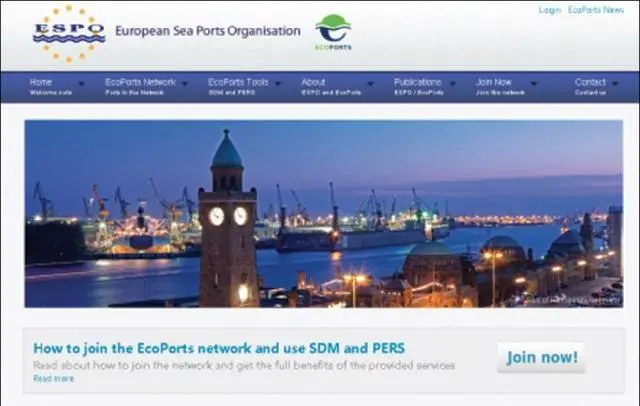
During the GreenPort Conference in Venice (23-24 February 2011), ESPO officially launched the new EcoPorts portal (www.ecoports.com). The portal marks the integration of EcoPorts within the structure of ESPO. Through this website, ESPO manages the EcoPorts network of ports and offers the opportunity to port authorities within its broad membership to use the well-established EcoPorts tools, Self Diagnosis Method (SDM) and Port Environmental Review System (PERS). SDM and PERS have been updated and re-launched as part of the services ESPO offers to its members. EcoPorts membership fees ceased to exist and the EcoPorts tools can now be used by all ports that are part of the broad ESPO membership.
The new EcoPorts portal incorporates SDM as an online-based tool and provides visibility and credit to port authorities that achieve and maintain an “EcoPorts port” status. The latter is achieved by any port registering within the new system and completing the online SDM checklist, contributing in this way to the up-to-date maintenance of the European benchmark of performance in port environmental management. Furthermore, the “Ecoports port” status allows ports to access, implement and get certified by PERS, the only port sector specific environmental management standard.
“ESPO is in a unique position to encourage best practice among its member ports and to set challenging targets.”, said ESPO Secretary General Patrick Verhoeven, “The integration of EcoPorts within the structure of ESPO and the new website form part of that process. We are convinced that the new system will further trigger the interest of ports to join the EcoPorts network and use the available tools and services. In this way we can step up the significant progress that has been achieved by the European port sector in the field of environmental management during the last 15 years.”
ESPO maintains the EcoPorts name and brand and will continue promoting the EcoPorts guiding principle of sharing environmental experiences and best practices between port professionals in Europe. Under the new set-up ESPO will continue working in close cooperation with Cardiff University and Lloyds Register, the main partners involved in the processing and analysis of SDM and PERS respectively.
The steps that a port needs to follow in order to join the EcoPorts network within ESPO are outlined below:
- Registering at www.ecoports.com: The port creates an account and receives a password to access the EcoPorts portal pages.
- Completing the port profile section: The port provides some generic factual information and gains access to the SDM checklist.
- Completing the SDM checklist online: The port provides information on the organisation and performance of its environmental management, contributing in such way to the up-to-date maintenance of the European benchmark of performance. By completing SDM the port achieves an “EcoPorts port” status and is provided visibility and credit by ESPO through the portal. In addition, the port obtains access to PERS, the only port-specific environmental management standard that it is fully recognized by ESPO and may be independently certified by Lloyd’s Register. A completed SDM has a validity period of 2 years. After this period the port needs to repeat this step in order to maintain its “EcoPorts port“ status. In order for a port to get the full benefits of the provided services, ESPO highly recommends that the following additional steps are taken:
- Submitting the SDM for analytical review: The completed SDM is reviewed independently and in strict confidence by the ESPO / EcoPorts collaborating experts. The review includes: (a) a projection of the port’s answers against the European benchmark of performance, (b) a GAP analysis between the port’s current organization and performance and the requirements of established environmental management standards (ISO 14001 and PERS), (c) a SWOT (Strengths, Weaknesses, Opportunities, Threats) identification of the port’s environmental management performance, and (d) an analytical report containing expert’s advice and recommendations on the current status and the further development of the port’s environmental management program.
- Downloading the PERS documentation and implementing the PERS methodology: PERS is the only port-specific environmental management standards and it is fully recognized and promoted by ESPO.
- Applying for PERS certification: Once PERS is implemented, the port can apply for PERS certification by ESPO / EcoPorts independent collaborating partner, Lloyd’s Register. Subject to successful assessment, the port receives a PERS certificate with a validity period of 2 years.
Antonis Michail, Policy Advisor and EcoPorts Coordinator at the European Sea Ports Organisation (ESPO).
Related Articles
 ALTERNATIVE FUELS GREENPORT