![PortStrategy[GreenPort]](https://www.portstrategy.com/wp-content/uploads/2026/09/PortStrategyGreenPort.svg)




Electric trucks help cut port emissions
A first-of a kind US$11m pilot project with zero-emission fuel cell electric yard trucks is preparing to launch to help California ports reach their environmental goals.
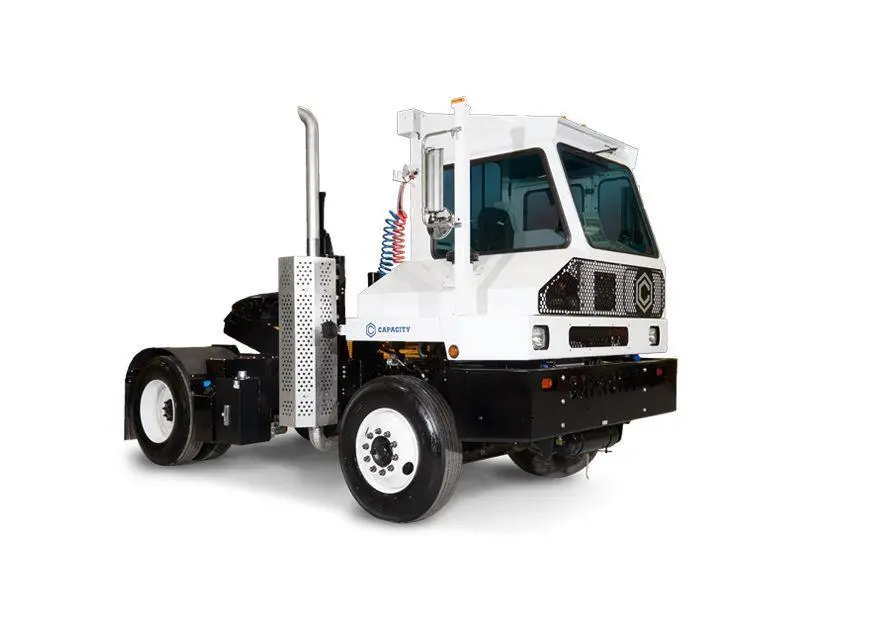
For 16 months, US-based research, development and training organisation GTI and partners have been designing and assembling the terminal tractors in a project called Zero Emissions for California Ports (ZECAP) that will assess vehicle operation in a demanding, real-world cargo-handling application. The hydrogen fuelling equipment is in final assembly and due for installation this spring, along with the delivery of trucks. Poject partner TraPac will operate two fuel cell electric yard trucks for 12 months.
“We designed the project to maximize the time the trucks will be in service,” said Bart Sowa, GTI’s project manager. “TraPac is a 24-hour operation. The fuel cell yard trucks are expected to operate for two shifts and refill in minutes, with minimum disruption to TraPac’s operation. We’ll collect and analyze real-time operating data to evaluate safety, reliability, efficiency, and ability to meet operational requirements.”
The trucks are Capacity of Texas Trailer Jockey Series TJ 9000 gliders configured with BAE Systems electric drive powertrain capable of peak propulsion power of 200kW and Ballard Power Systems FCveloCity-HD85 85kW proton exchange membrane fuel cell. The Capacity truck can store 9.1kg of hydrogen at 350 bar and will fill at an onsite Hydrogen Technology & Energy Corporation (HTEC) hydrogen fuelling station with 182kg storage capacity. Other project partners are Frontier Energy and ZEN Clean Energy Solutions.
This project is a step toward achieving the Ports of Long Beach and Los Angeles goal of using 100% zero emission cargo handling equipment by 2030.
The California Air Resources Board (CARB) funded the project through a grant.
Related Articles
 ALTERNATIVE FUELS GREENPORT