

Focusing on the environment
Copenhagen Malmö Port (CMP) will play host to the GreenPort Congress in 2015. Environmental issues have long been in focus at the Danish-Swedish port operator, which is the largest in the Öresund region.
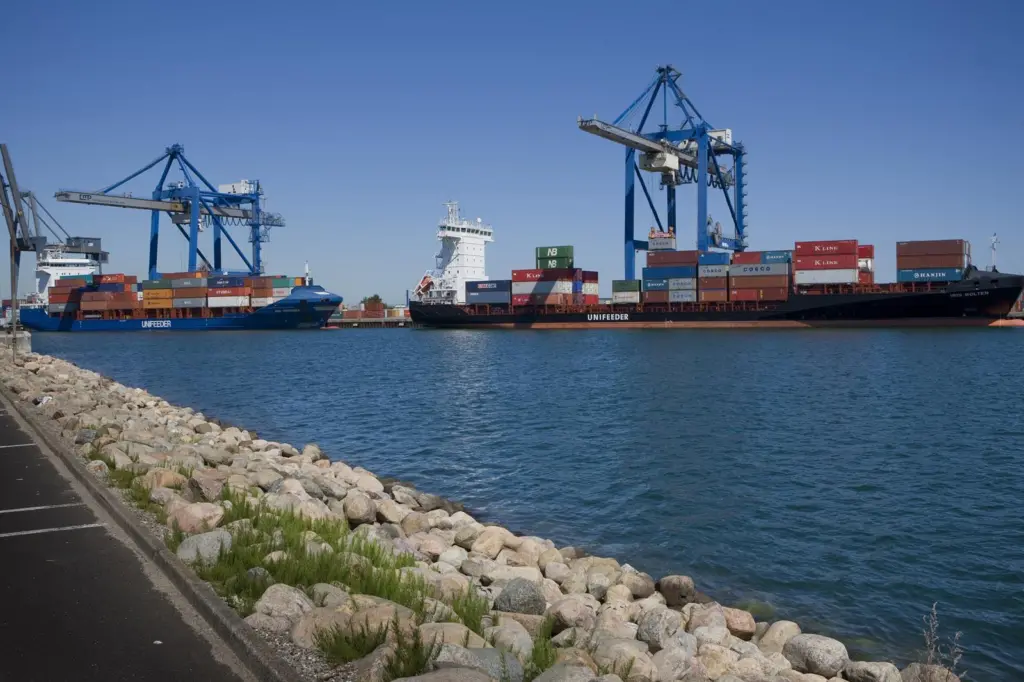
CMP’s work on sustainable development is focused on managing noise, emissions, energy consumption and now also climate adaption.
Copenhagen Malmö Port (CMP) is unusual in that it is a port operator based in two countries – Denmark and Sweden. The company was formed in 2001 through the merger of the ports in Copenhagen and Malmö. The Öresund Bridge between Denmark and Sweden was opened at the turn of the millennium. It was the start of a broad integration between the countries, including trade and industry, the housing market, education and culture.
”We were a part of the integration in the Öresund region, with 4 million consumers. And we can be pleased that CMP is usually viewed as one of the most successful examples of regional integration”, says Johan Röstin, CEO of CMP.
A full service port
CMP is a full service port which receives all types of freight and ships, including RoRo and container traffic, car imports and liquid and dry bulk. The terminals handle freight including consumer goods, oil, grain and scrap metal. In addition, CMP has a lot of cruise traffic in Copenhagen, Northern Europe’s leading destination.
Its strategic location in Öresund has led several companies to making CMP their hub for operations in Northern Europe. CMP is Scandinavia’s largest car port, where 15 or so car manufacturers distribute new cars onward to customers in Scandinavia, the Baltic States and Russia. CMP is also a hub for oil handling and distribution of steel products.
”Together with our Danish-Swedish owner, we have made substantial investments in order to ensure growth remains strong”, says Mr Röstin. ”During 2011 a new container and RoRo terminal was opened in Malmö, where we have invested SEK 900 million. In spring 2014, a new cruise terminal was put into operation in Copenhagen.”
Focus on sustainable development
When Petra König, CMP’s environmental director, presents the company’s environmental agenda, water quality, land issues and noise come at the top of the list. CMP has been engaged with these issues for a long time and they are linked to a number of improvement initiatives and control programmes. Energy consumption is another major issue.
“We have put a lot of efforts into reducing diesel consumption in our machinery, as well as cutting electricity consumption. Today green electricity from solar, wind or hydroelectric power is used,” she says.
A look back over CMP’s environmental activities shows that it has reduced its impact on the environment in Copenhagen and Malmö in various ways. One important explanation is that port operations have been moved further out from the central parts of both cities.
”A relevant example is our new cruise terminal in Copenhagen, which has enabled parts of the cruise operation to be moved out towards the sea. This reduces problems of noise and emissions”, Ms König says. ”Waste water from the cruise liners is now handled at the terminal in permanent facilities that are linked to sewage works in Copenhagen.”
When the new port in Malmö was put into operation in 2011, the RoRo and container operations were moved further away from the city centre, thus removing the bulk of the road transport from Malmö’s centre. A move that has been appreciated by many of Malmö’s residents. At the same time, the RoRo ships’ turn-around-times have been cut by 30 to 40 minutes, reducing noise and emissions to water and air.
“We have also cut emissions from our machines, for example, through installing particle filters. CMP has also focused on EcoDrive training, which has paved the way for more effective and fuel-efficient driving. In addition, we have invested in machinery with a lower fuel consumption”, she adds.
Review of environmental objectives and policy
A review of environmental objectives and policy is currently underway. Water and land issues, noise and energy consumption remain important, but the work on climate adaptation is increasing in significance.
”It involves preparing for extreme weather involving strong winds or floods”, says Petra König. ”Our ports are part of a long delivery chain. We consequently have to secure our part of this chain and ensure that the quays are always functional and that the port cannot be knocked out.”
In part, environmental goals and policies will be drafted in a new way to include interviews with external stakeholders, eg authorities, customers and suppliers.
”This will enable us to take account of expectations from the surrounding world”, she concludes. This can contribute to environmental measures becoming even more strategic in the future. The importance of stakeholder perspectives is also emphasised in the ISO standard, which is relevant as CMP is undergoing a recertification process for ISO 14001 during 2015.
Related Articles
 ALTERNATIVE FUELS GREENPORT