![PortStrategy[GreenPort]](https://www.portstrategy.com/wp-content/uploads/2026/09/PortStrategyGreenPort.svg)






Genoa Port Environmental Energy Plan
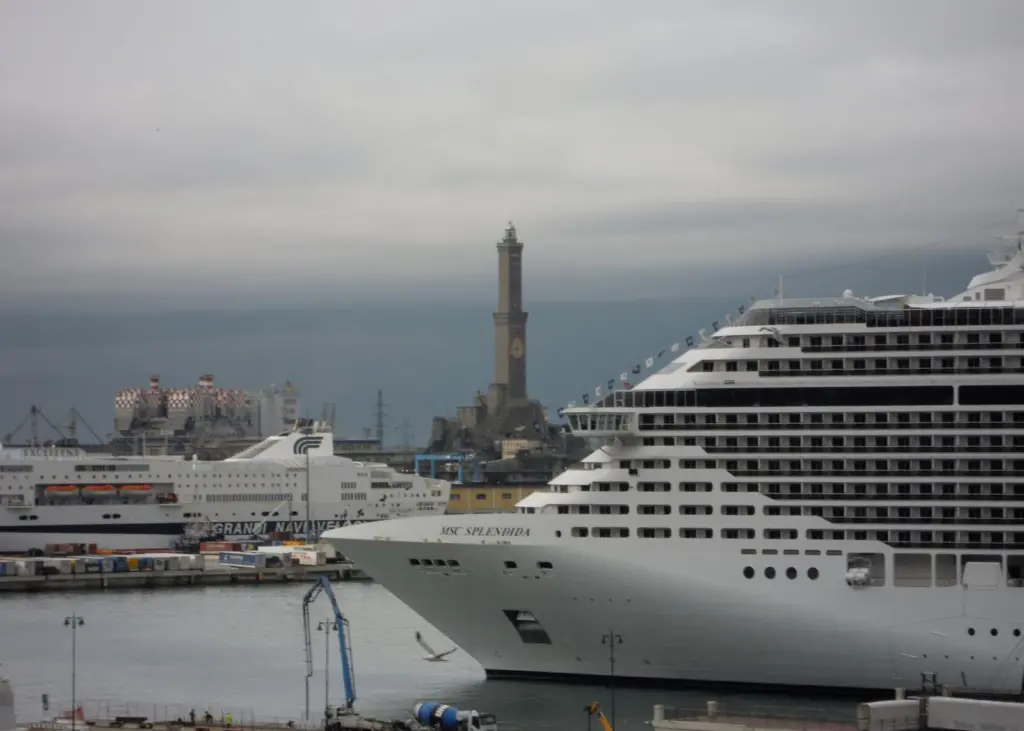
The port of Genoa reduces CO2 emissions by 20,000 tonnes every year thanks to €60m worth of investments in new energies – all part of the goal of the new Port Environmental Energy Plan (PEAP), says Luigi Merlo, President of Genoa Port Authority.
The PEAP has been developed by Genoa Port Authority in collaboration with the Province of Genoa and Muvita foundation,
The plan is a unique instrument in Italy to promote renewable energy and energy efficiency in port areas. Thanks to its innovative character, PEAP has been recognised as the official partner of the Sustainable Energy Europe Campaign by the European Commission.
The plan aims to convert the port of Genoa into a modern ‘green port’ thanks to new systems for solar, photovoltaic and wind power production and for quay electrification to be installed in port areas, with a potential reduction of about 20,000 tonnes of CO2 emissions by 2020.
Quay electrification
Quay electrification in the ship repair area of the port of Genoa will be the first step to prevent moored ships from running their auxiliary engines for a long time, thus emitting large amounts of greenhouse gases in the heart of the city (there are 12 berthing points), and to considerably reduce noise emissions in the area.
Genoa Port Authority has already included the project – co-financed by Liguria Region, the Ministry of the Environment and Genoa Port Authority for a total value of about €15 million – in its environmental policy programme, expecting its completion by 2013.
PEAP also provides a wind power plant with 39 towers on the outer breakwater, 29 photovoltaic systems producing 5,600k and three thermal collectors on the roofs of buildings in the port area.
Several applications for the installation of photovoltaic panels on the roof of buildings and warehouses have already been granted, in order to produce energy from solar radiation.
Geothermal and hydrothermal energy
New projects for the exploitation of geothermal and hydrothermal energy are currently being assessed, with preference being given to projects with lower impact on port infrastructure. These projects include the installation of plants able to provide both heating and cooling in buildings by using the temperature difference between the ground and the air.
At the port of Genoa, quay electrification will reduce CO2 emissions by almost 10,000 tonnes every year, the wind power plant by 6,000 tonnes, the photovoltaic systems by 3,600 tonnes, and solar panels by 100 tonnes every year.
PEAP is a comprehensive plan of action developed by Genoa Port Authority and the Province of Genoa against global change, completely financed by internal sources and assigned to Muvita foundation with the support of the ATS Muvita Energie Intelligenti.
The planned investment for the electrification of the quays is €15 million, €20.1 million for the windfarm, €24.4 million for the photovoltaic systems and €0.4 million for the solar panels, with a total amount of €59.9 million for works which could be immediately undertaken.
In the port of Genoa there are also many large areas where energy related renovation could be undertaken, with favourable effects both for the firms operating and consuming energy in those areas, and for the environment of the entire province.
Port Environmental Energy Plan
The PEAP is composed of the following tasks:
Part 1 – Assessment and planning
a) Regulatory framework
b) correlations with other planning tools within the port
c) environmental framework
d) condition of the buildings
e) development of guidelines for works
f) strategic environmental assessment
g) planning methods and choices
Part 2 – Communication with stakeholders
h) PEAP website and other material
i) presentation meetings (conferences)
j) immediate contact on the dealers
k) reports for media and local/national press office
l) information point dedicated to port operators
The pPort Environmental Energy Plan (PEAP) is focused on the following objectives:
- assessment of the potential in terms of energy production from renewable sources and energy saving but also a thorough analysis of the feasible works in the immediate future
- development of a dedicated operational software for managing and monitoring day-to-day activities related to the implementation of the plan
- realisation of a specific regulatory framework for permits issuing (i.e. the ‘guidelines for the implementation of the projects for energy redevelopment and improving energy production within the port of Genoa’)
- agreed upon plan with the involvement of local stakeholders
The PEAP guidelines provide for the following technologies:
- On shore wind energy
- Solar, thermal and photovoltaic energy
- Biomass energy
- Geothermal and hydrothermal energy
- Wave power
- Cogeneration and trigeneration
- Improvement of energy efficiency of buildings
- Improvement of energy efficiency of public lightning
- Improvement of efficiency of cargo transport
- Quay electrification
- Other technologies and projects applicable within the port (green energy, CO2 segregation, purchase of carbon credits)
- Electrical mobility
Genoa and the port
The PEAP was presented to the members of the Genoa Smart City Association in Palazzo Tursi (seat of the City Council) on 19 July 2011. However, a close collaboration with the association had already begun a few months earlier, when the city’s approach to becoming a ‘smart city’ was identified in its nature as a port city.
In this respect, it should be reminded that the port is indeed one of the four main objectives of the ‘Genoa Smart City’ project – undertaken by the association of the same name of which Genoa Port Authority and Province of Genoa and Muvita Foundation are members – which also includes energy and networks, buildings and sustainable mobility.
Last February, the projects first drafts related to the port were presented by the Genoa Smart City Association at Palazzo San Giorgio (home of Genoa Port Authority). Such projects relate in particular to the issues of the mobility of people in the port area and port logistics.
Implementation of the Port Environmental Energy Plan
All projects concerning the installation of systems for the production of energy from renewable sources or energy efficiency of buildings will be subject to the assessment of a specific technical committee. The assessment takes account of the criteria included in the guidelines and regulations related to it. However, all projects must comply with national, regional and provincial regulations.
All projects, whatever the form of funding, will be assessed also on the basis of the type of use of the energy produced or the amount of emissions reduced per Euro invested (actual reductions will be counted using the internationally and nationally accepted protocols).
The first projects
With the approval of the PEAT, many projects relating to the different scopes of the plan have been launched.
Besides the quay electrification in the ship repair area (works by Genoa Port Authority already tendered and assigned), many private operators have undertaken projects for the production of energy from renewable sources and energy saving.
The first project completed was the installation of a 190kWp photovoltaic system (200,000 kWh) at terminal Messina, enabling the production of electricity used fully in the company’s production cycle.
Many other projects have been approved by the Technical Committee, including the requalification of buildings to reduce their environmental impact and removal of asbestos; the installation of photovoltaic and solar thermal panels both on industrial areas and on other buildings (e.g. hotels) and, the paving of large areas to be devoted to parking lots with special photovoltaic roofing.
Related Articles
 ALTERNATIVE FUELS GREENPORT