![PortStrategy[GreenPort]](https://www.portstrategy.com/wp-content/uploads/2026/09/PortStrategyGreenPort.svg)

Gothenburg sets goal to cut emissions by 70%
The Port of Gothenburg has joined forces with three transport companies to speed up the transition to fossil-free fuels in the transport sector and cut emissions linked to the port by 70% by 2030.
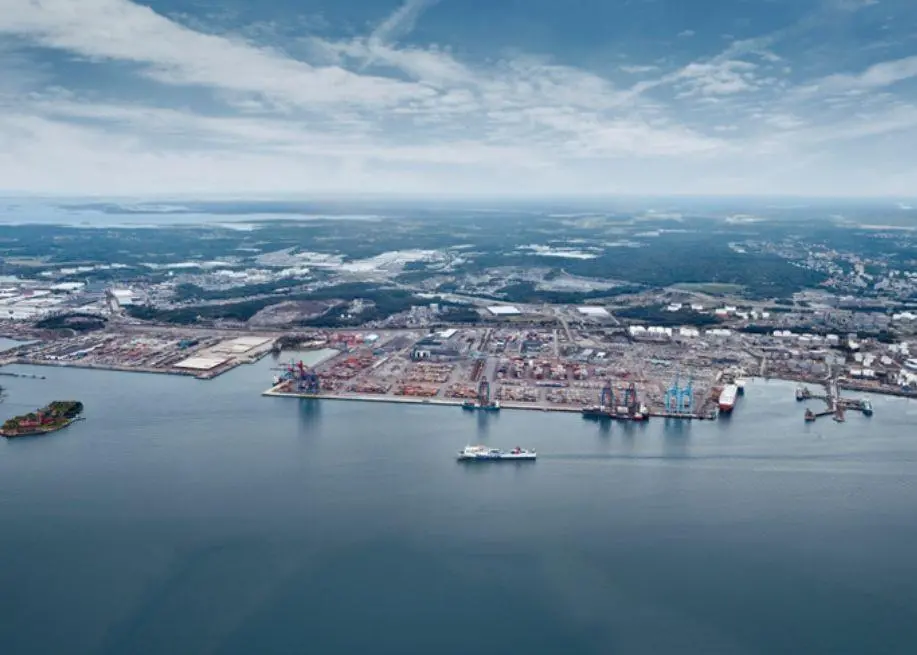
In addition to the Port of Gothenburg, the ‘Tranzero Initiative’ venture comprises Volvo Group, Scania and Stena Line. It is focused on the 1m truck transports and the 55,000t of carbon emissions generated from road transports to and from the Port of Gothenburg each year. The initiative also includes electrification of sea transport.
“No single organisation or individual holds the key to meeting the challenges ahead of us. Collaboration is crucial and we are pleased to bring on board two of the world’s largest truck manufacturers and the world’s largest ferry company. With our collective expertise, breadth, and market presence we can make a real difference,” said Elvir Dzanic, Gothenburg Port Authority chief executive.
Freight flows mapping
The companies involved will introduce a series of interlinked measures designed to accelerate the switch to fossil-free fuels. This task has already commenced with a needs analysis and mapping of freight flows as part of the commitment to offering the market the right products and establishing a fossil-free fuel infrastructure to support this development.
Gothenburg Port Authority will produce the necessary infrastructure and access to fossil-free fuels for heavy vehicles, including electric power, HVO, biogas, and hydrogen gas.
Volvo and Scania will put commercial offerings in place for their heavy truck customers, ensuring that in time land transport becomes fossil free in accordance with the goals laid down by the port.
Stena Line will also have a key role to play by ensuring new fossil-free vessels are brought into service on the Gothenburg-Frederikshavn route by 2030, moving from vision to reality with its battery-powered vessel concept Stena Elektra.
Related Articles
 ALTERNATIVE FUELS GREENPORT