![PortStrategy[GreenPort]](https://www.portstrategy.com/wp-content/uploads/2026/09/PortStrategyGreenPort.svg)






Gothenburg sniffs out sulphur emissions
As shipowners work hard to keep in line with the IMO’s new stringent regulations, emissions at the Port of Gothenburg have dramatically fallen by 80% since the beginning of the year.
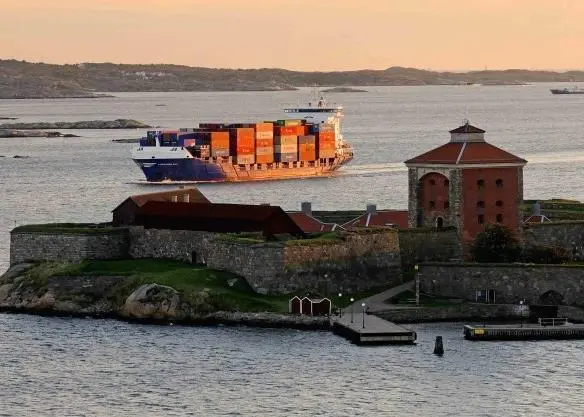
Under the new regulations that came into effect on 1 January 2015, the sulphur content in fuel was reduced from 1% to 0.1% in the short-sea shipping area around Gothenburg – the Baltic, North Sea and English Channel.
Measurements of the emissions plume from around 200 passing ships were taken by a ‘sniffer’ located at the Älvsborg Fortress, in the fairway leading in to the port. Of these, 80% were approved, while for 20%, the sulphur emissions were too high.
“It is incredibly positive to see that the new rules are having such an effect and that sulphur emissions are falling,” said Edvard Molitor, senior manager, environment, Port of Gothenburg.
Developed by Gothenburg’s Chalmers University of Technology and Vinnova, the Swedish Environmental Protection Agency and Gothenburg Port Authority, the sniffer measures the sulphur and carbon dioxide levels in the gas emissions, therefore revealing the sulphur content in the fuel.
Despite the recent drop in emissions, the port says there’s still uncertainty regarding the control system for vessels that are failing to comply with the rules. “The industry has reason to be concerned that less serious shipping companies will not follow the rules and that this will lead to a distortion in competition,” Mr Molitor added.
The port says it hopes sniffer technology will be used to check compliance with the Sulphur Directive from now on.
The Port of Gothenburg is the largest port in the Nordic region, seeing 30% of Swedish foreign trade passing through the port as well as 60% of all container traffic.
Related Articles
 ALTERNATIVE FUELS GREENPORT