![PortStrategy[GreenPort]](https://www.portstrategy.com/wp-content/uploads/2026/09/PortStrategyGreenPort.svg)




Making EFFORTS to be good neighbours
The EFFORTS research project is intended to permit ports to strengthen their role as environmental protagonists and to improve trust of near-by residents
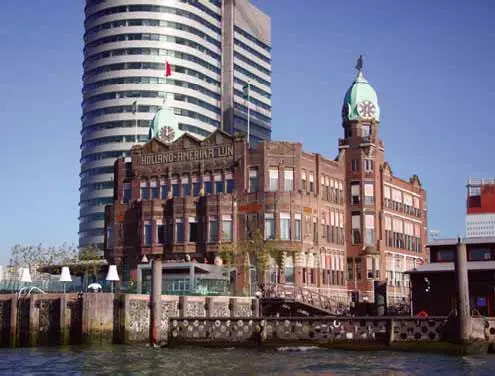
A sea-view is a much sought-after attribute, capable of increasing property value meaning it is not really surprising that landowners are converting unused warehouses into new flats – to sell at high prices. However, when the idyllic sea views of blue water dotted with sailing boats, a fresh sea breeze and the sound of seagulls turn out to be views of gantry cranes, the smell of tanker berth and the noise of van carriers, residents can feel aggrieved.
With more residents living in the vicinity of ports, the deep-set issues regarding this co-existence are becoming ever more important. Such issues cannot be ignored, and it falls to the port to ensure good relationships are maintained. Attempts to do so may involve improving social relationships by hosting children’s parties within the port, or by communicating the key economic role a port plays and the need for close cooperation required to minimise annoyance. The port industry is well advised to become an environmental protagonist instead of fighting the image of an industry trying to hide environmental problems. Certainly this must be communicated to the public to build mutual trust and confidence between society groups, especially nearby residents, and the port industry.
EFFORTS project
“Effectiveness” and “Efficiency” are the key words for EFFORTS, a project co-funded by DG Research within the 6th Framework Programme on Research, Technical Development and Demonstration. The three thematic areas are:
• ‘Navigation in Ports’ led by the Port of Dublin
• ‘Port Environment’ led by the Port of Le Havre
• ‘Port Organisation’ led by the Port of Gijón. As a cross-project activity ‘Training, Education and Human Resources Development’ elucidates the significance of the further development of skills, knowledge and attitudes in understanding advanced port operations. Ports are complicated systems, hosting many facilities. In order to make activities transparent to people at all levels for processes, a process-orientated system approach was developed based on the process standards of ISO CEN 19439 and 19440 which allows treating processes as objects, allocating attributes and defining systems relations, thus also allowing the integration of environmental process aspects into the overall system.
It is understood that the port environment is a crucial production and image factor of a port. Energy management, ships’ ballast water, diluted aluminium from cathodic protection of port steel constructions, port air quality tackling VOCs and noise annoyance are the key words to describe EFFORTS work related to the port environment.
The overall topic for the environmental tasks in EFFORTS is “prevention is better than cure” which means pro-actively investigating all possible environmental threats before others find out and forcing re-active measures, which are always more expensive than prevention. The EFFORTS project activities are based on existing knowledge and aim at improving the state of the art. The financial restrictions and project schedule force us to focus on a few issues selected by the participating ports:
Energy Management
Advanced terminal operations, especially those of container operations including large numbers of reefer containers, consume high quantities of energy, which is not only a cost factor but also a question of CO2 and emissions.
Under the EFFORTS umbrella, a team works to model the port energy consumption and to map the consumption level and costs per type of operation and site. In order to locate energy production as close as possible to consumption, renewable energy sources compatible to ports will be investigated and by means of sophisticated simulation, correlated to the port energy consumption related to time and operation. Unexpected consumption peaks is one of the main problems in energy management and this will become even more difficult once cool ironing comes into practice.
Ballast Water
The background of this research task is the International Convention for the Control and Management of Ships’ Ballast Water and Sediments (International Maritime Organisation) focusing on:
• Identifying harmful aquatic microorganisms in ballast water
• Solutions to eliminate these or, at least reduce negative consequences on the port environment.
Aluminum from steel constructions
In ports, sacrificial aluminum anodes are frequently used to prevent excessive corrosion of steel constructions. The objective of the investigation is to assess the aluminum concentration in the port water and in the sediment and to determine its toxicity against marine organisms. Preliminary results are mostly good news, showing that:
• No significant influence of Aluminium sacrificial anodes dissolution in water was detected
• A low Aluminium contamination in sediments was observed due to port activities, however, this contamination significantly increased close to Aluminium anodes in non-dredged areas. Ecotoxicological tests with mussels (Mytilus edulis) to determine the toxicity against marine organisms and the potential environmental impact of the use of sacrificial aluminium anodes are still going on.
Port Air Quality
This task tackles the problem of volatile organic compounds (VOCs) and sulphur compounds which are emitted as gases through loading or discharging operations of petroleum products and are considered as carcinogenic. The aim is to reduce the global impact of port operations on air pollution.
Noise Annoyance
Alert signals of vancarriers and the bumping of containers on top of one another or on the ground, together with the wide variety of port noises is irritating for nearby residents. It will, however, not be very efficient to combat all kinds of noises in the same way and with the same priority. Further knowledge needs to be gained about the annoyance factor of port-specific noises. The difficulty is that this factor is subjective rather than objective. Rather than just measuring, one must conduct empiric studies to identify annoyances due to noises, their sound power level, frequency and regularity or irregularity. Because the amount of annoyance sensed is subject to individuals, their condition and mood, the results can only match a majority of a certain collective rather than all individuals at all times under all conditions.
Conclusion
Research in port water and air quality and in annoyance due to port noises will, without doubt contribute to making ports better neighbours to nearby residents. There is a risk that the port energy issue may become ambivalent because wind parks for producing clean energy are not always welcome and are often considered visual pollution. However, wind parks are not the only source of clean energy. It is expected that intelligent management of energy will have a larger effect on the carbon-dioxide footprint of a port than that from new sources of energy. The question, however, is not which method to select but to exploit all possibilities to achieve the maximum effect.
A port environmental office needs to act more stringently than any other party. The port must be the first to recognize environmental impacts and immediately initiate measures to investigate and to improve. Those waiting until they are blamed by others are in a defensive position which requires more effort to overcome than taking an early initiative and not impairing the public image. Environmental issues must be placed at the top of a port CEO’s list of tasks and be timely and comprehensively communicated to residents living in the vicinity of the port. The benefits of clever terminal contracts can rapidly become irrelevant once residents succeed in e.g. restricting night operations and a port can seriously be-come constrained by communities when planning an extension. Talking to each other does not solve the problems but it prepares the ground for coming closer to shaking hands.
Related Articles
 ALTERNATIVE FUELS GREENPORT