





Moving towards pollution prevention and environmental excellence
Understanding and managing environmental risks, mitigating impact and measuringperformance are taking greater prominence in the boardroom. With requirementsfor accountability increasing, there are a number of options for port operators,says Emma Goodchild, Manger at ENVIRON.
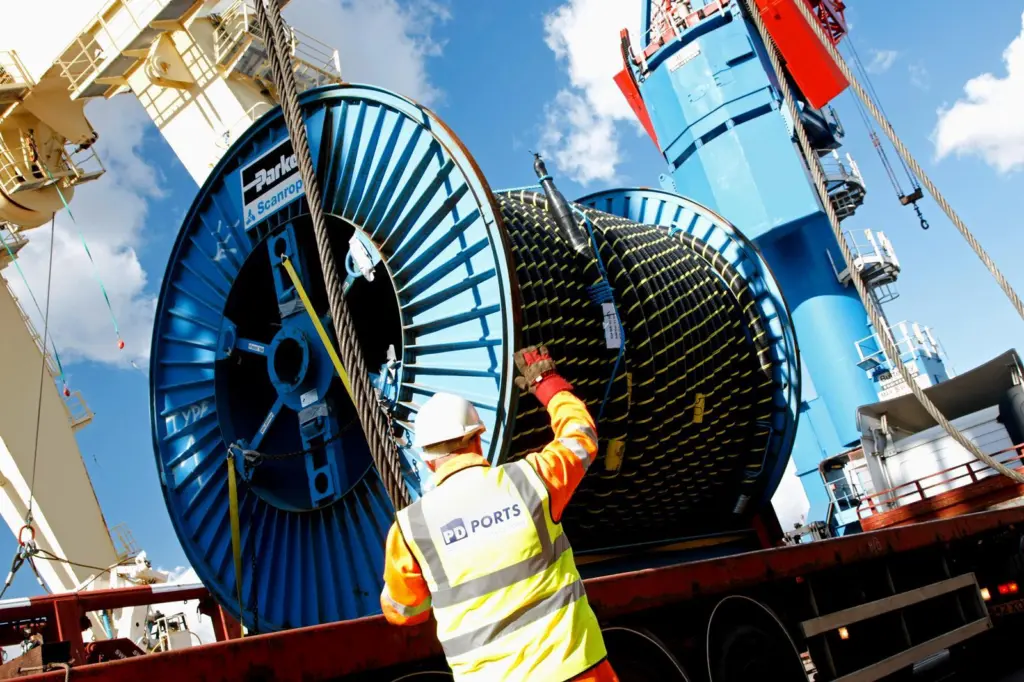
With multiple tenants moving high volume and potentially hazardous cargoes in sensitive locations, it comes as no surprise that the port sector is subject to some of the world’s most stringent regulations.
How do you best understand, manage and mitigate risks? How do you turn regulations into a force for the good of your organisation? And when the worst happens, how do you minimise the effect on your operations, reputation and bottom line – not to mention the environment and the community within which you operate?
Environmental management systems
Leading ports organisations are increasingly using environmental management systems (EMS) as a means of moving beyond reactive compliance programmes and replacing them with proactive systems that promote prevention and environmental excellence. At the same time, regulatory agencies require EMS to be used as part of their approach to enforcement of better compliance.
For ports considering how best to approach measuring and improving environmental performance, there are also three standards to consider, each with its own pros and cons.
The main options for port operators are:
• The International Standard ISO 14001 – Environmental Management Systems – provides a framework for ensuring legal compliance and continual improvement;
• The Eco-Ports Port Environmental Review System (PERS) – while addressing the main requirements of ISO 14001, this is adapted to specifically address port-specific environmental impacts and their effective management and also allows for external certification. The approach is particularly suited to those operating across Europe;
• The Eco-Management and Audit Scheme (EMAS) – in terms of its management system this is based on ISO 14001 but also requires the publication of an externally available environmental report and therefore is suited to those companies who want to formally report on their environmental performance against agreed objectives and targets.
Before deciding to commit to an EMS, however, companies should examine the business case for adopting it and consider which of the three approaches above is best suited to its needs. Board-level presentations are often required and key questions at this stage are strategic and customer focussed. Common areas to be addressed include: what are we trying to achieve? What are our drivers? What do our customers require? Are there other stakeholders to consider such as regulators or the general public? Do we operate purely in the UK, Europe or internationally? Do we want to make our environmental performance publically available?
Regardless of the model to be adopted, the steps in the process are broadly similar:
• Environmental reviews to ascertain the current status of a company’s EMS and identify the gaps between the current level of performance and that required by internal policies or industry standards such as ISO 14001
• Identification and evaluation of environmental aspects and impacts, and determination of those that are significant to the business and hence form the basis of environmental objectives and targets
• Identification of relevant pieces of environmental legislation and what they mean to the company
• Development of internal EMS key performance indicators (KPIs) and track performance against objectives and targets on a regular basis
• Project management of the implementation process across all group locations and facilities. For example, there are EMS toolkits (available both in hard and soft copy) to allow multi-site organisations to collectively develop an EMS
• Development of documented environmental procedures to supplement and strengthen existing practices
• Environmental training using either face-to-face or computer-based methods for areas such as staff environmental awareness training, EMS awareness and implementation training and internal auditor training
• Establishment of an internal audit programme to address legal compliance evaluations and conformance with in-house policies and procedures.
Once this is all successfully in place, a period that typically takes 12-18 months for a large and complex port development, post-EMS implementation reviews are needed to identify risk reduction and cost savings attributable to the EMS and/or evaluate the effectiveness of programme implementation.
ISO 14001 certification
PD Ports was one of the first UK ports and logistics businesses to have been awarded the ISO 14001 EMS certification. In seeking this certification, the group’s primary initial objective was to minimise its exposure under environmental legislation. Working with ENVIRON, it chose the ISO 14001 option because this was increasingly becoming a key customer requirement and lack of certification could potentially reduce future commercial opportunities.
The focus of PD Port’s EMS to date has been updating its infrastructure to ensure it both achieves and goes beyond legal compliance, right across the group. This has involved significant investment in areas such as replacement of oil storage tanks and diversion of vehicle and equipment washing drains to the foul sewer system under the consent of the local water company. As a result the company now knows that they are in compliance with environmental law.
Russ McCallion, PD Ports’ Human Resources Director, commented, “For about 18 months we worked hard on achieving formal accreditation for our environmental system to ISO 14001 standards.”
ENVIRON advised PD Ports throughout the implementation process, starting with a gap analysis, drafting procedures, training employees and undertaking legal compliance evaluations. Its approach built on PD Ports’ earlier work in conservancy and its existing health and safety management system.
Environmental champions
Once certification was achieved, the role of individuals within the team became one of the most important factors in achieving a successful and sustainable EMS. A key group of “environmental champions” was established that meets regularly to encourage information sharing across the group.
Not only does this work help to keep staff motivated through a common and clearly communicated goal, but by focussing on empowering the team to successfully maintain and improve the EMS within their areas of responsibility, the group now has an extremely strong and capable cadre of environmental champions, which was particularly commented upon by the scheme’s external certification auditors, SGS.
Another notable success during the initial certification period came via SGS who commented on the low number of minor non-conformances found across the group during the external auditing process. They said it was unusual to find so few in a business as large and diverse as PD Ports at the initial certification stage.
“This, of course, is only the start of our programme to achieve and maintain excellence in the management of our environmental obligations,” Russ McCallion adds. “With the ISO 14001 certification achieved, the plan is to move towards achieving cost savings and reducing carbon emissions through better energy and resource efficiency.”
This second stage has involved establishing a quarterly KPI reporting system whereby all sites in the group submit performance data in areas such as energy and fuel use, water consumption, packaging use and waste generation on a quarterly basis. The intention is to use 2012 as a baseline against which future improvement can be evaluated, with an immediate emphasis on improving energy efficiency.
The group also identified significant savings by updating warehouse lighting during 2012 and is expanding this to other uses of energy during 2013. It is also planning to launch an energy efficiency campaign at the start of quarter two, comprising a range of energy awareness initiatives and training.
Fuel efficiency across the transport fleet is another significant area of focus, with initiatives such as training and reward schemes for staff currently being implemented.
Perhaps most importantly, however, PD Ports has also continued to focus on staff training and involvement, and last year trained a further 40 members of staff to support the current network of environmental champions as well as a further 10 internal auditors; a commitment that will continue into 2013. McCallion is clear to acknowledge the team involved: “This is an outstanding achievement for PD Ports, and huge credit goes to our team of environmental champions who have all done an excellent job in making this objective real and deliverable.”
About PD Ports: PD Ports is a multi award winning ports and logistics business delivering solutions to improve supply chains. Based in the north of England, PD Ports operates from locations at many key UK ports and logistics centres.
PD Ports owns and operates one of the largest UK ports, Teesport. It handles over 35M tonnes each year and has increased container volumes by more than 40% in the past five years. It has been developed to become the northern gateway for container traffic, handling over 420,000 TEUs last year, and is positioned for further significant growth.
All port operations are backed by a comprehensive logistics network through PD Logistics, which is part of the PD Ports Group. PD Ports is owned by Brookfield Asset Management Inc. Brookfield Asset Management Inc. is a global alternative asset manager with approximately $150 billion in assets under management. It has over a 100 year history of owning and operating assets with a focus on property, renewable power, infrastructure and private equity. Brookfield Asset Management Inc. has $19 billion of assets in infrastructure, which includes its port related interests. Brookfield’s investment in PD Ports represents its first foray into the ports business with a view to expanding this portfolio.
About ENVIRON: An international consultancy, ENVIRON works with clients to help resolve their most demanding environmental and human health issues. Clients around the world benefit from our unique ability to bring clarity to issues at the intersection of science, business and policy. The firm’s interdisciplinary network of more than 1000 consultants operates from over 85 offices in 19 countries. ENVIRON has been operating in the UK for 21 years and has more than 150 practitioners offering the following services from offices in London, Bath, Birmingham, Cardiff, Edinburgh, Exeter, Glasgow, Leeds, Maidstone and Manchester:
• Air quality management
• Climate change and energy management
• Contaminated land assessment and remediation
• Ecological services
• Environmental compliance and management systems
• Environmental due diligence
• Environmental planning and EIA
• Health and safety services
• Product safety and regulatory compliance
• Sustainability services
• Waste management
• Water and wastewater management
• WEEE, RoHS and EcoDesign
Related Articles
 ALTERNATIVE FUELS GREENPORT