




Portcentric delivered
PD Ports, owner of Teesport, the Port of Hartlepool and port and logistics facilities throughout the UK, is one of the pioneers of the Portcentric model in the UK. It has the land, the expertise and the commitment to make the model work for a wide range of customers, says Geoff Lippitt, business development director of PD Ports.
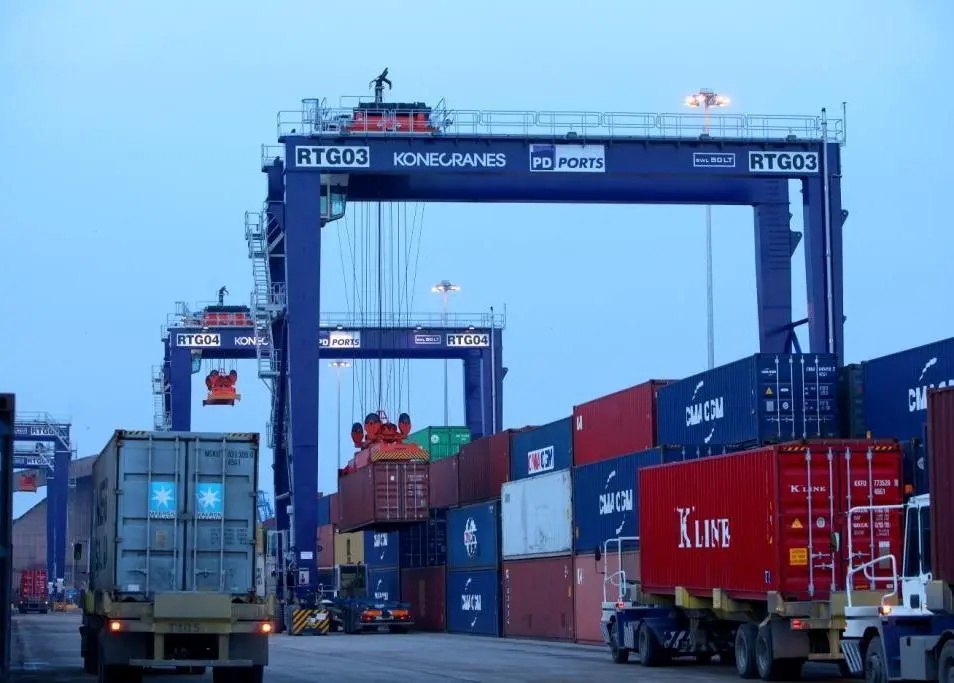
The Portcentric model, where warehousing is based on, or close to port land, means that containers are no longer hauled from ports to distribution centres, often in the middle of the country, and then hauled back again, mostly empty, to the ports.
In total, PD Ports estimates that its Portcentric logistics solutions, compared with a traditional distribution network, has saved more than 60,000 tonnes of carbon emissions and 40 million road miles.
Cost and environmental benefits
Both Asda Wal*mart and Tesco, as well as smaller companies such as Taylors of Harrogate, have realised significant cost and environmental benefits by importing through Teesport, locating their warehouses at the port and then distributing to local stores, customers, production facilities from there.
Late last year, Clipper Logistics announced the creation of a Portcentric super-centre in Wynyard near Teesport. The facility has a footprint of 350,000 sq ft but with mezzanines the operational space will be well over 1 million sq ft.
Asda Wal*mart calculates it saves more than 3 million road miles a year by using its Teesport import centre.
As well as having more than 4 million sq ft of land in use, or available for development, for Portcentric operations around Teesport, PD Logistics is the largest operator of warehousing around the UK’s busiest container port, Felixstowe, where it operates 500,000 sq ft of warehousing just 250 metres from the port gates.
Portcentric economic advantages
Even though the pressures of the economic downturn may have caused some companies to question the importance of their environmental commitment, the Portcentric model is still highly attractive.
The reduction in road miles and subsequent green benefits may have been instrumental in helping companies initially opt for a port-based warehouse close to their customers. But, in the end, as the Portcentric model has proved and economic advantages, increasing numbers of companies are now accepting the rationale.
Teesport, PD Ports’ main centre for Portcentric activities, is located in the north east of England, where land and labour is plentiful skilled and highly motivated, certainly compared to other regions of the UK.
At Teesport we are in a rather fortunate position that we not only own and operate the available landbank, but also the terminals, the wider port infrastructure and logistics activities.
“With our operations at Felixstowe and Teesport, and the continued growth at Teesport, PD Ports is proof that twin-port Portcentric solutions are available, with the added benefit of one overarching company managing the whole operation”, says Geoff Lippitti.
Looking ahead
Future developments around Portcentric solutions may build on the retailers’ need for multi-channel distribution operations. Until recently, retailers had kept their online distribution network (which tended to utilise inland warehousing) and their retail store distribution network separate.
However, recent advancements in inventory management software and increased pressure to reduce costs and environmental impact has meant they are beginning to consolidate the two operations in one warehouse. This opens up new opportunities for further environmentally friendly Portcentric developments to meet the double-digit growth that online retailing is experiencing.
The Portcentric strategy has also been hugely successful for Teesport itself and is helping drive the growth in both its import and export container volumes, in contrast to the situation at other ports which have seen volumes stutter as a result of the faltering global economy.
In fact, the Teesport container terminal has just completed the first phase of a multi million pound upgrade, helping bring total container terminal capacity to over 500,000 teu.
Port’s strategy
Subsequent phases will be investigated subject to volume growth and market stability. The port’s overall strategy is to expand port-wide capacity, including Ro-Ro traffic, to at least 650,000 teu, which will position Teesport as a major player in the container market.
Furthermore, the growth in imports driven by the Portcentric traffic has attracted many new shipping lines to call at Teesport which, in turn, has opened up new opportunities for UK exporters. Teesport now handles around 35 vessels a week.
In the last few years, both Evergreen and Unifeeder added Teesport to their network, and existing lines Samskip and BG Freight continue to add services. Containerships selected Teesport as its strategic northern hub to link its Mediterranean and Baltic services.
Maersk, MSC, CMA/CGM and K Line – four of the world’s largest container operators – now regularly use Teesport for their European and Baltic feeder services. We have the exact services which exporters in the north need. And we are also working hard to show other manufacturers, from Scotland to the M62 corridor, that they have an excellent alternative on their doorstep to using the ports in the south of the country.
Although the pressures of the economic downturn may have pushed environmental concerns down the agenda for many companies, the Portcentric model is still highly attractive. Reducing road miles also reduces costs. A lot of ports talk about creating Portcentric operations, PD Ports has already and Portcentric delivered.
Related Articles
 ALTERNATIVE FUELS GREENPORT