![PortStrategy[GreenPort]](https://www.portstrategy.com/wp-content/uploads/2026/09/PortStrategyGreenPort.svg)




Ports Climate Initiative: Charting the way ahead
The World Ports Climate Initiative, under the leadership of IAPH, is now well under way, with four active projects and two in preparation. GreenPort 2009 provided an opportunity to review the work that has been undertaken – and to set out the Agenda for the coming year. Kate Royston reports
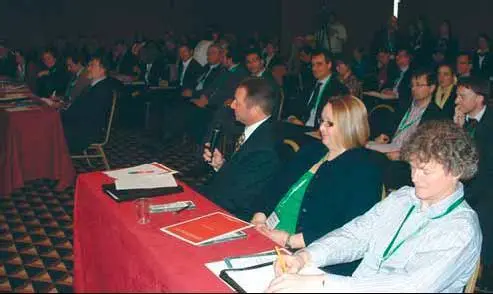
A key message from the GreenPort 2009 conference was that significant environmental challenges lie ahead for the ports industry, that these are global in nature and cannot be resolved in isolation. This was already recognised by the Port of Rotterdam and others in 2007 when, at a C40 conference they called for a global initiative to be developed.
World Ports Climate Initiative
WPCI emerged from this call and was formalised in 2008 with the World Ports Climate Declaration. It is now
under the leadership of the IAPH.
WPCI Mission
• Raise awareness in the port community of need for action
• Initiate studies, strategies and actions to reduce GHG emissions and improve air quality
• Provide a platform for the maritime port sector for the exchange of information thereon
• Make available information on the effects of climate change on the maritime port environment and measures for its mitigation
WPCI Organisation
A simple organisational structure (Figure 1) has been established with a WPCI Chair (Geraldine Knatz) supported by the Regional port branch organisations. Co-ordination and communication is provided by the WPCI bureau (Fer van de Laar) who liaises with the Project teams and other interested stakeholders. The Regional Port Associations are playing an essential part in the process. Their key role is to encourage involvement of their port authorities and regional stakeholders (eg ship owners and terminal operators), support regional projects and facilitate links with the regional polices they work to promote. The Association of American Port Authorities (AAPA), European Sea Ports Organisation (ESPO) and the Pan African Ports Conference (PAPC) have pledged their support to date.
Table 1: WPCI Active Projects
|
Project Title |
Lead Port |
Participating Ports |
|
Projects Underway |
||
|
Carbon Footprinting |
Port of Los Angeles |
Amsterdam, Antwerp, Finnish Ports Association, Houston, Los Angeles, New York/New Jersey, Rotterdam, Oakland, Oslo, Seattle |
|
Cargo Handling Equipment |
Port Authority of New York/New Jersey |
work in progress |
|
Environmental Ship Index |
Port of Rotterdam Authority |
Amsterdam, Antwerp, Bremen, Hamburg, Le Havre, Rotterdam |
|
Onshore Power Supply |
Port of Gothenburg |
Amsterdam, Antwerp, Bremen, Hamburg, Le Havre |
|
Projects in Preparation |
||
|
Intermodal Transport |
Port of Amsterdam |
work in progress |
|
Lease Agreement Template |
Montreal Port Authority |
Houston, Rotterdam, Amsterdam
|
Projects under way and under consideration
There are four projects underway and a
further two in preparation.
Table 1 summarises the projects, the ports involved, and their progress.
How to get involved?
Ports or Port stakeholders wishing to get involved in any of these projects should contact Fer van der Laar (fer@wpci.nl).
Ongoing review of project progress
GreenPort 2009 provided an opportunity for delegates to gain an understanding of the projects underway and provide feedback. A further update was provided at IAPH 2009 in Genoa. Ongoing communication and exchange of best practice is a critical project aim. The WPCI website (http://www.wpci.nl) was launched on the 26 May 2009 to facilitate this.
Carbon Footprinting Project
Carbon footprinting entails establishing the total set of greenhouse gas emissions (GHGs) caused directly or indirectly by an individual, organisation, event or product over a defined period of time. A carbon footprint is an essential element of Carbon Management. This should be a systematic approach to assessing a carbon footprint and using its results to reduce the organisation’s emissions and increase efficiency. (A more detailed overview of this system was published in GreenPort Journal, March/April 2009 “Carbon management: Approaches for Ports”) The project’s aim is to test a methodology for carbon footprint calculation and its application to any port, large or small. A guidance document will be produced as a reference for other ports seeking to determine their own footprint. This will help with the areas of carbon footprinting requiring careful consideration, including setting the boundaries and scope (see Figure 2). The GHG Protocol identifies 3 scopes illustrated in the figure above: The Port of Oslo led an initiative in 2008 to calculate the carbon footprints of the Ports of Oslo and Rotterdam. These were presented at the C40 World Ports Climate Change (WPCC) conference in Rotterdam in July 2008. The Port of Los Angeles is now leading the project. It has been active in assessing and monitoring its carbon footprint for many years and its progress is highlighted later in the article.
Cargo Handling Equipment (CHE)
There is a whole range of CHE in use at ports and rail yards including yard tractors, cranes, forklifts, container handlers (e.g., top picks and side picks), and bulk handling equipment, such as tractors, loaders, dozers, excavators, and backhoes. The CHE project aims to understand how emissions from the range of CHE used at ports and rail yards can be reduced. Options include retrofitting emissions controls, replacement with newer, cleaner equipment or using cleaner fuel technologies, such as electrification.
The Environmental Ship Index (ESI)
The ESI indicates the environmental performance of seagoing vessels through an assessment of their sulphur dioxide (SOX), nitrous oxides (NOX) and indirectly particulate matter (PM) and CO2 emissions. The aim of ESI is to encourage ships to improve their environmental performance and thus reduce emissions (see Figure 3). Ports plan to reward those visiting ships whose ESI indicates that they meet lower than current IMO emissions standards. Each port can operate its own reward system, although the ESI will be assessed and administered centrally. The scheme is voluntary. Ships wishing to participate will apply to the ESI administration, submitting verified EIAPP certificates and bunker fuel information for their own ESI. The calculation is based upon a study undertaken during 2008/2009, titled ‘Proposal for an Environmental Ship Index’ and available to download at www.ce.nl. Trials are currently underway to test the index on a number of different ships. The ESI administration will be established in the latter part of 2009 and communication will take place with stakeholders throughout the year. The aim is for introduction on the 1st January 2010. A leaflet explaining the scheme is available at www.iaph.nl. The project is led by the Port of Rotterdam Authority.
Onshore Power Supply (OPS)
The OPS project is led by the Port of Gothenburg. They were the first port in the world to offer OPS at high voltage for cargo vessels, in 2000. The initiative was in partnership with Stora Enso. OPS may also be referred to as alternative maritime power (AMP), cold ironing, shore side electricity etc.
OPS provides an electrical connection between a vessel and the quayside (see figure 4). This enables the vessel to shut down its auxiliary engines whilst in port and provides local benefits in reduction of NOX, SOX, PM and noise. Other Greenhouse Gas (GHG) emissions may also be reduced dependant upon the sources used for electricity generation. The overall goal of the project is to reduce local air pollutants and greenhouse gas emissions by encouraging ports, terminal operators and shipping lines worldwide to implement OPS technology. This is to be facilitated through user friendly support tools for feasibility assessment and implementation. A ‘Guidance Document’ has already been developed (see www.portgot.se) and was presented at the WPCC conference in Rotterdam. The project will now design and build a web based application providing practical guidance for ports, terminal operators, shipping lines and other stakeholders You can take the opportunity yourself to contribute to the project by completing a questionnaire about your operation’s current OPS status and future plans. Your answers will provide important input to the OPS working group. The questionnaire is available at www.wpci.nl and www.portgot. se from the beginning of June 2009. For more information see www.portgot.se or contact Susann Dutt (susann.dutt@portgot.se).
Inter-Modal Transport
This project will be led by the Port of Amsterdam. It aims to stimulate wider application of appropriate inter-modal transport in and around ports and their hinterlands to enhance the economic and environmental performance of a transport chain. Improving the efficiency of cargo transportation can also drive reductions in road congestion and related emissions.
Lease Agreement Template
This project will develop a Lease Agreement Template that can be used as a basis by ports wishing to incorporate sustainability considerations into their tenants lease contracts. It will include requirements related to control measures to combat climate change.
Integrating the themes at the Port of Los Angeles
The Port of Los Angeles (POLA), North America’s largest container port, handles 7.8m TEUs per annum. POLA encompasses 7,500 acres, 43 miles of waterfront and features 27 cargo terminals, including dry and liquid bulk, container, break bulk, automobile and Omni. facilities. In the face of increasing challenges to manage growth whilst reducing emissions the Board has determined to become a Climate Leader. Early programs implemented, such as Onshore Power Supply (OPS) and Vessel Speed Reduction (VSR) have led to significant greenhouse gas reduction along with priority pollutant reduction. POLA, in an initiative led by Christopher Patton, the Environmental Affairs Officer, is developing its own Climate Action Plan (CAP). Through this work it may be one of a few ports to understand the implications of operating at 80% emissions reductions by 2050, and how this might be achieved. Their case study, part of the WPCI initiative, will help inform others on how to take an integrated approach. Since each port is unique, the study is based on testing a systematic process which can be adapted to different port situations. The CAP development process is briefly described below and is illustrated in Figure 5. The port has also adopted five guiding principles (see box) which are integral to the Board’s programme.
Guiding Principles
To plan and facilitate green growth through:
• Setting goals and standards
• Promoting success
• Supporting technology advancement
• Funding Partnerships
• Information sharing
The CAP process seeks to establish the operations base line (emission levels for 1990), determine the operation’s relevant boundaries and quantify the current and forecast emissions arising within these boundaries over the forecast period (up to 2050). The overall goals are established, informed by the business and regulatory policy. These goals are then mapped against the forecast level of emissions. From here, the gap is assessed and strategies developed for reduction. A re-iteration cycle of ‘Plan-Do-Check’ quantifies and applies identified reductions against the gap. Where a shortfall remains continue to identify further reduction strategies. In order to achieve a coordinated plan it is vital to partner and collaborate with local and regional business and authorities. This is particularly important for a port such as POLA which set extensive boundaries. Based on the key criteria of pollutants and the operations impact on them these are: an over-water boundary approximately 60 nautical miles offshore; inland boundary approximately 100 miles encompassing truck first drop offs.
Port of Los Angeles Regulatory
and Policy Goals for Emissions
Reductions
•2020 emissions not to exceed baseline
level of 1990
• 2030 to be 35% below 1990 levels
• 2050 to be 80% below 1990 levels.
It became clear to POLA as they worked through the process that achievement of the goals would require a paradigm shift in the way the port operates beyond 2020, including zero emissions cargo handling. This will require considerable investment and innovation. POLA’s emissions from its own operations (Scopes 1 and 2) can be managed within target until 2025 after which time more radical strategies are required. These represent only 1% of indirect emissions (Scope 3). Strategies have yet to be identified to manage within Scope 3 target, even within the short term. A very different approach to regional transport and shipping is required such as the introduction of electric trucks running on dedicated truck lanes on the highway with dedicated power sources. The exercise has been very informative for the port and emphasised the critical nature of the future challenge! The most important step now is to make it happen!
Climate change adaptation
Mark Hannam from the CARES Group reminded the GP09 delegates that paying attention to climate change mitigation measures alone i.e. taking action to reduce emissions, is not the entire extent of the challenge. Addressing adaptation is critical i.e. taking action to address an operation’s or an asset’s physical vulnerabilities from climate change impacts. Further climate change is inevitable in the coming years as a result of past and present emissions. Ports and coastal operations are particularly vulnerable to effects such as sea level rise and changes in weather intensity, with windstorms posing a particular threat. Forecasting will require new approaches as past patterns can no longer be relied upon. Predicting climate change impacts on the business should be incorporated into risk management assessment and business continuity planning. Importantly, any major new projects or asset purchases must properly assess future climate change risks to avoid costly mistakes. The importance of this has been recognised by the UK Energy sector, and work has commenced to assess vulnerability and develop adaptation strategies to assure future investments. This was initiated by Executives from the sector’s major operating companies. They see this work as an essential element of their corporate governance and risk assessment. Mark believes this developing best practice can be built upon within port communities. WPCI is actively considering how an Adaptation initiative could be progressed.
Summary and Conclusions
WPCI has developed a groundswell of support as ports and related industries worldwide recognise their enormous challenge and the need for collaboration to find solutions. The case of Los Angeles has also illustrated that the scale of investment required will be significant and those ports able to put in place a progressive and sustainable investment programme, spreading costs over a number of years, are likely to have a distinct advantage in the future. Lean and Green is the future and WPCI can help lead the way! If you would like to participate contact Fer van der Laar (fer@wpci.nl).
Follow Up
Subsequent issues of GreenPort Journal will provide updates on WPCI progress.
Related Articles
 ALTERNATIVE FUELS GREENPORT