



Putting action before words
‘Leading by example is the Port of Strasbourgs motto for its sustainabledevelopment policy, which is to co-creating with its staff, explainHélène Haslé, former Director of Development and Aurore Mourette,Sustainable Development Project Manager at the Port of Strasbourg.
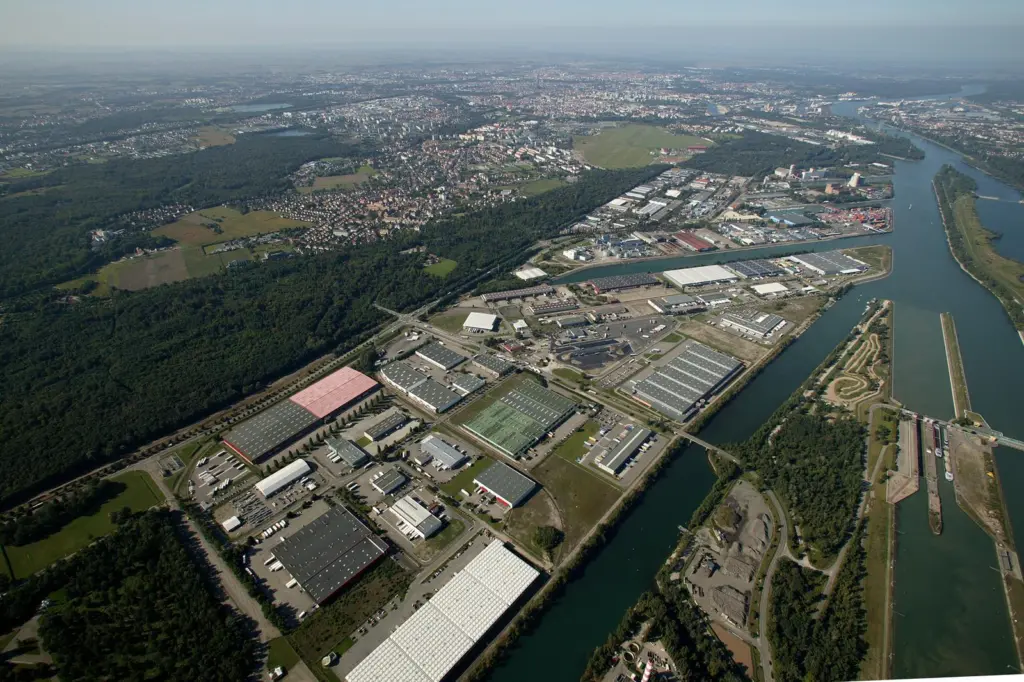
WITH ITS LOCATION at the intersection of 3 European TEN-T corridors, the Port of Strasbourg (PAS) is France’s second largest inland port. Situated on a 1-km wide north-south axis running 10 km along the Rhine, the area owned by the Port Autonome covers a surface area of 1,050 hectares. In its principal zone, it accommodates 350 companies, representing 13,000 jobs. It has 2 container terminals (a third to be opened in 2014), enabling it to handle 9 million tonnes of river traffic, 430,000 TEUs and 2 million tonnes of rail traffic each year. The Port Authority has three main activities: terminal operations, land leasing and tourism (with the management of 11 city tour boats).
2011… Communic’Action: phase 1
2011 was a crucial year for the Port of Strasbourg (PAS) as it became the first inland port to join the ECOPORTS network. Becoming a member has enabled the PAS to use the network’s well-established tools, such as the ‘Self Diagnosis Method’ and the ‘Port Environmental Review System’ and to benefit from ECOPORTS members’ best practices. In order to assist the port authority in its first steps towards sustainable development, a dedicated Sustainable Development Project Manager was hired and given the task to implement a sustainable development policy. At first, Port staff may have believed that this initiative was a question of image rather than essence, but the port of Strasbourg was determined to lead by example by undertaking immediate and tangible actions. The staff was quickly on board and significant steps were made in a range of different areas thanks to their support and participation.
Communic’Action in Action: putting the rail back into multimodal… the Kronenbourg case
The Port of Strasbourg (PAS) is an important hub in the upper-Rhine area where three modes of transport come together: road, the Rhine and railway; whose marshalling yard is the largest in the region. From 2005 to 2011, the port saw a continuous decrease in rail freight using its single and longstanding yet relatively non-innovative rail operator. In July 2011, PAS took over the management and maintenance of the signalling system and 60 km of tracks, increasing its rail network to 110 km. The decision was then taken by PAS, working with its public and private partners, to give rail transport a new lease of life as part of a multimodal solution. To this end, a study of prospective clients’ needs, and of the potential for railway-based freight solutions via the Port, was conducted. A key goal was to demonstrate that rail freight can be viable for short distances (of about 50km). In 2012, PAS also took the decision to challenge its partners to enhance the range of services on offer at the port. Two years ago, this preparatory work paid off. When Kronenbourg’s parent, Karlsberg, asked the brewery to deliver the equivalent of 5,000 containers of products to the Middle East in 2011 the Port of Strasbourg, working in collaboration with VFLI, was able to put in place a rail shuttle between the port of Strasbourg and the brewery, a short distance of 40 km. 15 container wagons were specially designed to allow quick and easy loading, at the rate of 3 to 5 daily rotations. Today, trains of 40 containers go back and forth, between Kronenbourg and the Port of Strasbourg. At the terminal, the containers are transferred onto barges before travelling to the ports of Antwerp and Rotterdam. From there they are shipped to the Middle East. Epilogue 5 Interest in these new transport opportunities is being shown by malt producers wishing to deliver to Kronenbourg 5 IToday, there are 6 rail operators using the port and traffic is increasing again! 2013…
Communic’Action in Action: Towards energy transition
In order to enhance the competitiveness of the Strasbourg port zone and therefore its business, an industrial ecology policy has been initiated by the Port Autonome de Strasbourg (PAS) and the Communauté Urbaine de Strasbourg (CUS). Industrial ecology is an approach that aims to interpret the industrial system as an ecosystem composed of complementary, interdependent protagonists, just like “natural” ecosystems. Therefore, it is a comprehensive approach based on the analysis of the flows of materials and existing and future forms of energy that is being anticipated. An initial study with a group of sixteen firms, which take a positive view of the subject will help to establish the extent and scope of the project, which may, although this has not yet been confirmed, become a large-scale project, whether in terms of its geometry or its timescale. Through this approach, three kind of action are identified: 1) Cost control regarding the forms of energy and materials concerned, if necessary by implementing inter-company synergies to optimise production and consumption, the reduction of energy and material needs and the resistance of companies regarding fossil fuels; 2) Funded by the PAS and the CUS, the study will be coordinated and carried out by IDÉE ALSACE (an association of entrepreneurs assisting firms with actions to foster sustainable development), with technical support from the ÉNERGIVIE competitiveness hub and SOFIES, an engineering design firm specialised in the themes of energy and materials; 3) The Strasbourg Ports Users Group (GUP) will oversee this study in tandem with the PAS and the CUS as part of a strategic committee. In parallel, a consultative committee will represent partners from various institutions and the academic world.
The start-up
As a result of the appeal launched by Catherine Trautmann, Euro-MP and President of the Port, sixteen firms have agreed to an active participation in this approach. Following a workshop in September/October 2013, an inventory will be drawn up for each of the sixteen firms of the principal flows of materials and energy involved in their industrial process. This will help to detect potential synergies with an initial look at the feasibility of their implementation. Incrementally, the study will identify and describe any projects to be launched or fostered and help to determine the financial engineering of the investments needed and the protagonists to get involved. At the completion of this study (April-May 2014), the policy will be followed up by subsequent phases aiming, for example, to broaden the study of potential to a larger number of firms in the Strasbourg-Kehl port zone and ensure the implementation of actions in terms of infrastructures, services, good practices, etc.
Communic’Action: the next phase
After 2 years of innovative projects, the Port of Strasbourg has demonstrated both to its staff and to its partners, that through small tangible steps, real progress towards sustainable development is possible. That’s why we talk about ‘Communic’Action’. In 2013 the decision was taken to build on this success, to again ‘lead by example’, and fully integrate sustainable development in all aspects of the Port’s strategy and we are currently developing the action plans that will deliver this goal.
Related Articles
 ALTERNATIVE FUELS GREENPORT