


The Nereidas Project – Port of Melilla
It was at the last GreenPort Congress, in Copenhagen, that the Europeaon project of Nereidas presented its results of two years of work and studies, explains Jaime Bustillo Gálvez, Head of Strategic Planning Unit at the Port Authority of Melilla.
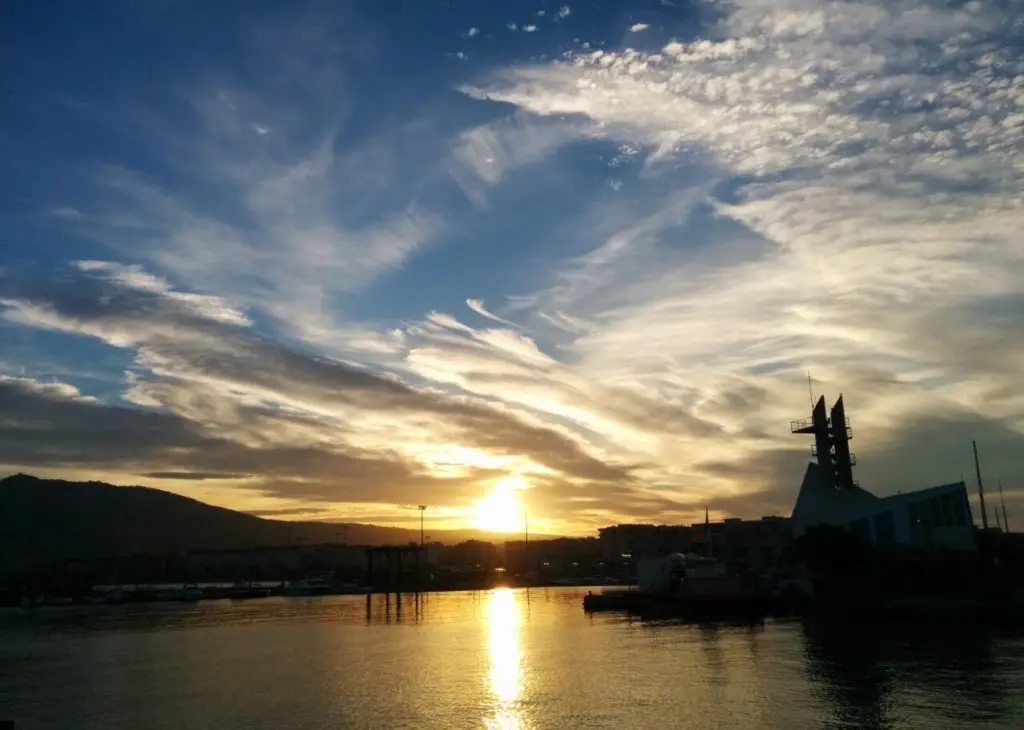
The main objective of Nereidas was to offer a solution to make ports more efficient and to raise environmental awareness.
Its implementation at the Port of Melilla can be summarised through its key actions. Firstly, the placement of roughness structures and techniques of growth development of Ellisonlandia elgonata. Along with the placement of degradable structures and planting of Cymodocea Nodosa and the Development of a EWS for the control and safeguarding of the plantations. The implementation also led to the elaboration of a protocol that standardises its use in other locations.
The CO2 emissions produced by maritime traffic and port activities can be compensated through the ecological processes of planting and the development of marine organisms. In particular, the Pilot in Melilla used the seagrass Cymodocea Nodosa and the algae Ellisolandia elongata, widely distributed in the Mediterranean Sea. This compensation mechanism can be described as innovative in the field of marine, being an efficient tool for the capture of CO2, and to increase biodiversity. In contrast, to what is currently used which relies primarily on preventive measures related to energy and fuel consumption reduction.
In order to identify diffuse pollution within sufficient time and to safeguard this biological structure, an Early Warning System (EWS) has been developed. This tool is able to monitor the parameters in the sea and to distinguish between normal variations, contamination events and differences in quality due to biochemical and physical interactions. It has theability to analyse and interpret results in real time and also includes data of others sources such as water analysis.
The NEREIDAS module is able to send information about risks defined by e-mail, SMS to cell phones or through web alerts in near real time.
An example: An increase in the concentration of nutrients dissolved in water can accelerate the process of eutrophication of microalgae. The abundance of these algae leads to a significant reduction of dissolved oxygen in the water column. This reduction is especially big on the bottom of water column. The absence of photosynthesis process tackles the microalgae to respiration that eventually consume all the available dissolved oxygen. The generation of anoxic conditions makes reduce the pH and consequently can dissolve our CO2 sinks. The EWS, warns of danger, and can help to prepare some ad hoc measures before this happens.
The ultimate aim of Nereidas was exactly the design of a protocol for the implementation of preventive and compensatory measures about environmental damage related to maritime transport and port activities. Today, the market hosts many rules and guides with same denominator, ‘contribute to the mitigation of climate change’. Each one of them faces different challenges and scopes but no one comprises the purpose of this project. As it is widely known that who pollutes, pays and repairs, but is polluting. With this Protocol we amount to an additional turn of the screw, and propose to compensate this pollution.
The uniqueness of this Protocol, of good environmental practices for ports of the Mediterranean, is the new approach and special attention to biodiversity, to the survival of living beings and in turn offset pollution in ports. In addition, it is self-assessed and issued, for the first time, to be developed and tested before going to market.
Related Articles
 ALTERNATIVE FUELS GREENPORT