![PortStrategy[GreenPort]](https://www.portstrategy.com/wp-content/uploads/2026/09/PortStrategyGreenPort.svg)

Opening address at MEPC 69
The first of two Marine Environment Protection Committee (MEPC) meetings to be held this year began in London on 18 April at the IMO headquarters.
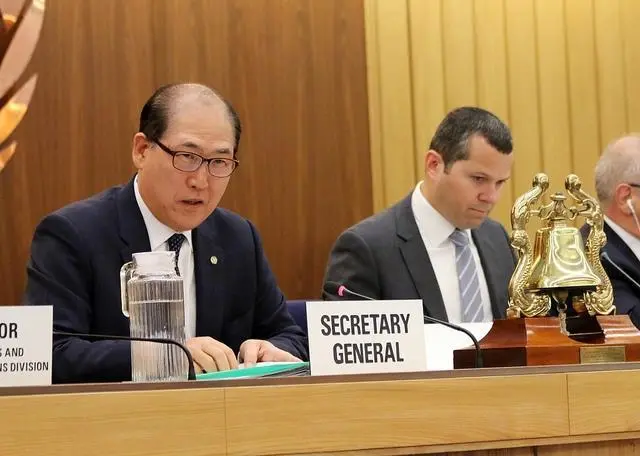
It began with the secretary generals address which explained MEPC 69 would cover a vision of the future where shipping meets the needs of the world in a safe, secure and sustainable way, building on the substantial efforts and achievements of the organisation to date.
“I see the promotion of sustainable shipping and sustainable maritime development as one of the major priorities of my tenure,” said Kitack Lim, IMO secretary-general.
He explained: “The year 2015 saw two landmark achievements in the wider context of sustainable development: the adoption of the 2030 Agenda for Sustainable Development, and the Paris Agreement under the United Nations Framework Convention on Climate Change.”
The session is busy, with 129 documents submitted under the 21 items on the agenda.
IMO did state that its main objectives will remain unchanged. The objectives are to clearly demonstrate that IMO is the appropriate international body to continue work to address greenhouse gas emissions from ships engaged in international trade.
To safeguard that international shipping regulations are applied to all ships according to the non-discriminatory principle on which the IMO regulatory framework is based and ensure that the interests of developing countries are fully taken into account.
The topics currently being discussed of particular importance are; the development of draft guidance for assuring the quality of fuel oil delivered for use on board ships and the establishment of a date for the Baltic Sea Special Area under MARPOL Annex IV to become effective.
As well as the adoption of amendments to the NOx Technical Code 2008 related to the testing of gas-fuelled and dual fuel engines for the NOx Tier III strategy and the consideration of the full report of the Ad-hoc Expert Group on Facilitation of Transfer of Technology for ships.
Toward the last few days there will be a discussion on the approval of the updated version of the draft Manual on “Port reception facilities – How to do it” as well as an analysis of recommendations to reduce administrative burdens in IMO instruments
Related Articles
 REGULATION & POLICY GREENPORT
 REGULATION & POLICY GREENPORT
 REGULATION & POLICY GREENPORT