![PortStrategy[GreenPort]](https://www.portstrategy.com/wp-content/uploads/2026/09/PortStrategyGreenPort.svg)

The importance of planned maintenance
In this article Laurence Jones, director global risk assessment at TT Club, offers advice on how carefully considered and implemented planned maintenance of cargo handling equipment saves not just time and resources but also radically improves the safety record and reputation for clean, quality performance at terminals.
Asset management is of great importance to any business of which maintenance, or the maintaining and monitoring of assets, is an integral and important part.
The purpose of maintenance
The purpose of maintenance is to maximise an asset’s useful lifetime and minimise cost. Decisions are regularly made about how to sustain assets – from servicing intervals and frequency to a responsibility hierarchy. While software tools can aid in the administration of a planned, efficient, cost-based, maintenance schedule, the fundamental issue is one of management attitude. If an asset is maintained more often than necessary, valuable time and resources are wasted.
It is also self-evident that well maintained machinery will be more efficient and less ‘power hungry’. A greener environment will therefore result. Whether the saved power involves electricity or the more direct burning of fossil fuels, the energy consumed in operating the terminal will be reduced and emissions cut down.
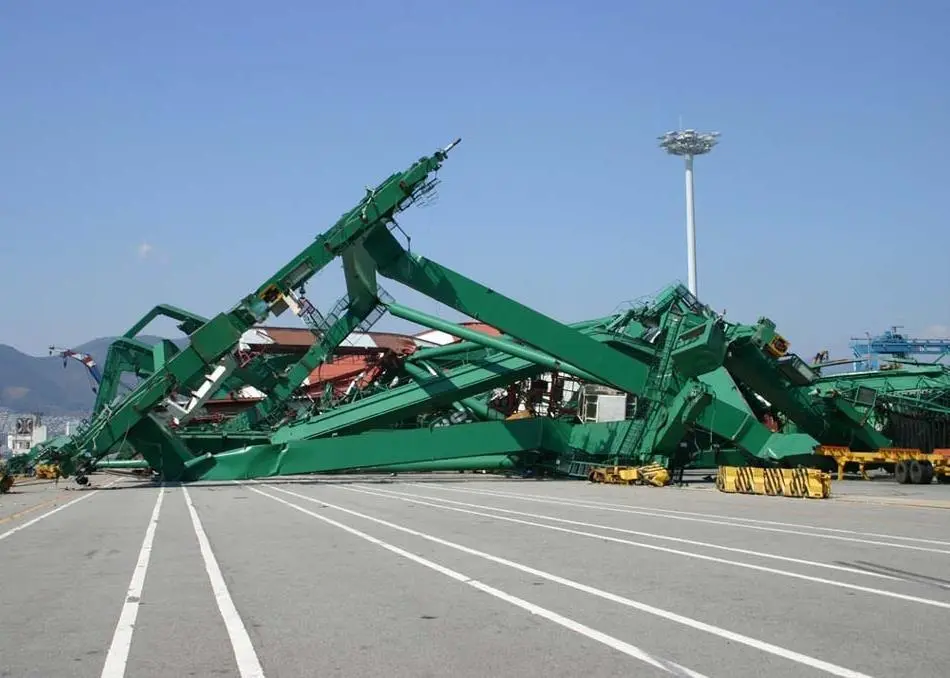
Maintenance performed too infrequently will also lead to a loss, resulting in unplanned down-time. Additionally, the cost of unexpected failure and repair can be up to six times that of planned, preventive maintenance. Costs saved by delaying routine servicing are short-term savings that may, eventually, incur financial loss.
Maintenance should only be carried out within the strictures of a documented plan, when all the required resources are readily available and at a time that will cause least disruption to operations and customers. It may be performed by in-house employees or out-sourced to contractors. This decision is made based upon the degree of expertise and equipment which is required, as well as the funds and time available.
It is important that there is a well-organised asset management structure. Front-line supervision, engineering/maintenance management, engineering support, training, participative teamwork and planning and maintenance data management are all key aspects.
Key Performance Indicators (KPIs), which monitor how a site’s assets are being maintained, include the safety of personnel and the environment, the performance of equipment and the cost of engineering. Retirement, the final phase of an asset’s life cycle, can be the result of a need for newer models, changes to operational requirements, high maintenance costs or the risk of total failure. As regards fuel efficiency and emission control, naturally early investment in new machinery and technology will be, in the vast majority of cases, more beneficial than repairing older equipment. However, when funds are tight, there are still undeniable advantages to the environment in running handling equipment in a good state of repair.
Maintenance policy
In order to alleviate these issues and minimise risk and their insurance claims, every port and terminal operation should have a maintenance policy to maximise uptime and minimise cost. The following provides some guidance about developing such a policy. The principal aims of such a policy should be to:
1. Ensure a safe working environment for all terminal operations
2. Protect the company’s investment in infrastructure and equipment by introducing a framework for regular preventative maintenance and routine inspections, thus maximising their useful life
3. Provide a structured plan for cost-effective maintenance expenditure
Routine inspections of all equipment and infrastructure should be planned and carried out at regular intervals in order to check the general condition of all components, this should include general wear and tear, component failure and incidental damage. The interval between inspections, and the level of detail required, should be determined using component wear and tear predictions. Components should be prioritised based upon their operational and safety importance.
Regular maintenance, in line with the manufacturer’s recommendations and operational best practice should be carried out upon all equipment and infrastructure in accordance with maintenance procedures.
A framework for inspections and routine maintenance should be prepared by the site maintenance department based upon manufacturers’ recommendations. A Computerised Maintenance Management System (CMMS) would usually be used for the management and control of such maintenance activities.
Maintenance strategies
A maintenance strategy may be seen as the mission statement of the department and organisation. It must be supportive of, and be supported by, the business plan, must identify the needs and wants of customers, shareholders and other stakeholders, and should identify the best maintenance tactics for the application and equipment. Such a strategy should:
1. Maximise productivity
2. Phase out ineffective and inefficient equipment
3. Optimise expenditure against equipment availability and reliability
Maintenance tactics are the specific actions taken to minimise the consequences of unexpected equipment failure. There is a particular operational difficulty when deciding the appropriate maintenance tactic. How does one decide the most appropriate action taking into account cost, plant down-time and risk? There is a balance between insufficient maintenance, having to tolerate unexpected down-time, or doing too much, bearing unnecessary cost.
The task of maintenance is to minimise an asset’s life cycle cost, maintain its fitness for purpose and provide availability and reliability so that operational requirements are fulfilled. Reactive or breakdown maintenance will, generally, increase down-time and result in higher overall cost.
Implementation of a preventive maintenance schedule always reduces the number of unexpected failures. A preventive approach means more equipment down-time for inspecting, servicing, repairing and testing, which leads to less equipment availability for operations. This may become difficult to manage and may also have a detrimental operational impact. There is a balance to be had between the cost of breakdown maintenance and the cost of preventive maintenance.
Budgetary constraints are often cited by operators as a reason for reduced maintenance standards or the absence of a planned, on-going maintenance programme. While the financial challenges for operators in certain markets and at particular times are understood, the contention remains that a lack of investment in proper maintenance will inevitably cost the operator more when the consequences materialise.
It is important not to lose sight of the fundamentals of maintenance practice. No matter how sophisticated the condition monitoring or the scheduled maintenance strategy, it is the responsibility of management to ensure that basic procedures are followed. It is dangerous to assume. Always verify that work has been completed as reported and that inspections generate the appropriate action.
TT Club has produced an advisory Handbook entitled The Importance of Maintenance – a handbook for non-engineer which can be obtained via the TT Club website (http://www.ttclub.com/publications/risk-management-handbooks/the-importance-of-maintenance).
Related Articles
 REGULATION & POLICY GREENPORT
 REGULATION & POLICY GREENPORT
 REGULATION & POLICY GREENPORT