![PortStrategy[GreenPort]](https://www.portstrategy.com/wp-content/uploads/2026/09/PortStrategyGreenPort.svg)






Revolution at the gate
New innovations with automated gate systems mean they play an increasingly influential role in optimising container terminal performance
SECTOR ANALYSIS: AI OFFERS MORE FOR AUTOMATED GATES
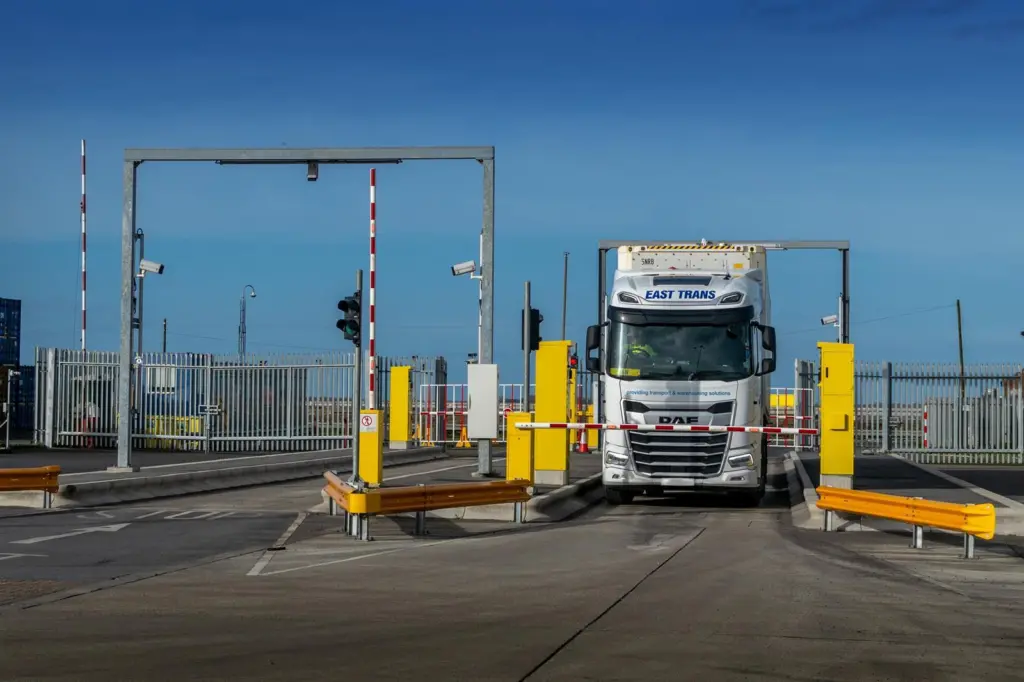
Automated gate systems play an important role in boosting container terminal operations, and will further enhance productivity with the advancement of artificial intelligence (AI). Gate automation helps terminal operators in their quest to boost container throughput and quick turnaround times by reducing congestion, transactions and wait times. As Chloe Grams, Product Manager, Gate Solutions, Tideworks Technology, points out, they have the added advantage of reducing operating costs, and creating a safer and more sustainable working environment due to reduced truck idling and eliminating unnecessary moves.
New technologies such as AI are likely to play a greater role within such systems. Ms Gram notes: “As more terminals and operating technologies leverage emerging technologies, automated gate systems will continue to advance. For example, growing interest in and early adoption of AI adds another layer of intelligence to automation.” For instance, as applications of AI evolve to help predict and manage container dwell times, stakeholders across the supply chain will be able to navigate changes in volumes and even regulatory outcomes more effectively. Highlighting its growing role, she adds: “Looking ahead, the increased adoption and advancements in AI in gate operations will redefine what is considered possible in terminal performance and planning.”
Recent contracts and innovations, as detailed in the news below, underline the growth of automated gate systems within container terminals, with port operators reaping the benefits.
PRODUCT DEVELOPMENTS, INNOVATIONS, R&D AND CONTRACTS
Camco: US-headquartered Camco has launched The Bridge, a web-based platform that connects gate operating systems, rail optical character recognition (OCR), RTLS and crane OCRs. In the past, these systems had different user interfaces. This platform allows operators to manage and monitor their container terminal on a single screen. Another new feature is its compact All-In-One gate kiosk, which is smartphone enabled. This is deployed at truck driver self-service terminals where drivers perform identification and registration tasks while remaining seated in their truck cabin. The robust kiosk suits harsh environments, and is customisable with optional components like printers, finger scan, barcode reader, and RFID/ID cards. Camco reports that its gate operating system (GOS) software includes a visual overview of gate operation, via graphical user interface, real-time process monitoring and built-in monitoring and diagnostic capabilities.
Certus Automation: Netherland-based Certus Automation has recently won new contracts for its automated gate solutions in container terminals and reveals that over the past few years, it has updated its AutoGate offerings. All of its OCR engines algorithms have been moved to deep learning engines, assuring even higher recognition rates and making additional features available. “In combination with the latest camera technology, higher productivity is achieved by means of accurate data capture and automated gate inspections,” it explains. Certus Automation has signed an agreement with Nigeria’s Lekki Freeport Terminal, to deliver its Automated Gate Solution combined with Fleet Telematics and Position Detection to support gate and yard processes. The solution includes an automated gate which consists of five gate OCR portals, Weigh in Motion scales, 15 Gate Lanes equipped with kiosks, RFID readers and traffic control equipment and the GOS software suite together with a vehicle booking system. And last year Certus provided a new gate automation system for Associated British Port’s (ABP) Immingham Container Terminal in Humber. An ABP spokesperson confirms: “The whole automated gate process has given us faster turnaround times, improved productivity and efficiency and helps with better customer service.”
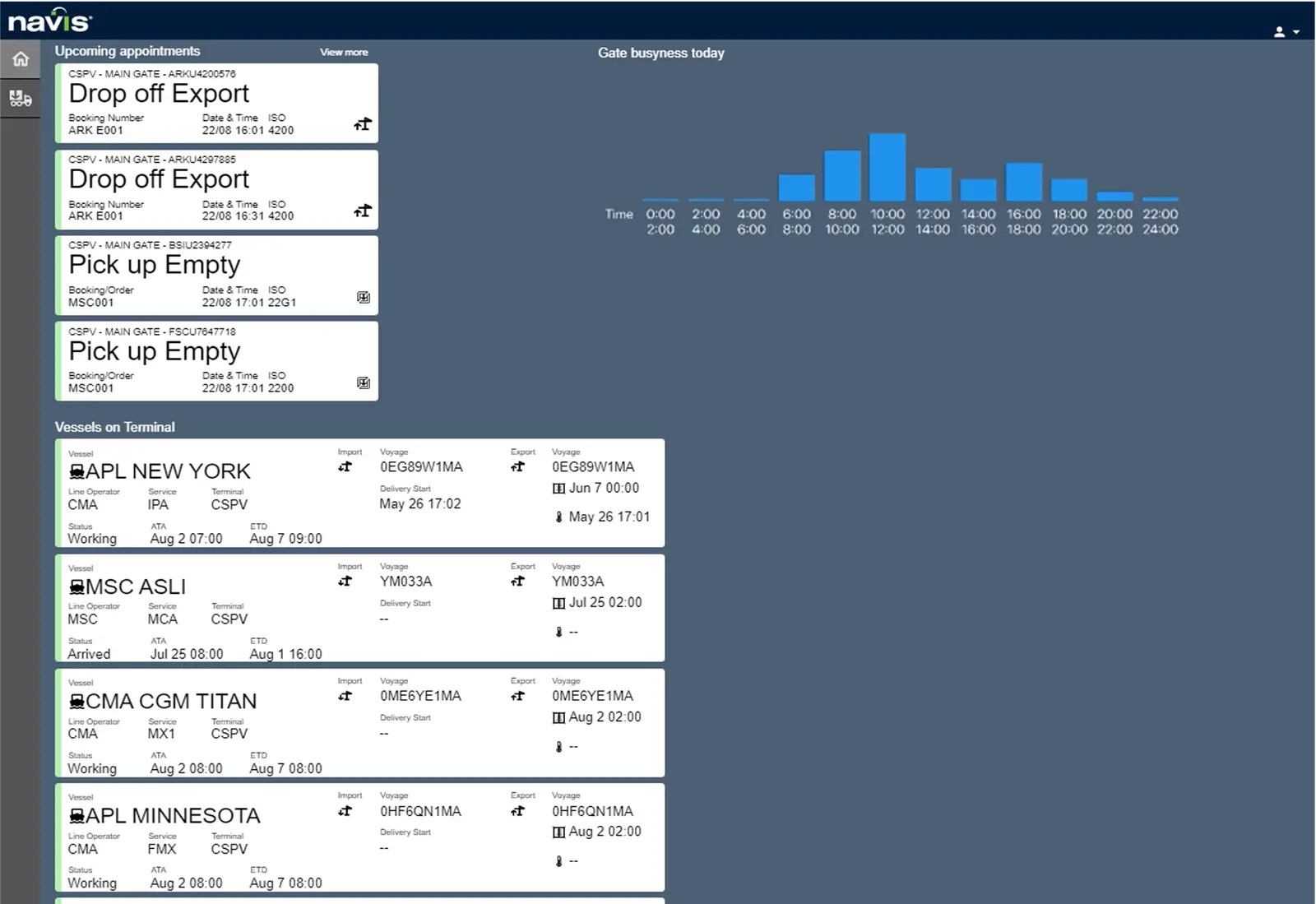
Kaleris: US-headquartered Kaleris has recently launched new gate functionality across its Navis TOS solutions to streamline and simplify gate management while also reducing carbon emissions. SmartAccess is a digital portal that optimises gate operations by connecting terminals and their communities via a web-based tool. Trucking companies, line operators, agents, and beneficial cargo owners can use SmartAccess to manage appointments, bookings, and pre-advise on pick-ups or drop-offs of imports, exports, or empty containers. SmartAccess is part of the Kaleris Execution and Visibility Suite of solutions and leverages appointment logic from the TOS to schedule and maintain appointments. Trucking companies can use the Navis Terminal Visits mobile app to manage appointments and enter the terminal by scanning an in-app QR code at the gate. Navis integrates its Navis TOS gate modules with physical gate kiosks provided by hardware companies. Carlos Lopez, VP of Product, Kaleris, says: “Because terminals have so much to manage each day, we spent a lot of time ensuring the SmartAccess dashboard has an intuitive and easy-to-use interface…SmartAccess and Terminal Visits help lower emissions by enabling trucking companies to efficiently plan their terminal journeys and minimise wait times.”
NASCENT Technology: NASCENT has recently rolled out two new developments: the automation of the detection and identification of hazardous placards and an automated gate system (AGS) for smaller inland depots. US-headquartered NASCENT’s automated data entry solution enVision Portal uses detection and imaging technologies to automatically capture and process container, chassis and trailer data in real time and report it instantly to terminal operations. It has applied vision expertise and image analytics capabilities to streamline and automate the detection and identification of hazardous placards in real time on shipping containers and trailers as they pass through the enVision Portal. The company says that this means that all hazard placards are detected and identified, associated classes and divisions identified and all placards correctly displayed and matched on all sides of the container/trailer. Elsewhere, NASCENT has launched ReadyGate, to make AGS affordable for smaller, leased sites. Its capabilities include fully automated gate control to identify and process trucks and equipment within seconds, remote exception management and elimination of manual data errors from the gate process. Nascent states: “The system is available using flexible purchase and leasing options sidestepping the need for any upfront capital expenditures.”
smart-Tecs: US-headquartered smart-Tecs says that its gate operating system is “consistently and proactively upgraded for efficiency and security”. The automated system is available as either a standalone system or integrated with any TOS system. It includes customisable gate kiosks and a standard set of devices for data collection and driver instruction. A configurable user interface and streamlined user experience provide terminals with real time data visibility through dashboards and reporting. The US based company says that it has a recorded 99.99% uptime rate measured during working hours, eliminating lost working hours, improving productivity, and increasing gate capacity. Additional features and solutions include RFID, OCR, LPR or WIMs to boost data driven decisions and optimise operations. North Carolina Ports has selected smart-Tecs’ technologies to operate its new container gate interchange at the Port of Wilmington. NCP explainS that the new truck gate container complex enables it to meet the demand of increased container volume while continuing to improve on trucker turn-times.
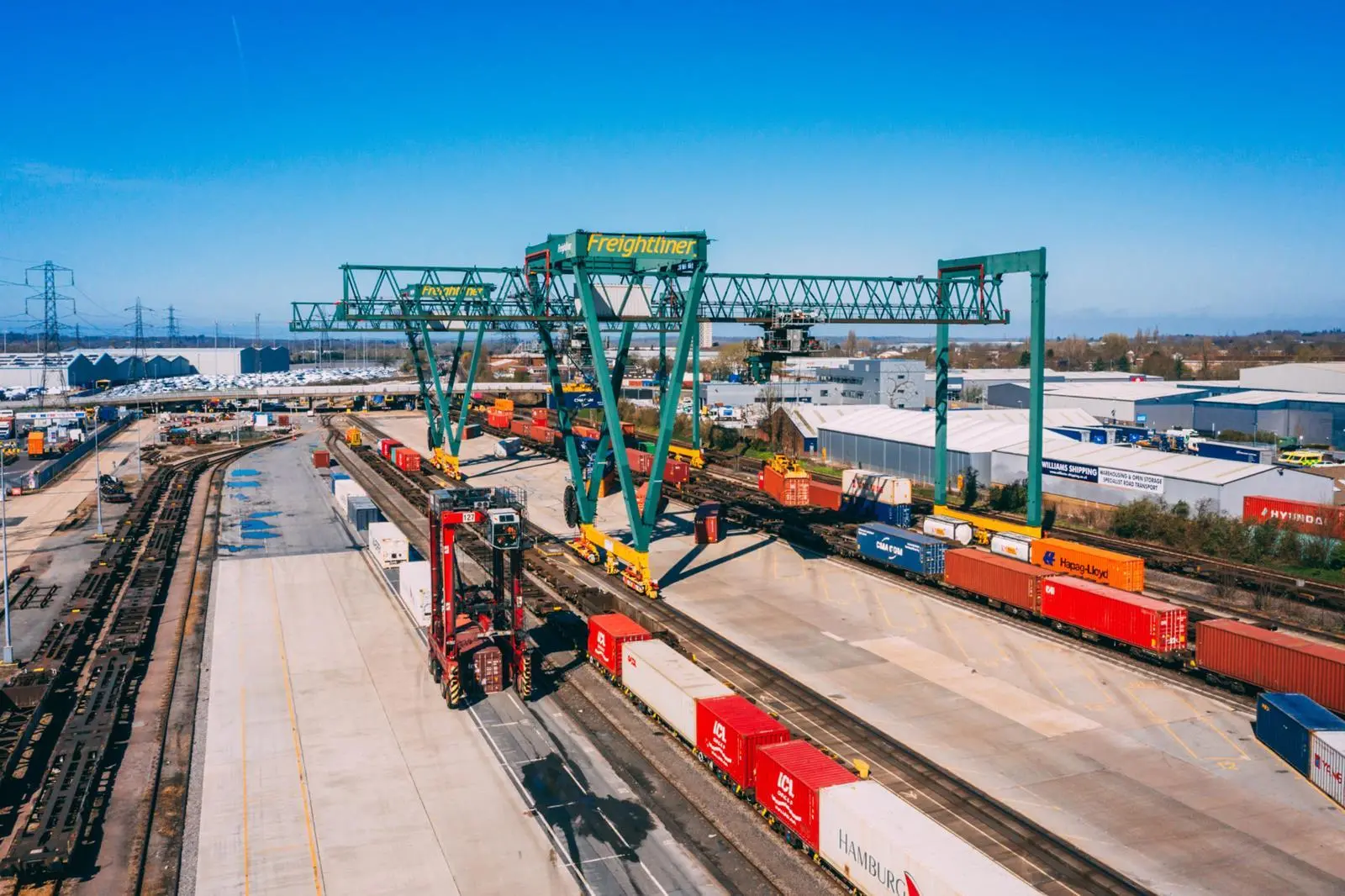
Tideworks Technology: US-headquartered Tideworks Technology’s terminal operating systems (TOS) offer integration capabilities with gate operating and vehicle booking systems. Chloe Grams, Product Manager, Gate Solutions, Tideworks Technology says: “These integrations help terminal operators manage activity before truckers arrive at the gate. Once at the terminal, the automation technologies allow real-time monitoring to determine the status and location of containers. This visibility for the trucking community and terminal operators impacts yard equipment productivity and the consistency of truck turnaround times.” Genesee & Wyoming Inc. (G&W) leverages Tideworks’ Intermodal TOS to power automated gate solutions for its UK rail and container terminal operations. Tideworks Intermodal Pro and Traffic Control solutions are integrated with Advent eModal’s vehicle booking and Camco Technologies’ gate management systems. Since that deployment, Tideworks, Advent and Camco have supported G&W’s automation initiatives with deployments spanning several Freightliner and Pentalver sites. Following the deployment, G&W UK operations have seen improvements in turn times. For example, the Birmingham terminal has reduced the time to clear gate queues from two hours to 20 minutes.
Visy: Visy has developed a trio of new solutions as part of its participation in the Business Finland funded project SMARTER, which took place between March 2021 and February 2023. The Finland company’s contribution focused on AI for lightweight terminal access infrastructure. It developed a mobile solution for cargo traffic at the gate, explaining that while in most ports today, driver check-ins are manual, it believes that this will “transform into hand-help apps in the near future”, with benefits including a reduction in both check-in time and physical hardware as well as providing a better understanding of the people who are inside the facility. The company has piloted the system to aid its further development. It is also piloting a track-and-trace system, Visy Area, that uses overview cameras. The cameras work together facilitating a smooth handover of tracked vehicles between cameras. The solution integrates data with the Visy Gate Operating System and license plate recognition, thus keeping track of vehicle and cargo identities and locations throughout the facility. Its third solution, Virtual Trigger, implements gate events triggering directly from the video stream instead of via physical ground loops, photo cells, or laser scanners. While this feature is already in production, Visy has introduced a new angle as during the project it moved the AI component from the server to the edge (inside the camera). This decreases the need for CPU power network bandwidth, and configuration.
Related Articles
 CONTAINER & CARGO HANDLING
 CONTAINER & CARGO HANDLING
 EQUIPMENT