![PortStrategy[GreenPort]](https://www.portstrategy.com/wp-content/uploads/2026/09/PortStrategyGreenPort.svg)





Fourfold surge in port emissions by 2050
A new paper published by the International Transport Forum of the Organisation for Economic Co-operation and Development (OECD) in France, warns that most shipping emissions in ports will grow fourfold by 2050.
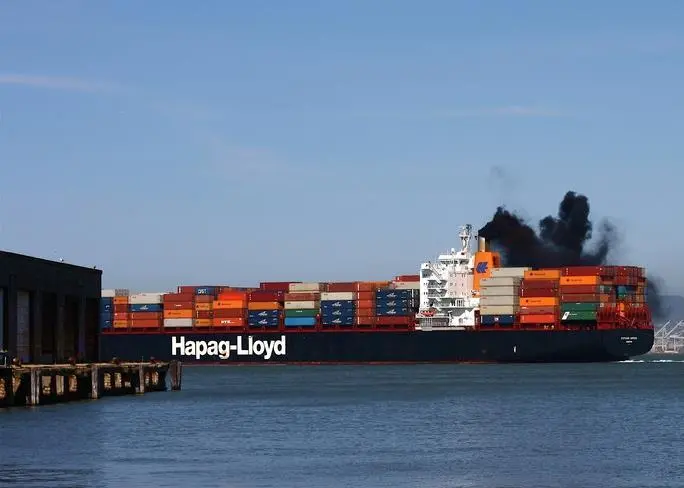
In a paper called ‘Shipping Emissions in Ports’, Olaf Merk said that the increase in CH4, CO, CO2 and NOx emissions will bring CO2 emissions from ships in ports up to 70m tonnes and NOx emissions up to 1.3m tonnes by 2050.
Mr Merk said: “Ship emissions in ports follow a highly skewed distribution pattern, with more than a third of the emissions occurring in only 50 ports. This points to the concentration of air pollution in selected environmental hotspots, but also suggests that policy interventions with respect to environmental externalities, such as on shore power supply, would be most effective if focussed on these places.”
He pointed out that although no indications of economies or diseconomies of scale with regards to relative emissions, there were certainly geographical differences.
Shipping-related emissions in Asian and European ports were large in absolute terms, but small in relative terms representing 70% of total port calls, but only 51-58% of shipping-related emissions. Mr Merk said this is because of their favourable performance in time efficiency – shorter port times mean relatively lower emissions.
In contrast, the ports in North America, Africa and Oceania had relatively high emissions. In the case of North American ports this is caused by a much larger vessel capacity calling at the port which might be caused be the relatively underdeveloped short sea shipping market.
The ITF arm of the OECD is an intergovernmental organisation with 54 member countries. It acts as a strategic think-tank, with the objective of helping shape the transport policy agenda on a global level.
This paper and others can be downloaded from the ITF website.
Related Articles
 TERMINAL OPERATIONS
 TERMINAL OPERATIONS
 CONTAINER & CARGO HANDLING