![PortStrategy[GreenPort]](https://www.portstrategy.com/wp-content/uploads/2026/09/PortStrategyGreenPort.svg)





Joining the security dots
Disjointed security solutions in European ports ultimately slow operations down, explains Alex Hughes
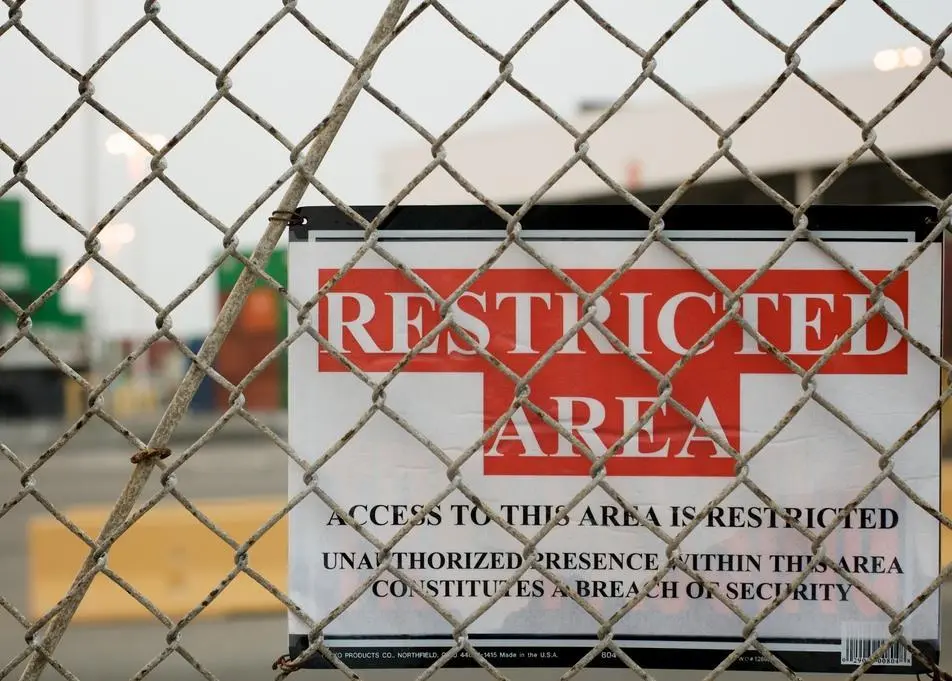
The days when threats to ports consisted of theft, damage to goods and stowaways have long gone: nowadays, they have to deal with corruption, drugs and people trafficking, as well as fraud and terrorism.
But despite the gravity of these threats, they aren’t really the main concern of most ports today; the central focus remains of competing with one another for cargo traffic. Cooperating on other, albeit serious global issues, therefore has had to take a back seat, according to Henk van Unnik, security expert and former chairman of the Security Development Board at the Port of Rotterdam.
Mr van Unnik does concedes that 9/11 did concentrate minds since, previously, security hadn’t really been on the agenda at all, with port policy orientated almost entirely towards boosting cargo handling.
“What security measures there were at the time tended to be related to insurers’ conditions,” he says.
Things have changed, which Mr van Unnik attributes to the introduction of the ISPS code and EU Directive 725, since these dictate that port facilities handling safety of life at sea (SOLAS) ships on international voyages have to apply mandated security provisions.
“In general, this has made ports more robustly protected, although there are clearly still problems that need to be tackled,” he says.
One voice
Within Europe, the lack of a US-style agency, such as the FSA, has meant that implementation of the ISPS code/Directive 725 has been left up to individual member states. As a result, there is little standardisation across ports, as each has approached the task in its own unique way. Indeed, even if it had wanted to, the EU lacks the powers to insist that national regulatory bodies follow centrally compiled guidelines.
As a result, port authorities have not sought a complete, overarching solution to security, leaving it up to individual terminal operators to interpret the best way to implement the necessary security measures, while also assuming the cost. Governments are prohibited from providing funding, since this would be illegal under EU rules, which views this as potentially distorting competition.
“Not only, then, are there financial and competitive reasons why it is difficult to install integrated security systems at ports across Europe, but EU regulation effectively makes it difficult to do so, too,” says Mr van Unnik.
But in his opinion ports should definitely be looking for a complete security solution, since this would not only be more cost effective and efficient, but also significantly enhance security by making ports better protected against both terror threats and those posed by organised crime.
“Security per se is not the highest priority in terms of a terminal operator’s budget, since the main aim is to make profit and that’s where the majority of the investment goes,” he says.
However, once a port authority is mandated by the national government to produce a port facility security plan (PFSP) – thereby allowing the facility to become ISPS certified – then the focus does change. Nevertheless, in Mr van Unnik’s opinion, there is still some way to go. “The only significant upgrade we can expect to see in port security will be when there is pan-European supervision of measures laid out in PFSPs,” he says.
Giving SUPPORT
To overcome the current lack of standardisation, the European Commission has partly funded the Security UPgrade for PORTs (SUPPORT) research & development project, through its FP7 Security Research Programme. SUPPORT is backed by 20 European organisations whose focus is to raise the current level of port security. The main objectives are to assist Port Facility Security Officers (PFSO) by developing generic port security management models based on best practice and reusable state-of-the-art technology, which can then be adapted for use at individual ports; improving training; and making use of open standards-based tools to aid security upgrades.
The SUPPORT programme takes a holistic approach, integrating legacy port systems with new surveillance and information management systems, thereby resulting in an improved level of security. Research has thrown up key gaps in current security provision at ports while at the same time producing generic models that describe actions that can be taken to either maintain or augment the efficient and secure operation of these ports.
It is not simply a theoretical exercise; the EU ports of Gothenburg, Lisbon and Piraeus are all putting full scale programmes into place based on the SUPPORT programme.
“SUPPORT solutions include policy and standardisation proposals – as well as training – that can be used by any EU port to efficiently enhance its security level,” says Mr van Unnik.
Perhaps the most important initiative to come out of the SUPPORT programme has been the development of the Port Security Management System (PSMS), which has been designed to help PFSOs upgrade their security systems simply by making available to them the specialist knowledge that they need. The PSMS provides both information and skills as well as methodologies that can be used to boost overall port security and awareness of issues related to it without any major capital spend being required.
“The Port Security Management System (PSMS) allows the PFSO to gain improved knowledge of security issues, while allowing them to simultaneously change both the perceptions and the security culture in the port,” says Mr van Unnik.
Better protected
Another benefit, he adds, is that overall corporate security can be improved simply by removing the assumption that the need for enhanced security measures hampers the business. By doing this, a port actually gains better corporate security management, which, in itself, makes companies operating there more profitable.
The PSMS package has five constituent parts, including a maturity module designed to enable security professionals to review and upgrade security plans to address terrorist threats; a corporate security module, which addresses crime risks such as loss events related to corporate processes and procedures; an e-learning education and examination module based on best practices of ISPS related maritime security educations, including drills and exercises; a sharing and decision support module which enables security professionals to supervise facilities via the internet and to collaborate on a local, national or global scale; and an Authorised Economic Operator (AEO) security self-assessment module which provides a system to reach compliancy and submit AEO application.
Nevertheless, Mr van Unnik is under no illusions that the PSMS package is some form of silver bullet.
“To reap the full benefits offered by integrated security systems, there needs to be a change of perception and of culture in the industry,” he says, stressing that there will continue to be a balance to be struck between commercial realities and security measures, which will persist as long as current legislation remains in place, since the burden of investment and compliance currently resides fairly and squarely with the terminal operators.
“Current thinking suggests that we can only expect a change to the status quo until such a time as a major terrorist incident takes place at a European port facility. Nevertheless, measures contained within SUPPORT’s PSMS programme gives PFSO’s the tools they need to assess the situation, provide the necessary advise to their management team and ensure the correct decisions are made to counter individual security threats,” says Mr van Unnik.
Related Articles
 TERMINAL OPERATIONS
 TERMINAL OPERATIONS
 CONTAINER & CARGO HANDLING