![PortStrategy[GreenPort]](https://www.portstrategy.com/wp-content/uploads/2026/09/PortStrategyGreenPort.svg)





Needles in haystacks
Terminal operators needs to be kept in the loop on scanning decisions, finds Stevie Knight
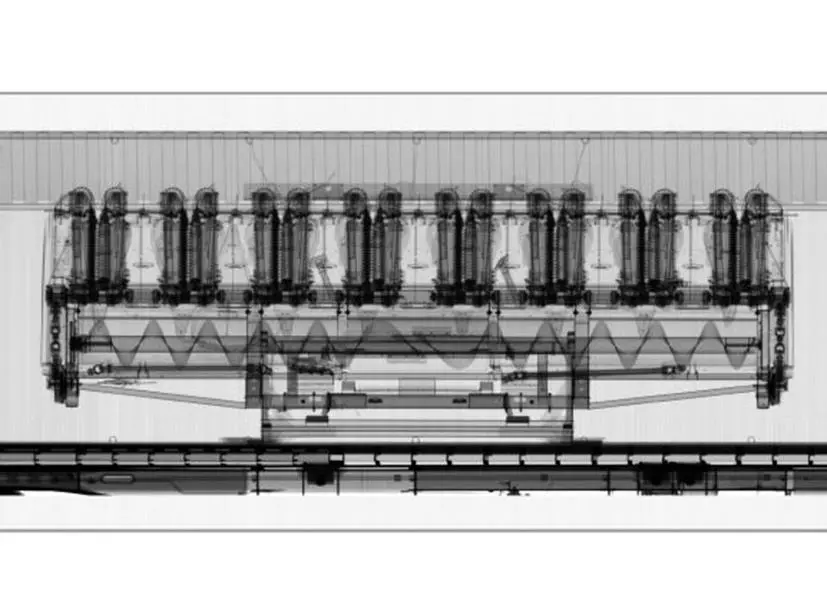
Security isn’t only about cargo scanning and equally it seems that cargo scanning isn’t only about security.
The first point is something that’s finally been admitted by Janet Napolitano of the US Department of Homeland Security (DHS). She finally sealed the fate of the US attempts to scan all cargo coming into the US by conceding “it has become increasingly clear that, at least for now, a 100% scanning goal is not feasible, and even if it were, would come at an unacceptably high cost monetarily and in the displacement of other efforts”.
So according to Ms Napolitano there’s a move to “multilayered security measures” and a risk based approach, which in everyday language means intelligence and tying together the available data to see which boxes are more worthy of a look.
Somewhat surprisingly, Andrew Goldsmith of security equipment provider Rapiscan agrees with this approach. He believes this multilayered approach is the answer: “It will take a while, but the realisation is spreading to regulators around the world that the only practical way forward is to link up information so you don’t get swamped by having to look at each and every container, leaving enough resource to focus on what really does need investigation.”
In other words, scanning cargo for dangerous goods is like looking for a needle in a haystack and the biggest issue for ports isn’t dealing with the needle, it’s the hay. While the actual scanning device is usually operated by Customs personnel, many are located inside the port which leaves the operator with piles of quite innocent boxes to move and occasionally strained relations.
Information highway
In order to sift the hay and help keep things on an even keel, Mr Goldsmith explains that there’s a need to tie together the “shedloads of information” that can help locate suspicious boxes and release those aren’t a problem; therefore software systems like Certscan are a blessing as they pop up the image of the box alongside information such as the manifest, payment data or even history of previous scans.
A good example is the container facility at Puerto Rico: “They had no way of tangentially combining the data, so every time they saw something that was suspicions, the operators and Customs officials had to stop everything and track the information from all the different sources,” says Mr Goldsmith. Installing a smart system that could pull up all the relevant data made the operators aware of likely explanations behind any suspicious signals, streamlining the process and helping keep everyone on target.
Costs can unfortunately create a tangle: although it’s often in reality the responsibility of Customs, sometimes the scanner outlay is pushed on to the operator. At around €3m each, it’s quite a hefty purchase for something that doesn’t actually improve throughput and often increases handling times.
To offset this some interesting models are being considered, including outsourcing to a third party company which brings in its own equipment and operates it on behalf of Customs: Rapiscan itself helped Puerto Rico with something similar to a Build Operate Transfer agreement.
However, these arrangements usually hinge on one party or another being compensated by a share of the duties they help collect – which brings in the second point: scanning isn’t just about security. As the process can unearth questionably declared goods it is often not just used for spotting dangerous items but is also linked to revenue generation.
Apapa trials
Dallas Hampton, managing director of APMT’s Lagos terminal at Apapa, Nigeria, explains that though the operator “has massively upgraded, modernised and improved efficiency at the terminal” X-ray scanning remains the Achilles heel of port operations in Nigeria.
He tells how APMT at first welcomed the idea of the installation of container X-ray equipment at the port of Lagos. “After all, Customs were always opening up containers for physical inspection – up to 75% of all containers at times and at first this seemed like a solution to reduce the number of those inspections considerably,” he says.
However, he explains that while in most other countries the Customs authority advises terminal operators which containers need to be X-rayed prior to or at the time of discharge or arrival, in Nigeria it is necessary to wait until the importer or exporter has lodged their Customs documentation. In the case of imported containers this delays delivery to the consignee by several days.
“The first thing we get is a request from the consignee or importer to say, ‘Customs have told us we need to get our containers scanned’,” says Mr Hampton – so the terminal operator is the last to know.
Join the line
Dogged by this lack of information, Apapa’s queues didn’t shorten when the new facility was installed by Customs contractor Cotecna, they actually got worse. The facility only managed to scan about 50 containers per day in spite of many more being nominated for the process explains Mr Hampton: breaking point came with around 100 waiting lorries clogging up the port and, finally, a driver being hit by another truck.
The death pushed APM Terminals to step in and, as a partial solution, provide the logistics to and from the port based scanning facility run by the Nigerian Customs contractor for around 200 boxes a day, about a third of the throughput, for a nominal fee. It succeeded rather too well and the requests for drayage rose almost weekly.
“Unfortunately, in its drive to increase revenue Nigerian Customs didn’t adhere to the agreement,” says Mr Hampton, adding that the number finally rose to above 300 boxes per day. As a result delays reappeared and APMT was blamed for the growing queues: “In the end we had no real option but try to draw a line in the sand. The point is, it isn’t about more drayage; 200 containers was our limit as this was the amount of disruption that the port could handle,” he says, adding: “Unfortunately the simplistic response by those not directly involved in port operations is to blame the terminal operator for scanning delays. Many people in Nigeria forget that scanning is not, actually, our responsibility.”
So, while the queues have abated, if there is no governmental push to effect change Mr Hampton expects them to reappear. However, he goes on to say the solution is not down to anything as simple as new technology as Customs already have quite a bit of risk assessment software in place. He insists “they just need to use those systems” and let the operators know – in time.
Related Articles
 TERMINAL OPERATIONS
 TERMINAL OPERATIONS
 CONTAINER & CARGO HANDLING