![PortStrategy[GreenPort]](https://www.portstrategy.com/wp-content/uploads/2026/09/PortStrategyGreenPort.svg)





Passive system promises speedier handling
US-based Decision Sciences has installed its first fully operational multi-mode passive detection system at Hutchison Ports’ Bahamas transhipment hub, Freeport Container Port.
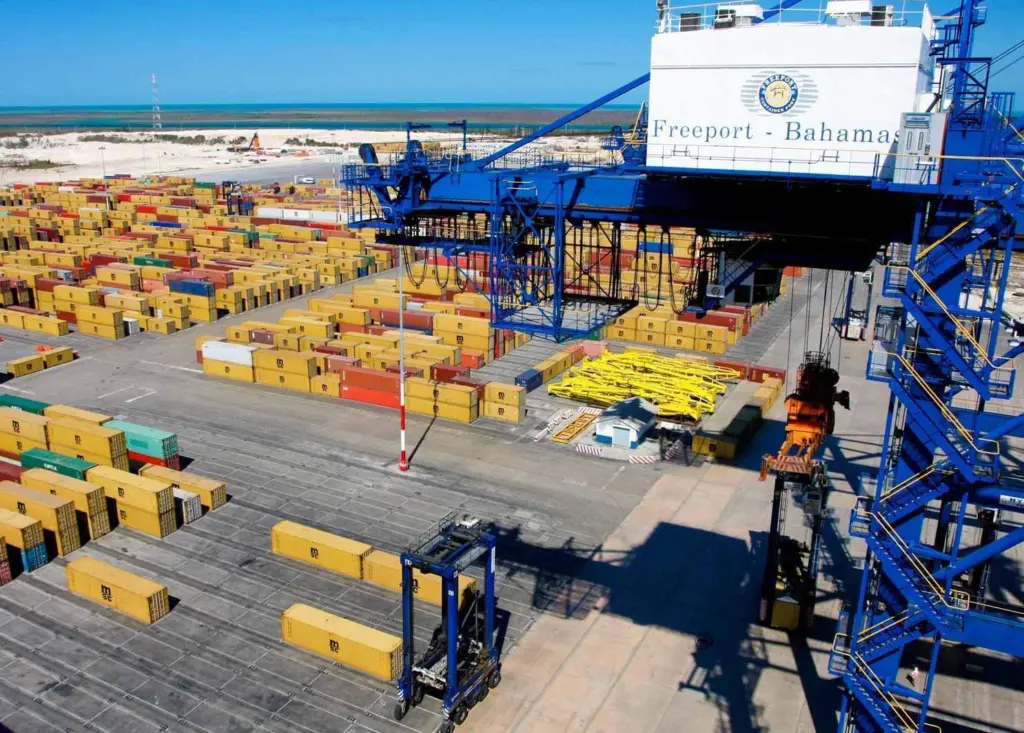
The system, designed to detect even heavily shielded nuclear and radiological threats inside containers, has been based on technology developed at the Los Alamos National Laboratory and uses naturally occurring cosmic ray muons, rather than X-ray.
It is said to be capable of scanning all types of container, vehicle or rail wagon without impeding the flow of commerce or generating harmful radiation, and can also detect other smuggled goods, such as arms or narcotics.
Decision Sciences is funding the Freeport scanner, using it to showcase its capabilities.
Speed is of the essence if container scanning is to be implemented without causing bottlenecks in the supply chain.
Earlier this year, APM Terminals introduced a new container scanning procedure at its Apapa, Lagos terminal, working with Nigerian Customs and the Swiss Cotecna Destination Inspection.
The new system increased scanning throughput by 62% in the first week and eliminated congestion in the scanning area – which been causing delays of up to four days and hundreds of dollars in additional trucking fees, says APMT. Previously, as many as 200 trucks would be waiting in the scanning line.
Related Articles
 TERMINAL OPERATIONS
 TERMINAL OPERATIONS
 CONTAINER & CARGO HANDLING