![PortStrategy[GreenPort]](https://www.portstrategy.com/wp-content/uploads/2026/09/PortStrategyGreenPort.svg)





Singapore taps Big Data benefits
The Maritime and Port Authority of Singapore (MPA) is working with IBM to develop and test new analytics-based technologies to help improve safety, security and vessel traffic at the global port hub.
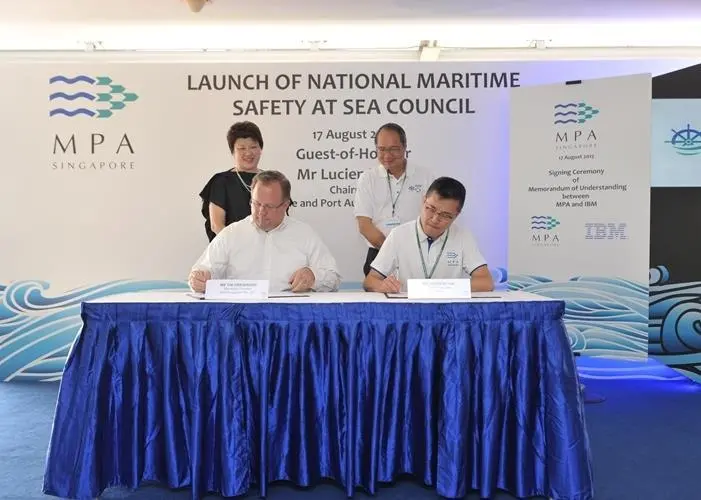
As part of the two-year agreement, IBM will create a unified platform to integrate real-time data and provide a consistent view of data points across MPA to help port operators make more informed decisions. For example, with vessel positional and weather data, the platform will report on any vessel path inferences to avoid accidents.
“MPA is happy to partner IBM on this important MOU to leverage new technologies and harness data analytics that not only enhance current maritime operations, but support our smart port initiatives for the Tuas Next Generation Port,” said Andrew Tan, chief executive, MPA.
“Our collaboration with IBM will see a good mix of our research expertise, software technologies and maritime domain knowledge to create new capabilities for the maritime industry to support Singapore’s vision towards a safe, smart and efficient port,” he added.
Using the IBM Traffic Prediction Tool, predictive analytics will be applied to forecast vessel arrival timings and potential traffic congestion. The partnership will also uncover new methods for sense-making and aid in event monitoring to detect unusual behaviour of vessels and prevent illegal bunkering through fusion analytics, anomaly detection and data mining, using the IBM Incident Detection Module and IBM System G.
Singapore remains one of the busiest ports in the world and the region, with an estimated 1,000 vessels calling at the Port of Singapore at any one time. Every year, there are about 130,000 vessel calls at the Port of Singapore, which means there is a vessel arriving or leaving Singapore every two to three minutes.
The work with IBM is expected to significantly improve port security and safety and help cater to increasing growth in vessel traffic at the port.
Related Articles
 TERMINAL OPERATIONS
 TERMINAL OPERATIONS
 CONTAINER & CARGO HANDLING