![PortStrategy[GreenPort]](https://www.portstrategy.com/wp-content/uploads/2026/09/PortStrategyGreenPort.svg)





The Insurer
Ports challenged by shrinking trade volumes are being tempted to go for a new money-spinner: providing berths for laid-up ships. That is less of a cake-walk than you might imagine, and for that you can blame or thank the insurance market.
Speaking at a recent conference, Michael Laurie, business development manager of BMT Marine & Offshore Surveys, made it clear that to maintain insurance cover, shipowners will have to ensure that laid-up ships must satisfy national, port and classification criteria. Ports themselves will have lots to do, including demonstrating that they have taken precautions against pirates and other incursions onto minimally-crewed ships.
Insurers and surveyors will be taking a close look at port geographical features such as access, shelter and climate. Ports in the Philippines, Malaysia and Indonesia are among those bidding to become holding stations, and have been offering tempting prices, but locations vulnerable to typhoons or criminal activity are unlikely to win much favour.
Insisting on standards acceptable to BMT and other survey specialists, underwriters will be seeking a whole range of guarantees about port authority systems, tugs, fire-fighting and safety, and the availability of services such as fresh water, shore power and repair. Few locations are likely to match Elefsis Bay in Greece, which has a micro-climate devoid of the humidity that can so easily damage idle hulls; and not everyone wants laid-up tonnage in town. Authorities at Koje Island, Korea, are worried about biocides leaching out of parked ships.
Ports going in for this speciality have to buy additional indemnity insurance, and unsurprisingly it is getting pricier, both in general, and per ship. Liability for pollution sits with the shipowner, but a port could be presented with the bill resulting from an accident while ships in its custody are manoeuvring.
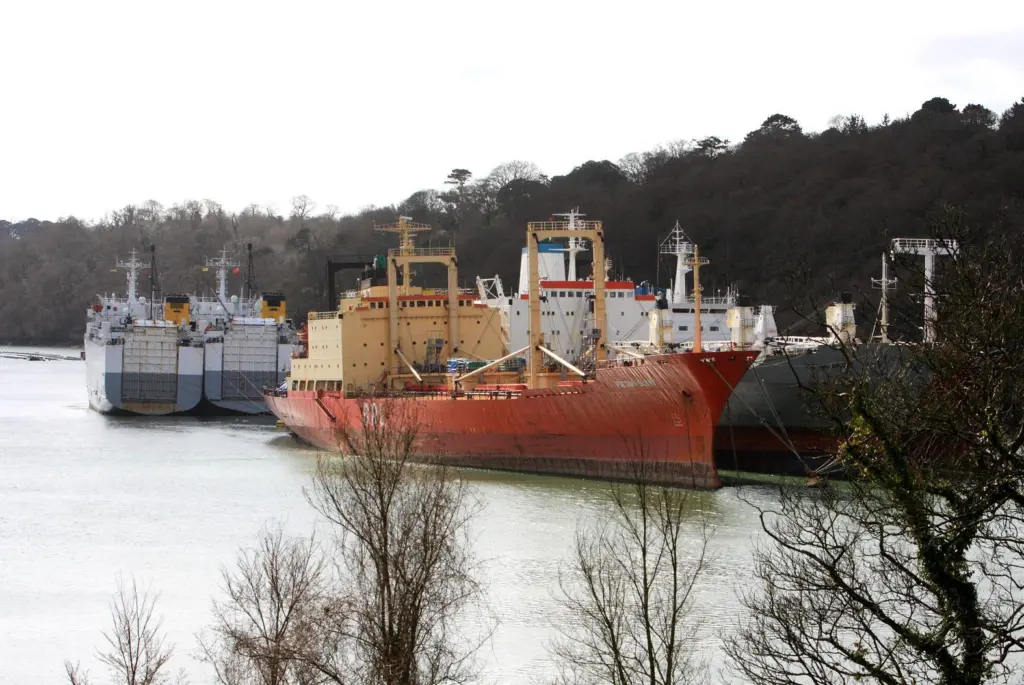
Colin Harrison of Able UK, told the above mentioned conference, run by the Institute of Marine Engineering, Science & Technology, that his company has developed new berths on the Tees as lay-up facilities. For Able, this is good business given the general shortage of space. In the UK only Middlesbrough, Southampton and Blyth offer port lay-up berths, although the River Fal is in use too. The Tees has 10 ships in lay-up, including containerships and a former ferry which has become a night-club named Tuxedo Royale (the owners do not want to scrap it because it has a casino licence).
Do not let the grass grow under your feet, on this one, no matter how well you think you nurse the ships. Able had to unleash a vigorous hosing down on one vessel which had been idle for six months when grass was found sprouting on it.
Related Articles
 THE INSURER
 THE INSURER
 THE INSURER