
Johan-Paul Verschuure of advisory group Rebel explains what is in store for the port sector as hydrogen continues its upward trajectory across the ports and shipping industry
Looking back at 2020, hydrogen has continued its upward trajectory in gaining attention. Even though hydrogen seems like a new innovation, the technology is proven, applied in numerous industrial applications and regulation already exists. The large scale production of (green) hydrogen* and the increasing number of applications are new.
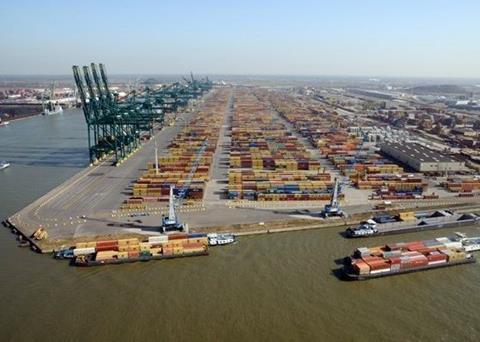
Renewable energy sources from around the world can be linked to consumption centres on the other side of the world using hydrogen, so international cooperation and trade are needed to really make the energy transition happen in the next decades. This is where ports have a big role to play, with lots of opportunities open to them.
Hydrogen plays an important role in most economic stimulus packages. France (€7.2 billion), Portugal (€7 billion), Spain (€8.9 billion) and Germany (€9 billion) plan to invest heavily in hydrogen during the current decade. For example, plans involve the realisation of 6.5 GW** in France and 5 GW in Germany by 2030. The EU’s overall objective is to reach 40 GW of electrolyser capacity by 2030 (producing some 14 m tonnes of liquid hydrogen).
Ambitious as this may seem, this only represents around 4.9 per cent of EU-27’s current energy demand. Currently, over 12 per cent of the EU’s energy demand is coming from renewable sources. Replacing all fossil fuels in the EU-27 (accounting for over 60 per cent of the current energy mix) with green hydrogen requires over 12 times the hydrogen production which the EU has set as its objective for 2030. This excludes the potential massive additional demand if the shipping sector makes a similar transition.
PORTS AND AFFORDABLE RENEWABLE ENERGY
The majority of renewable energy being developed in European countries could directly replace non-renewable energy on the grid, although no hydrogen will be needed in this process. However, despite significant upscaling of renewable energy in many European countries there will still be insufficient available to go beyond domestic demands.
Hydrogen can help to unlock the potential of places where renewable energy potential is high, affordable and has little impact on its surroundings. Importing green hydrogen is essential for achieving the ambitious net-zero objectives. This requires much more international cooperation than is currently foreseen in the various (national) hydrogen policies, but also on a port level.
Current supply chains for fossil fuels are focused on exporting from a few countries only. However, hydrogen will likely come from countries with supplies of renewable energy (i.e. geothermal, hydropower, solar or wind) and in the case of Europe, from closer suppliers.
This means that smaller vessel sizes can be used to link up hydrogen production and energy consumption centres. Although economies of scale advantages will be important for hydrogen as well, there may be more routing options for importing hydrogen than for fossil fuels.
For hinterland transportation many more pipelines are needed to transport hydrogen in bulk. This is in addition to assuming hydrogen transport is by short sea and inland waterway transport.
This summer, a vision paper was presented for a pan-European hydrogen pipeline network. The plans consists of a set of converted gas pipelines and new hydrogen pipelines. Realising a network of pipelines requires governments and ports to make necessary preparations for safeguarding the corridors. Other administrative preparations, including safety protocols, are also needed.
HYDROGEN BUNKER FACILITIES NEEDED
In October 2020, the IMO did not manage to reach an agreement around a CO2 reduction roadmap for shipping. However, the EU Parliament has voted to include shipping into its Emission Trading Scheme (ETS) from 2022 onwards.
This means the EU is providing a financial incentive for shipping lines to switch to alternative fuels and make use of shore power while in ports. This will make LNG powered vessels more attractive but also ships powered by green hydrogen in the future. In addition, for inland water transport reducing the emissions with hydrogen powered barges can be very attractive, although the adoption of hydrogen as bunker fuel will take a while.
Last year Maersk Line published its view of how the shipping industry should transform to reach net-zero. The shipping line aims to have a commercially viable carbon neutral cargo vessel by 2030 and then the transition moves at an accelerating pace. This means that a large bunkering network is needed in the next ten years.
However, in the early stages of the industry’s adoption of hydrogen, vessels need to have a hybrid propulsion system to ensure flexibility in operations and avoid being too reliant on a few ports to bunker – is currently the case with LNG fuelled vessels.
ROADMAPS AND DEVELOPMENT TIMING FOR HYDROGEN ARE COMPLEX
Unlocking the potential of hydrogen requires careful balancing between risk minimisation and creating viable (private) investment cases. The timing of developments and investments must be carefully aligned to make sure demand and supply match. This cannot be achieved with national plans only and an integrated international focus from supply through to end customer is required – with ports an essential link in these supply chains and plans.
Various other barriers in the energy transition need to be overcome before hydrogen can be handled at ports on a large scale. The biggest challenge for realising international hydrogen supply chains is the scaling-up of hydrogen infrastructure and production.
However, timing of the scaling up of investments is tricky and challenges exist around financing. Subsidising (or prefinancing) scaling-up of innovations is needed in addition to R&D innovations. Preparing stable institutional frameworks and support knowledge development will support this process further. Changes in the traditional incentive schemes and cost structure of fossil fuels versus renewable energy need to be changed before hydrogen can be used on a large scale.
For all these developments in and around ports, involvement of the financial sector and private investors is essential. Investments from the public and private side are needed on a large scale and a good risk allocation is essential to unlock investments. Solutions for reducing offtake risk and permitting risk is also essential for financial investors to step in.
HYDROGEN CAN LEAD TO CHANGES IN PORTS
The energy transition can reduce the need for fossil fuel storage and transport infrastructure in ports, but the requirements for hydrogen storage infrastructure can use the same areas and facilities. Safety measures and zoning requirement is different compared to some fossil fuels which hydrogen may replace. Crucially, port masterplans must be updated.
Industrial and/or chemical clusters based around hydrogen imports can be an options as well for ports without the ability to attract sufficient large volumes to obtain a pipeline connection. Also, because electrolysers are best situated in ports where supply and demand meet, marine facilities must adjust their own business model and capital structure to adjust to the new risk profile in comparison to traditional fuels and cargoes.
Ports can play an important function in the future supply chain of energy where hydrogen can unlock the potential of renewables from remote locations. Hydrogen can also play a vital role in net-zero ambitions for the shipping industry, but bunker facilities are needed to make this happen.
To realise the transition ports, governments and the financial industry need to cooperate more closely to get initiatives off the ground in an efficient and effective manner. Then, ports can adjust their organisations and infrastructure to make sure they are ready when hydrogen berths in the ports are required by supporting ‘hydrogenisation’ of supply chains.
* Green hydrogen is produced with energy without the use of fossil fuels. Fossil fuels can also be used for the production of hydrogen, which is then referred to as grey hydrogen. As this happens in specific facilities, the emitted CO2 can be captured and stored in order to create blue hydrogen. When pyrolysis is used for splitting hydrogen from the natural gas, leaving solid carbon as rest product, this is referred to as turquoise hydrogen.
** 1 GW installed power can produce 14 TWh, which is around 1.2 million tons of oil equivalent.
Hydrogen – the Catalyst for the Energy Transition
Hydrogen can store energy and when renewable energy is used for hydrogen production it results in green hydrogen, which does not lead to CO2 emissions. After usage the waste products are just pure water and oxygen. In liquid form, hydrogen can be transported over large distances without the use of power cables.
When potential renewable energy sources are remotely located but cheaply available, storing this energy in hydrogen can be attractive. In addition, energy can be stored in cases when demand and supply do not match. Also, hydrogen is attractive as an energy source for vehicles or anything else not connected to the grid.
However, hydrogen has to be manufactured using electrolysation to store the energy. During this process energy is lost due to inefficiencies. Currently, the known efficiency of an electrolyser is 80 per cent and another 10 per cent can be lost in compressing the hydrogen into liquid state for transportation. Therefore, using hydrogen results in more energy losses in the range of 35-60 per cent depending on the application. This generates an overall efficiency of 35-50 per cent from source to use.
The overall efficiency will increase when more research and development is undertaken but will remain significant. Linking renewable energy sources directly to the grid can result in lower energy losses (depending on the distance covered). However, in areas with renewable energy in abundance, hydrogen can offer great benefits for grid stability.