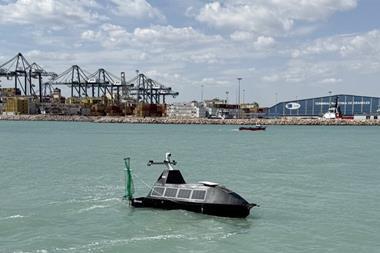
A new independent study has found that accumulated concentrations of scrubber wash water components are at very low levels in ports and well below applicable regulatory limits.
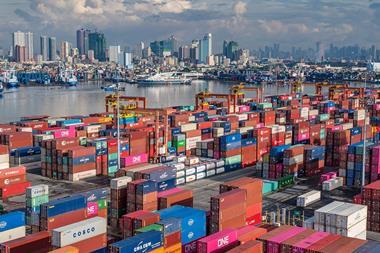
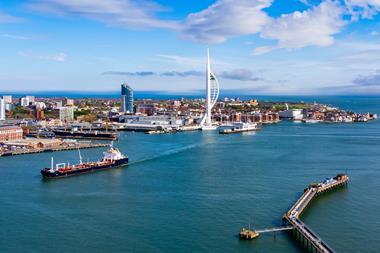
The study by CE Delft, presented to international delegates of the 74th session of IMO’s Marine Environment Protection Committee (MEPC) on 14 May in London, will help inform the current debate regarding the environmental impact of open loop scrubbers on the marine environment, and particularly on ports and harbours.
CSA 2020 executive committee member, Arne Hubregtse, executive board member of Spliethoff Group, observed: “These initial findings are very promising and suggest that those ships operating open-loop EGCS will have near zero impact on the quality of harbour waters.”
Impact assessment
The ongoing study, which uses three versions of Deltares’ dynamic computer modelling system MAMPEC, is assessing the accumulated impact of exhaust gas cleaning systems on the water quality in various common port configurations by evaluating the concentration of nine metals and 16 polycyclic aromatic hydrocarbons (PAH).
CE Delft researchers used wash water samples taken from the scrubber tower outlet of cruise ships, bulk carriers and ferries prior to any buffering or other wash water after-treatment processes.
In the first model, the researchers found that “for most of the compounds considered in the specified reference scenario and not considering wash water after-treatment, multiple ships using open-loop EGCSs may increase the equilibrium concentration in the port by 0% -0.01% of the annual average new Environmental Quality Standard expected to go into force in the EU in 2021, as part of a new Water Framework Directive”.
Only in their assessment of concentrations of Naphthalene, Nickel, Benzo(a)pyrene, and Fluoranthene did the researchers find a slight increase in the equilibrium concentrations, though still only between 0.02% and 0.2% of the maximum annual average Environmental Quality Standard specified for 2021.
CE Delft will continue to assess the accumulated concentration of scrubber discharge water compounds in two more port configurations and compare the resulting concentrations against other standards. It will also compare the compound concentrations being discharged from ships in port with the background concentrations provided to ports by other sources, such as rivers.
By Rebecca Jeffrey