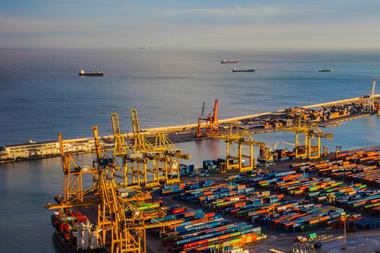
Navis predicts remote operations, innovative technology and sustainability will be big in the ocean shipping industry in 2021.

Navis’ predictions for the cargo supply chain include more investment in cloud-based technologies; the rise of smart technology for inland and marine logistics; the acceleration of automation adoption at terminals; and an increased focus on sustainable operations.
Speaking about the first prediction, Younus Aftab, chief product officer at Navis, said: “We’ve seen the cloud-based technology trend in the ocean shipping industry increase exponentially as a result of the COVID-19 pandemic and expect it to continue to rise next year.”
As a result of COVID-19 social distancing measures, onsite management of terminal operations had decreased this year in exchange for more remote operations made possible by innovative technology. According to a Navis customer survey, market interest in cloud-based solutions had risen nearly 40% comparing 2019 to 2020.
Mr Aftab added: “Terminals are realizing they can perform nearly all tasks remotely, which allows them to streamline workflow, cut down on costs and prioritize safety for their staff, leading to more reliable and stable operations to best serve their customers.”
Looking at the rise of smart technology, Navis said this year has demonstrated the value of enhanced visibility and predictability in operations, and the importance of technology that can collect and analyse data to help stakeholders make better business decisions. A Navis 2020 automation survey found 94% of respondents agreed that artificial intelligence and machine learning would be critical to improve optimization at automated terminals at some level in the near future.
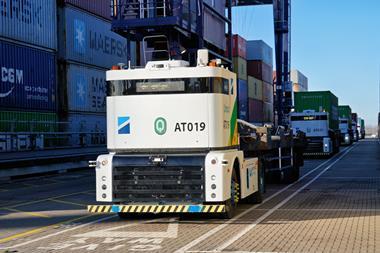
In a bid to increase productivity and remain competitive, terminals are now more rapidly turning to automation, stated Navis. In the same 2020 automation survey, 94% believe it will be important for terminals to automate operations in the next 3-5 years. Additionally, 70% of terminals believe automation could increase productivity by 15% or more, with increased operational safety (82%) and lower overall terminal operation costs (73%) as its biggest benefits.
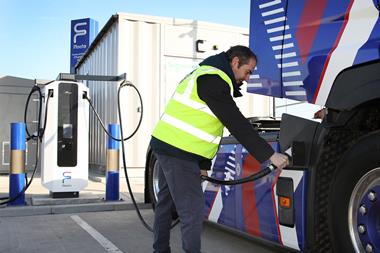
The increased focus on sustainable operations has been driven by a bigger focus on the supply chain. In the first half of 2020, decreased traffic at congested ports and terminals around the world had a positive impact on the air quality and environment, reinforcing the longer-term sustainability trend we were already seeing. Innovative technology to help terminals monitor operations to run more efficiently and the use of rail instead of trucks for transport, are expected to be on the rise to help ports and terminals achieve more sustainable outcomes.
Last year, Cargotec announced it will sell Navis.