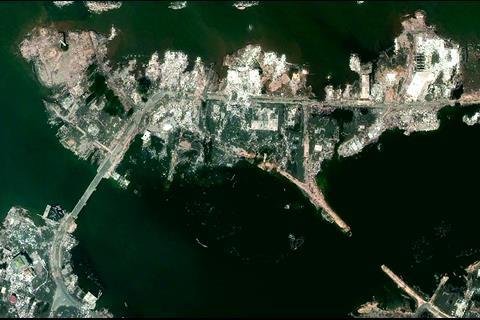
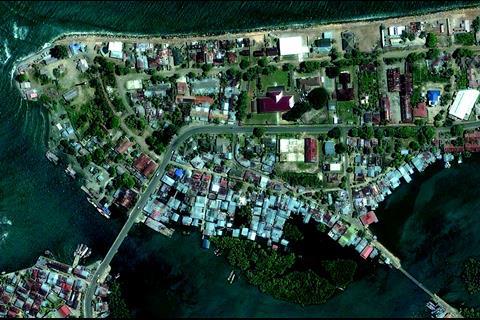
The shocking death toll resulting from the Indian Ocean tsunami has stunned the world by its sheer scale. Yet despite the damage wreaked on homes and hotels, the port and shipping industries, which initially looked as if they would take the brunt of it, remained surprisingly unscathed by the disaster. Gavin van Marle reports.
Ships in the open water barely noticed the wave, registering only an increased speed and some shaking. Most damage occurred when ships in port crashed into the quayside or each other. While problems on the land became immediately apparent, ports are also concerned about changes underwater, particularly the movement of sediment which affects safe depths for navigating and berthing.
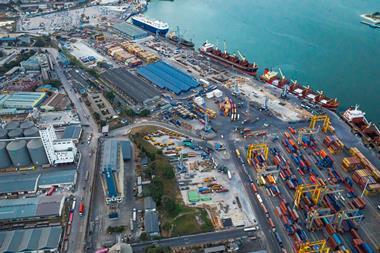
The most badly hit was the south Indian port of Chennai. As the tsunami struck, the water level at the port rose two metres above the wharf. When it withdrew, three vessels snapped their moorings, damaging three more vessels and several port structures; up to 12 ships were hit and six empty containers washed away. A fishing trawler sank in the port's basin. One vessel, the GEM OF TUTICORIN, was unloading 38,000 tonnes of raw sugar from Brazil as the wave struck.
Some 1,500 tonnes of cargo is said to have been spoilt by the water.
The ABG KESAVA hit two hoppers at the wharf. Hyundai, which has a nearby production plant, also saw 1,173 vehicles, bound for Mexico and Algeria and valued at $5.7 million, sunk in the port. According to the Chennai Port Trust (CPT), the cost of damages to the port is US$2.98m, while damage to ships and cargo is being calculated separately.
The tetra pod on the outer breakwater was flattened, and the entrance wall to Ambedkar Dock was left with a six-inch crack. A dolphin mooring, lighting and wharf cranes were also damaged. The oil terminal was hit too, but tankers have now been moored at anchor, allowing uninterrupted supply to the refineries.
EVEN AN UPSIDE Sediment from the wave caused the depth of water to be reduced in some places, and deepened in others. In fact, Chennai is now the deepest port on India's east coast, with the entry channel, previously 18.6 metres, now 19.6 metres. Some 4-500,000 cubic metres of sediment was dredged in the deep harbour, at a cost of $1.14m, adding an extra one to two metres draught. The changes have been welcomed by the port, which was planning a capital dredging project to deepen the waterfront anyway. On completion Chennai will be able to handle Suezmax-sized tankers.
Although port operations resumed on 27 December, delays are still occurring. Large numbers of homeless people have set up shelters by the port gates, which has restricted container movements. According to Maersk Sealand, although the quay cranes have been repaired, they are still suffering from breakdowns. CPT chairman K Suresh admitted that the port is operating at 90% capacity, handling around 600 containers a day.
Elsewhere on the Indian mainland, ports were let off lightly. There was no damage to ships at Tuticorin, where port operations have resumed and, apart from sedimentation, which also occurred at Kakinada, no problems have been reported. PSA Corp, which operates Tuticorin Container Terminal, said its facilities remained intact. Deputy chairman of the port, T Balakrishnan, noted that of the 15 ships harboured at the time, there was no damage to any. "We consider ourselves very lucky, " he said. Cochin Port, in the southwestern state of Kerala, was also unaffected. Vizag port temporarily suspended movements as a precautionary step, after one vessel broke its moorings. The channel has been inspected and surveyed, and operations are now back to normal. Haldia, Paradip and Karwar ports are all unaffected.
However, India's island territory, the Andaman and Nicobar islands, were severely damaged. Two Shipping Corporation of India vessels - the TEEL and KALAPANI - were sunk, and two jetties were destroyed at Port Blair. Access to the islands is still restricted making accurate assessment difficult. According to first estimates, losses to port and shipping assets on the islands is about $229m, with Port Blair alone accounting for $34-46m. Rebuilding is expected to take some time and relief shipmnets are the port's first priority.
Sri Lanka was also hit hard but despite reports to the contrary, Colombo port is now operating normally after just a short disruption to services. The only problem the port faced was the general cargo ship JAAMI, which was entering the harbour as the tidal wave struck, hit the pilot jetty, although there was no infrastructure damage.
Immediate action by the Sri Lankan Ports Authority (SLPA) prevented the ship from sinking in the main shipping channel, and it was towed to the outer anchorage. Basin depth soundings, conducted immediately, showed that no silting occurred and the port is operating at its original draughts.
INACCURATE REPORTS However, Colombo has suffered from inaccurate publicity. Arab News reported that Saudi Arabian ships have decided to bypass the port, although according to South Asia Gateway Terminals (SAGT) there have been no changes to vessel schedules. Shipping newswire cionline claimed that the port was severely damaged. A spokesman for SLPA retorted: "Colombo port is and has been fully operational since December 27 morning ? operations are continuing at the same efficiency and productivity level prior to December 26." However, congestion from naval relief vessels at the port has led to limited delays to containerships.
Galle port was still closed at the beginning of January, but was expected to reopen in the second week of the month. Only one berth was functioning normally at the time of going to press. The town itself was devastated, but the port managed to escape serious damage. The main port building survived, although other buildings and the pier were damaged. Commercial operations have been delayed mostly due to smaller boats sinking in the port's basin and excess mud in the harbour.
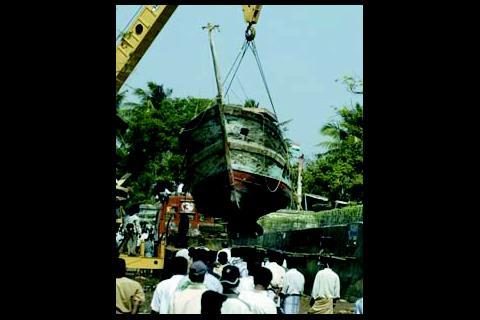
The Indian Navy has finished an echo-sounding project there to find out what dredging needs to be done. DIYAKAWA, a 1,000 ton dredger which had been anchored in the port, was washed ashore along with two tug boats. SLPA is trying to refloat the vessels, but has been hampered by the fact that there is no crane available to lift the dredger.
Kankesanthurai port was also closed following extensive damage.
Goods are being transported to the port by tugs. Point Pedro too, was hit badly. SLPA has said that the government is likely to ask for foreign assistance to help rebuild the two ports. Trincomalee suffered damage to the pier, but has resumed operations.
Meanwhile, in Indonesia, Samudera Shipping Line's cement carrier SINAR ANDALAS capsized off Aceh, in the port of Lhok Nga. Initially, 15 crew were reported missing, but were found later to be safely on land at the time. At Kreung port, two crew members of the product tanker Tirta Karsa died. According to the UN's Office of Humanitarian Affairs, sea access at Banda Aceh, Meulaboh, Sabang and Lhk Nga has been restricted, and cargo redirected to Belawan and Lhokseumawe, where operations are normal. Singkel and Sibloga ports are functioning at limited capacity.
Thailand, while suffering devastation to its tourism industry, was lucky in its ports. However, cargo destined for Thailand and Malayasia is likely to face delays as relief shipments, as elsewhere in the region, will get priority. For Thai businesses affected by the tsunami, local commercial banks have offered to provide new loans or allow borrowers to stop or extend debt payments.
Despite the scale of the disaster, both ports and shipping lines have been extremely fortunate. Some industry sources have even claimed that the tsunami might ultimately benefit the industry, as port projects have been bought into the spotlight. Others point out that extensive rebuilding in the affected region will lead to an increased demand for shipping.