A new report has recommended the closure of a major New Zealand port to improve the country’s supply chain.
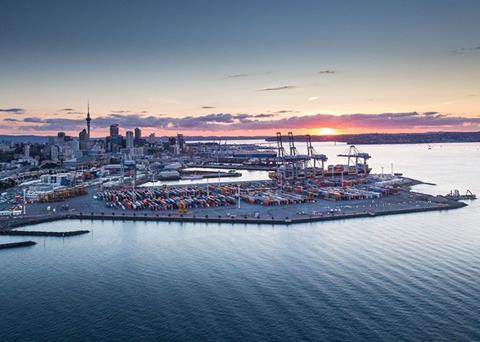
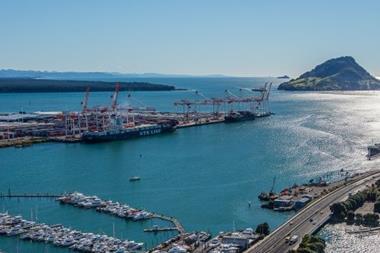
The Upper North Island Supply Chain Strategy Working Group, commissioned by the New Zealand government, said the managed closure of the Ports of Auckland (POAL), development of Northport to capacity equivalent to POAL and continued operation of the Port of Tauranga, was its preferred option out of five for the development and delivery of a strategy for the Upper North Island to ensure the supply chain is fit for purpose in the long term.
This report is the second in a study for an Upper North Island Supply Chain Strategy. The report is accompanied by an economic analysis of supply chain scenarios by a consortium of advisors led by EY. The economic report said moving POAL, including its car imports activity, to Northport would cost approximately NZ$10.3bn.
“Based on the multi-factorial analysis undertaken, we believe that option 2: the managed closure of the POAL, the development of Northport and continued operation of the Port of Tauranga; provides the greatest level of benefit to the upper North Island and New Zealand,” said the working group.
It added: “The benefit cost ratio for this option is 2:1. This scenario also includes development of landside infrastructure consisting: a rejuvenated the North Auckland Rail line and spur to Northport; a new inland freight hub in the Northwest of Auckland complementing Metroport in the South.”
Reasoning
According to the working group, reasons why this two-port solution was chosen include: it promotes resilience in the supply chain by providing two distinct North and South entry points for international freight originating in and destined for Auckland; it maintains levels of competition in the Upper North Island Supply Chain, plus fosters innovation and cost effectiveness/efficiency of freight delivery; and it maximises the use of the existing port system and the availability of surrounding land at Northport, noting potential alignment with other strategic projects such as a new drydock and rail staging for NZ refinery in west Auckland.
The working group used a range of strategic principles to assist in the evaluation of options for a future supply chain. These included cost efficiency in moving freight; maintaining the level of competition in the supply chain; reducing the ‘friction’ between freight and passenger movements; maintaining or improving the resilience of the supply chain; and contributing to overall government objectives.