





Oakland to cooperate in investigation to cut harmful diesel fumes
Californias Port of Oakland says it will cooperate fully with an investigation into whether it is sufficiently tackling harmful diesel fumes.
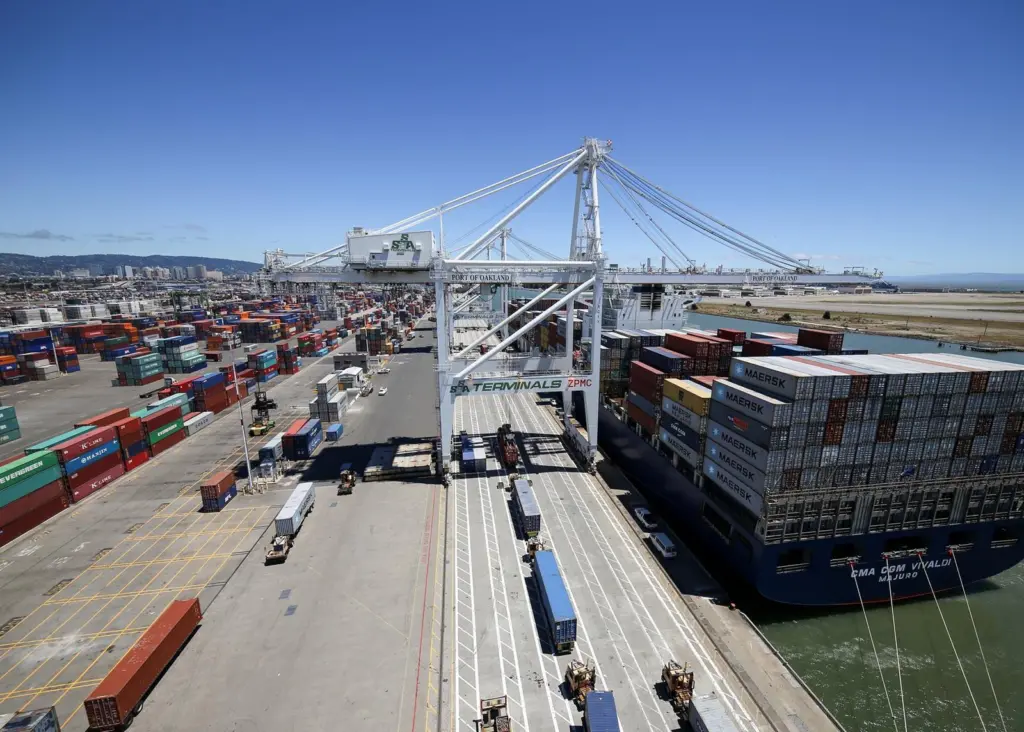
The port made the declaration following confirmation by the US Department of Transportation and the US Environmental Protection Agency that they would look into a complaint made by West Oakland Environmental Indicators Project (WOEIP) alleging that the city and port are producing harmful diesel fumes that discriminate against the neighbourhood of West Oakland’s predominantly poor, ethnic minority residents.
In a document submitted to the federal agencies, WOEIP said that the port’s continuous expansion of maritime activities has consistently failed to incorporate adequate measures to mitigate elevated pollution levels of toxins, such as black carbon and nitric oxide.
The Port of Oakland stated: “The Port of Oakland takes air quality concerns seriously and works aggressively to mitigate the impact of our operations and development on the environment. The Port operates under comprehensive plans to reduce air emissions throughout its operations. The Port’s efforts have resulted in significant reductions in diesel particulate emissions at its operations, and the Port continues to work to further reduce emissions. The Port will cooperate fully with the investigation.”
The port said it is guided by a Maritime Air Quality Improvement Program (MAQIP) that was developed in partnership with neighborhood representatives and air quality regulators and commits the port to diesel emissions reduction.
The State of California Air Resources Board (ARB), which aims to reduce diesel particulate matter (DPM) from port sources by 85% by 2020, conducted its most recent health risk assessment (HRA) of West Oakland in 2008. The Port of Oakland said the 2008 HRA showed that 80% of health risk in West Oakland is from sources other than the port, with the port’s contribution at just 16% and the UP rail operations contribution at 4%.
The port said diesel emissions from trucks serving the Port of Oakland declined 98% between 2005 and 2015. In the same timeframe, ship emissions dropped 75%. The results were calculated using modeling guidelines prescribed by state air regulators.
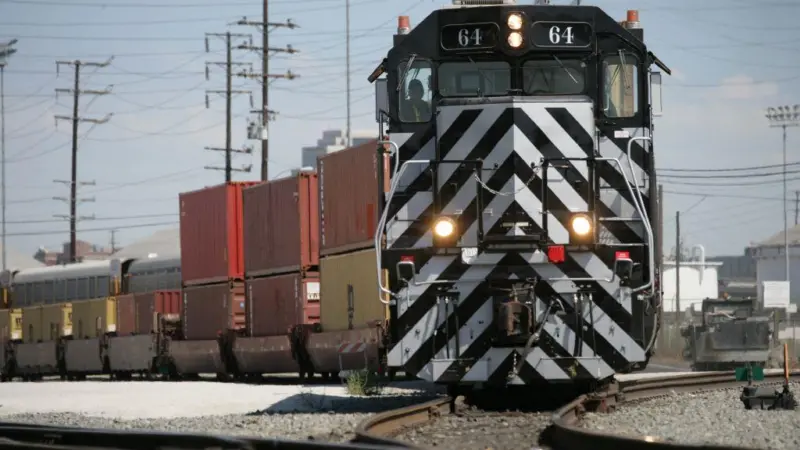
The port’s 2015 Emissions Inventory shows a 76% decrease in total diesel emissions. It added that DPM had reduced by 89% for locomotives, 82% for cargo handling equipment, 75% for ocean going vessels and 53% for harbour craft.
The emissions reduction at the 317-acre port, which has five terminals, 33 ship-to-shore cranes and 27 international shipping lines, is believed to be the result of various initiatives including a USD$38m grant program to upgrade and replace the oldest trucks operating at the port; a ban on trucks that aren’t compliant with statewide emissions requirement; shipping lines switching to cleaner burning, low sulfur fuel; and a USD$60m project to construct a power grid that ships can plug into at berth.
However, an independent study which used Google street view mapping to show where air pollution levels are most concentrated throughout Oakland, appears to indicate air pollution is still a problem in West Oakland.
In response to the findings, the port said: “The Port is supportive of efforts that develop tools and techniques that will allow all stakeholders to better understand local air quality conditions.”
According to The Mercury News, Brian Beveridge, co-founder of the WOEIP, was critical of the port’s latest report and stated: “If all the trucks at the port are so clean how come there are elevated levels of pollution out there?”
WOEIP is requesting the federal agencies address the apparent disparity in results between the port’s study and that of the independent study and put measures in place to protect West Oakland
Related Articles
 ALTERNATIVE FUELS GREENPORT
 OPERATIONS
 ALTERNATIVE FUELS GREENPORT