




Opinion- February 2009
Normally, this column is devoted to craft that are designed to float. This time, the recent incident in New York City, where a commercial airplane successfully glided to a safe water landing on the Hudson River (the major artery separating New York and New Jersey) has inspired a different perspective.
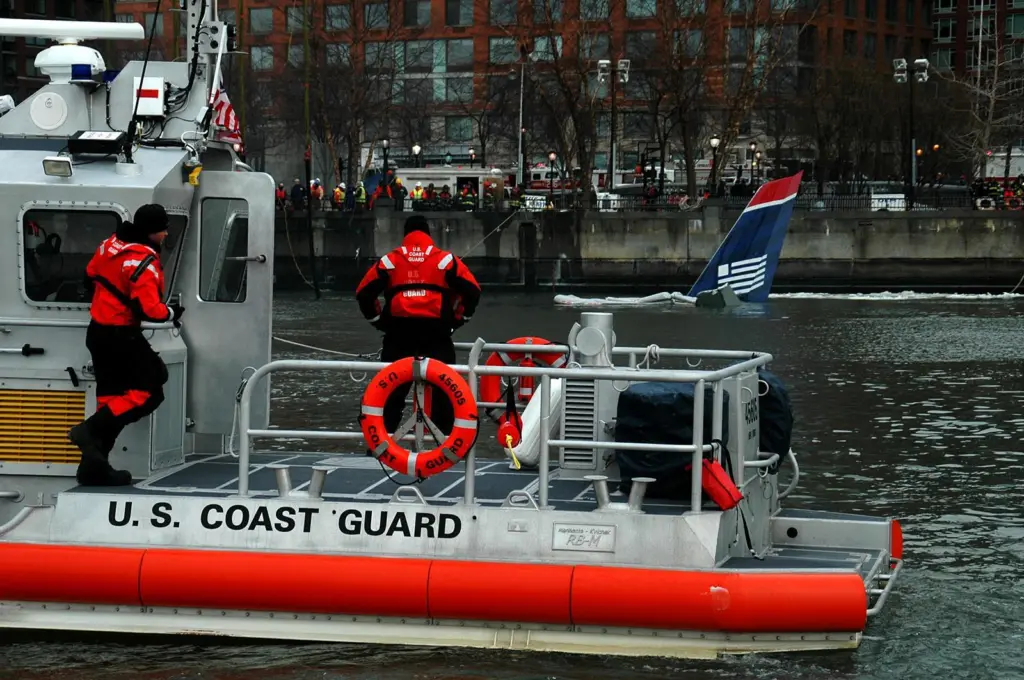
Though much of the media coverage was lauding the hero pilot of USAir’s Airbus 320, an important subtext to this story is the tremendous amount of preparation and cooperation among commercial interests and agencies at multiple levels of Government. The quick action of all concerned enabled 155 people to be rescued from life-rafts, from a perch on the plane’s wing, and from the icy waters.
In a large harbour such as New York, Harbor Safety Committees, and, more recently, local Port Security Committees, meet regularly, and drill for pollution or security incidents – which may include waterborne evacuations.
According to news accounts of the rescue, there were hundreds of first responders on the scene within minutes after the crash. These included ferry and tugboat companies whose vessels criss-cross the river on a daily basis, to agencies such as local police and fire fighters, and Coast Guard (at the Federal level).
News accounts also revealed that helicopter patrols from the New Jersey State Police and Nassau County (from nearby Long Island) also aided in the disaster response and rescue effort. With a missing aero-engine at the bottom of Hudson River after the impact, the US Army Corps of Engineers (better known for harbour dredging) was involved in recovery efforts in the murky waters.
It is ironic that some witnesses to the unfolding tragedy thought they were watching a replay of 9/11, where the airliners followed an eerily-similar path down the Hudson River. But a positive outgrowth of 9/11 has been excellent preparedness between agencies and on integrating commercial interests, such as Circle Line and New York Waterway. After numerous drills in New York, coordination was text-book like. Happily, terrorism did not figure into the USAir incident.
The new Administration will be concentrating on the economy as it begins the new term; the ports industry will likely benefit from renewed attention to physical infrastructure, as we’ve written. But, a very positive legacy of the oft-criticised and sorely unpopular outgoing Bush Administration has been the welcome emphasis on a “safety culture”.
The fact that all passengers and crew came out very much alive on the coldest day of the Winter is ample evidence of the positive impact of such culture at the Port of New York & New Jersey. Besides substantial funding for access roads, intermodal transfer terminals and the like, my hope is that the important lessons of preparedness remain top of mind for the new Administration.
Related Articles
 INSIGHT & OPINION
 INSIGHT & OPINION
 INSIGHT & OPINION