![PortStrategy[GreenPort]](https://www.portstrategy.com/wp-content/uploads/2026/09/PortStrategyGreenPort.svg)


Port of Tyne 5G Autonomous Trials
The Port of Tyne in the UK is testing new automated container movements using a 5G network that will support real-time data sharing, secure communications, and system integration.
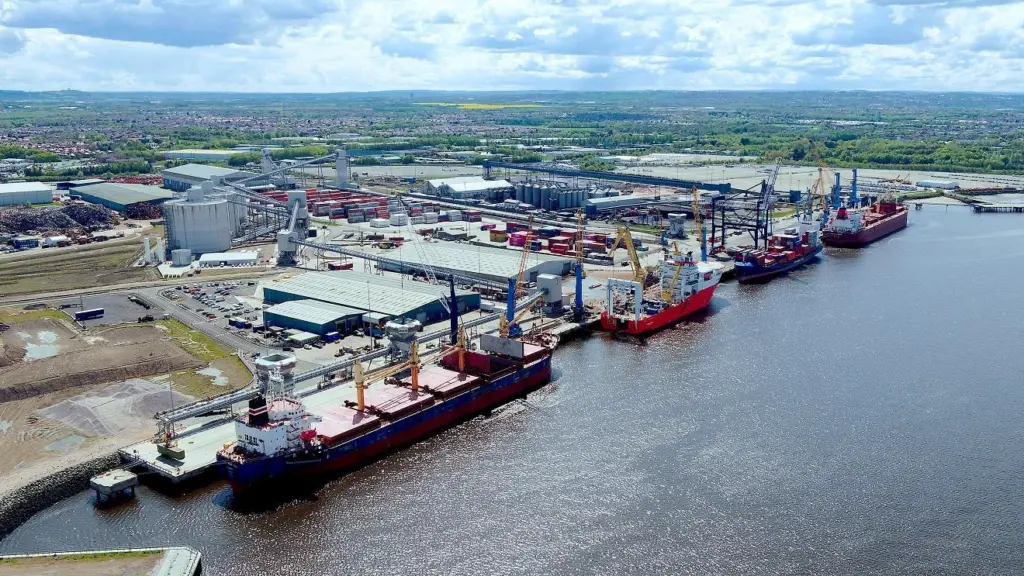
Led by the North East Automotive Alliance (NEAA), with the backing of the UK government, this new initiative, dubbed the Port-Connected and Automated Logistics (P-CAL) project, is aiming to successfully demonstrate the use of a fully autonomous terminal tractor operating within a live quayside environment.
The new system will move containers between the quayside after discharge from ship and to the container compound, while incorporating continuous data exchange with terminal systems and remote operators that can coordinate with crane movements and other port infrastructure.
NEAA notes: “It is expected to reduce costs, create skilled jobs and lay the groundwork for wider adoption of autonomous logistics across UK ports and distribution centres. With its focus on innovation, collaboration and environmental responsibility, P-CAL is not just a trial; it’s a bold step towards the future of freight.”
Cybersecurity specialist, ANGOKA, is developing a secure mesh network and the digital infrastructure that will allow communication between the autonomous vehicle, port systems, and operators maintaining high-frequency data transfer under real-world port conditions.
The P-CAL project is being funded through the CAM Pathfinder – Enhancements programme, which is part of the UK Government’s wider £150 million Connected and Automated Mobility (CAM) strategy. This initiative is the responsibility of the Centre for Connected and Autonomous Vehicles (CCAV), in partnership with Innovate UK and Zenzic.
The nine-month project builds on earlier 5G CAL and V-CAL initiatives and brings together a consortium including the Port of Tyne, Oxa, ANGOKA, Vantec Europe, BP, Nissan, Newcastle University, Womble Bond Dickinson, and Connected Places Catapult.
Related Articles
 EXPANSION & DEVELOPMENT
 CONTAINER & CARGO HANDLING
 PORT & TERMINAL NEWS