



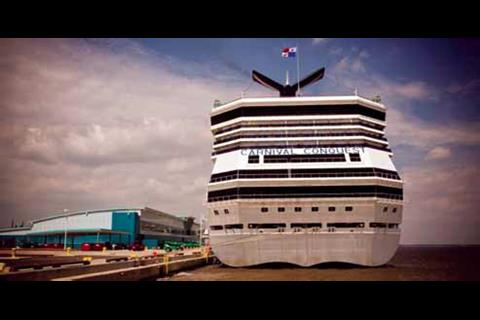
With the development of its new Bayport terminal, the Port of Houston has been working to meet a range of environmental challenges.
With the development of its new Bayport terminal, the Port of Houston has been working to meet a range of environmental challenges The major environmental issues for the Port of Houston region are the reduction of nitrogen oxide emissions and the improvement of energy efficiency, with the aim of reducing the port’s dependence on fossil fuels. The area is currently in a “non-attainment” status due to high ozone levels. According to Thomas Kornegay, the Port of Houston Authority’s CEO, the PHA’s new Bayport Container and Cruise Terminal development will meet these environmental challenges. “When the $1.4 billion, 1100 acre, Bayport Container and Cruise Terminal is completed,” said Kornegay, speaking at the World Ports Climate Conference (WPCC) in Rotterdam in July, “it will have a total of seven container berths with the capacity to handle 2.3 billion TEU, which is an estimated 1.7 million containers per year.”
Green features
At the conference, Kornegay presented several important features that have been incorporated or utilised in the Bayport design and construction to enable the PHA to address the environmental challenges. These include:
Lighting Mitigation
The design team at Bayport has incorporated the ‘dark sky’ design of high-mast lighting at the container yard. This minimizes glare, light spill, light trespass and light pollution to the surrounding communities.
Sight and Sound Berms
The first segment of a 3-mile long, 20ft high sight and sound berm was completed in August 2007. The berm provides a buffer to the nearby communities for potential noise, light, and aesthetic impacts from both the container and cruise terminals.
First Flush Pond and Drainage System
This system was created to prevent impacts to the Bayport Ship Channel and Galveston Bay. A storm sewer system was built that keeps contaminants from leaving the facility. The drainage system consists of terminal pavement sloped to a series of trench drains with guillotine slots located every 50 feet. The trench will isolate any spills which might occur in the terminal. Also built was a diversion structure that will route the first 1in of rainfall to a first flush holding or detention pond. This pond is designed to keep solids and contaminates from reaching Galveston Bay.
Hazardous Cargo area
A station for leaking containers has been built, encompassing an 80ft x20ft containment area with four sloped sides that drain towards a central sump. The sump is sized to contain up to three 55-gallon drums of hazardous material with a remote shut-off valve isolating the sump from the storm drain system. The station provides a means of safely capturing materials from leaking containers until appropriate corrective measures can be taken.
Noise Abatement
The PHA continues to monitor construction noise from three permanent listening stations. Construction equipment, including muffler systems, has been maintained in good working condition. The PHA is attempting to limit construction activity at night when possible. Dredge noise has been measured and assessed with noise control treatments installed on winches, cranes, and pumps.
Port Authority role
Kornegay explains that, from a ports’ perspective, there are three primary areas of improvement that can be undertaken. “Firstly,” he says, “it’s the terminal improvements whereby a port can control the enforcement of tenant lease agreements and individual fleet operating agreements and infrastructure design. “Second, it’s the on-road improvements which require federal government involvement (like EPA) to improve emissions in the areas of trucks, rail and harbor craft. “And last, it the vessel trade improvements whereby international trade mechanisms are established and international standards are implemented by the shipping lines.”

